How do you handle babysitting jobs where the parent is working from home?

babysitting or nannying while parents are working from home, sitter for work from home parents, nanny for work from home parents, child care while parents are home

8 tried-and-true ways to provide child care and work together with work-at-home parents

Babysitting or nannying while parents are working from home can all too often become a case of ‘too many cooks in the kitchen.’ Children often want to stick close to mom and dad, and the sitter may struggle to distract them enough to give the parents some space. We asked UrbanSitter’s experienced babysitters for tips on how to navigate the nanny/parents relationship and provide exceptional child care while parents are home — here’s what they said!

1. Communicate
The only way to ensure that both you and the parent(s) are on the same page is to talk about it. “Before starting the actual sitting, I have a conversation with the parents about the developmental stages of their child,” says nanny Nadia Joseph. “I ask if I can make any suggestions and we go from there.” Open communication can be a way to encourage teamwork and set a standard for honesty for everyone.  You can say:

  • I’ve noticed as baby grows out of infancy she has become better at recognizing who her primary caretakers are. What are some ways we can work together to make sure she doesn’t get confused or upset when you are working from home while I take care of her?

This strategy worked for Joseph, who says that “while initially we had some pretty challenging situations, with major temper tantrums when kids heard or saw their parents, we agreed on a plan and strategies and the parents are on board.”

Looking for babysitter and nanny jobs? Create a free profile at UrbanSitter.com and start applying today!

2. Establish boundaries
“The best way to co-exist with a parent at home is to accept that there are boundaries,” says UrbanSitter member Christy Chan. When working with parents who are accepting of your role as a childcare provider, use this to your advantage. Use professional language to clearly establish what is and is not fair, and come to a common agreement. Examples may include:

  • Baby tends to get confused when he sees you coming in and out of the office during his playtime, which makes him fussy. We are going to stay in the living room and nursery today so that he doesn’t get mixed up. Would you mind if I got some one on one time with him?
  • When toddler has multiple people in her room shortly before naptime, she has a hard time falling asleep. Would you like to be in charge of putting her down today, or should I? We can take turns.

Babysitter Safiya Taylor has been able to use this technique well, saying, “generally the kiddos know that I am in charge once I show up, so they don’t really run off to the parents when they don’t get their way!” Sitter Dalia Cabrera Martinez agrees, stating that this type of sitting works best when “they usually close their office door and try not to come out unless they want to spend time with the kids.”

3. Say goodbye
Experienced nanny and mom Susan Malone says “learning to say goodbye happily” is crucial. In this case, you and the parent set the tone for the child, so cheerful goodbyes help to create an environment in which the child is happy to be in your care, even when their parent is also at home. Going through familiar goodbye routines can help the child understand the transition from being in the care of their parents, to being in your care, even if the mom or dad remains in the home.

4. Make it a game
Another tip when providing child care while parents are home, making a game out of goodbyes is a fun and helpful coping mechanism, generally best for older children. This method has worked for UrbanSitter member Dori Heather, who says that she and the children she take care of “make a game out of it somewhat,” with rules such as needing to stay quiet outside of the parents’ office door. You can make up the rules of the game as you go, with suggestions such as:

  • Asking the kids to be ‘as quiet as a mouse’ or to ‘tiptoe as softly as a cat’ near the area where the parent is working.
  • Pretend the floor is lava and the office space is a volcano, and thus off limits.

5. Take the kids outside
“I usually choose to take the child outside of the home, returning briefly for meals, naps, et cetera,” says baby sitter Ava Martinez. This achieves two goals: both bringing the child away from the immediate temptation of being with their parents, and engaging them in fun activities outside of the house, affording them opportunities to learn and to have fun. It’s a win win for uninterrupted work – the parents can concentrate on working from home and the babysitter can provide the child care without distraction.

6. Change as needed
As children grow older, their needs change. Whereas a toddler may not have a need to be close to their parent every single moment of a day, a breastfed infant must be in close physical proximity to her mother. Being respectful of both the parent and child’s needs is crucial. With new parents, sitter Alexandra De Martini suggests being “especially mindful of the mom or partner just starting back to work, as they might not be totally sure what they want and their needs will evolve over the next few weeks.”

7. Have fun with it
“My current nanny family, the dad works from home and honestly it doesn’t bother me whatsoever. We have an excellent relationship and he respects me as a nanny so I am never bothered! I act the same as if I were home alone,” says Pennsylvania sitter Caleema Lawler. Actively put work into establishing positive camaraderie with both the parents and children so that you all feel totally comfortable in each others’ presence. This can come in many forms—intentionally spending time together with both the parents and children together to get to know one another and having monthly scheduled meetings to communicate successes and issues are two suggestions.

8. Move on it it’s not right
If you are aware that babysitting while the parent works from home is something that you wouldn’t be comfortable with, move on from the opportunity. Instead, take roles that allow your natural talents to shine and leave these experiences to other sitters.


Looking for babysitter and nanny jobs? Create a free profile at UrbanSitter.com and start applying today!

UrbanSitter is expanding!

urbansitter cities

UrbanSitter is now available in more cities across the US, including Atlanta, Austin, Dallas-Fort Worth, Houston, Las Vegas, Miami, Philadelphia, Phoenix, Portland, Raleigh-Durham, and Sacramento!

Just in time for summer break, parents across the country can now find their community’s most trusted babysitters and nannies, on-demand. Whether you’re looking for a sitter to fill in between camps, a full-time summer nanny, or a vacation sitter to take over after a day at the amusement parks, UrbanSitter has you covered!

Sign up for free now and start meeting great babysitters and nannies!

free babysittingOnce you’ve joined UrbanSitter, you can earn free babysitting by referring friends to use UrbanSitter, too!

Meet the Family Behind Edoughble: Rana & John Lustyan and Riley & Emma, Westside, Los Angeles

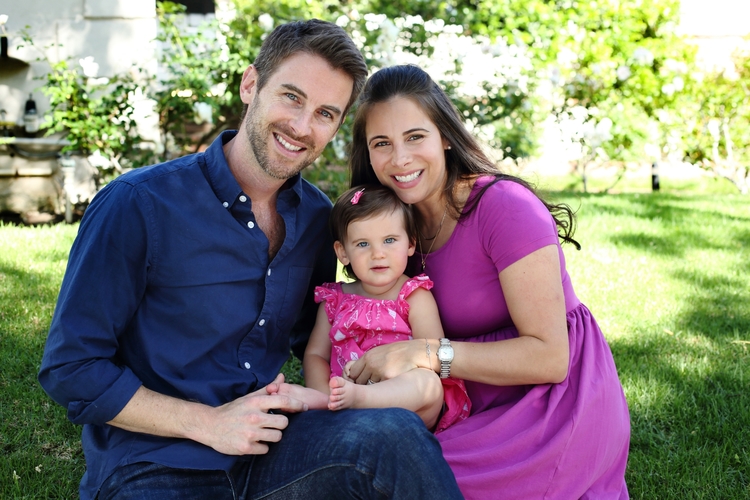
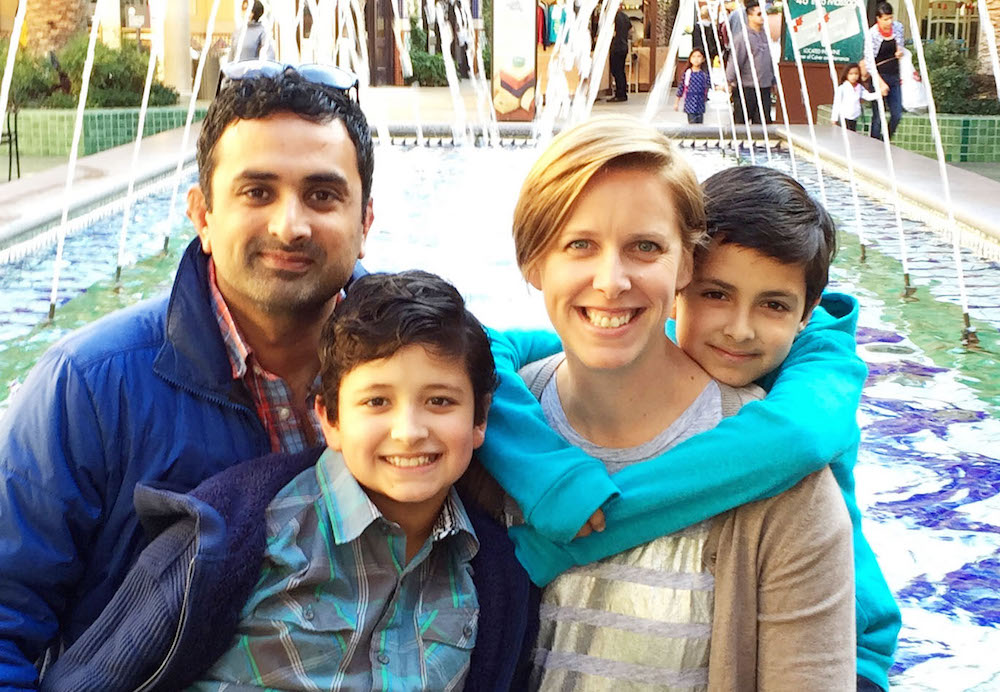
Lustyan family

By Dawn Van Osdell

What better way to satisfy a craving than to share it with others? Rana and John Lustyan did just that with the creation of Edoughble, their Los-Angeles-based company that produces raw cookie dough—in flavors like Birthday Bash and Snicker Dude—that’s meant to be eaten right out of the container.

“I have a crazy sweet tooth and I grew up eating cookie dough despite the dangers that came with the territory,” says Rana, who realized that her preference for eating the dough before it was baked was far from unique. With plenty of restaurant experience, including a stint as a pastry chef at Wolfgang Puck’s Spago in Beverly Hills—Rana and her husband, John, a business development director at DreamWorks Animation, created a recipe for eggless cookie dough that’s safe to eat—just as is—without fear of foodborne illness.

Soon after they launched their business in 2013, their first child, Riley, was born. She was a fan of the tasty treat from her first bite. In fact, “She cried when I wouldn’t give her a second bite,” says Rana. Just two months ago, a second daughter, Emma, joined their happy clan. Read on to learn about the sweet life of this family of four on LA’s Westside.

baby emma makes them a family of four
BABY EMMA MAKES THEM A FAMILY OF FOUR

Tell us about a typical day juggling a toddler, a new business, and a new baby.

Rana: I quickly realized when Riley was born that I can’t work from home and take care of a baby at the same time. As a small business owner and a mom, I’m stretched pretty thin but like all moms, I make it work. I have a part-time nanny and my mom to help me take care of Riley and Emma. I do all office work and customer service from home or by cell phone on the go, and John and I work together at home at night and on weekends on more creative tasks related to the business. We have a production kitchen where we make all the dough and taste each batch. We’re getting ready to launch a Pumpkin S’mores cookie dough and starting to play with Peppermint for the holidays.


John: I’m currently employed full time in the entertainment industry—outside of Edoughble. When I have on my Edoughble hat, though, I‘m focused on broader business strategy, marketing, and brand development. And I’m the dedicated lifter of all heavy sacks of flour!

Do you consider yourselves foodies? 

Rana: We are total foodies! John loves all the food competition shows and tries to be Gordon Ramsay when we go out to eat—being overly particular about tastes and textures. I love to examine the plating, service, and creativity and seasonality of the menu. Having worked in the front and back of plenty of restaurant kitchens, I know what hard work is involved with running one and I can really appreciate a good meal out.

John: Rana’s life revolves around planning meals and I am no way close to her foodie level, but I consider myself pretty particular about food. She’s always teasing me and telling me I should be a critic on one of those TV shows. Where I savor a bite of S’mores Cookie Dough and talk about how great the texture of the graham cracker is, she’s already on her fourth bite!

What are your favorite local restaurants and markets?  

Rana: We love brunch with the girlies on the weekends at Little Door Next Door; Cafe Midi, where we can sit outside; and Milo and Olive and Huckleberry in Santa Monica.

Grocery shopping is also something I look forward to every week. I enjoy different markets for different things. When I want to explore new products, I go to Bristol Farms and Whole Foods.  When I want ice cream, I head to Gelsons, which carries a great selection. For house staples, I run to Trader Joes.

John: I have a ton of favorites, but really love Milo and Olive, too; and Pace in Laurel Canyon. A staple of ours is Bandera, where Rana was the general manager for a while.

What about your daughters; are they foodies, too? 

Rana: Riley is almost 20 months and is obsessed with sweets. We try to keep her meals balanced, and she has shown a preference for foods like sushi, Thai and Mediterranean—which makes me happy. We lucked out with her eating. She definitely has preferences, but she is not a picky eater.  We’ll see about Emma when she is old enough to eat solids.  I’ll keep my fingers crossed!

Are you a dessert-every-night kind of family? 

Rana: During pregnancy and while I was nursing, we were.  Now that Emma is eight weeks old, I’m trying to move to every other night. We love ice cream with cookie dough—I’ve created a Pinterest board to collect all my favorite ways to eat it: milkshakes, parfaits, and brownie bombs.

How do you balance all those sweet eats? 

Rana: My philosophy is everything in moderation—I can take a bite here and there. I have the discipline to not sit down and eat the whole tub of dough, but maybe that’s because I am around it all the time.

What’s next?

Rana: Two kids under two and a business is quite a challenge! I really want to focus on growing our business. I would love for every cookie dough lover to have the opportunity to grab a spoon!

Photographs courtesy of the Lustyans

Nona Evans of Whole Kids Foundation Wants to Turn Every Kid Into a Passionate Gardener—And Eater

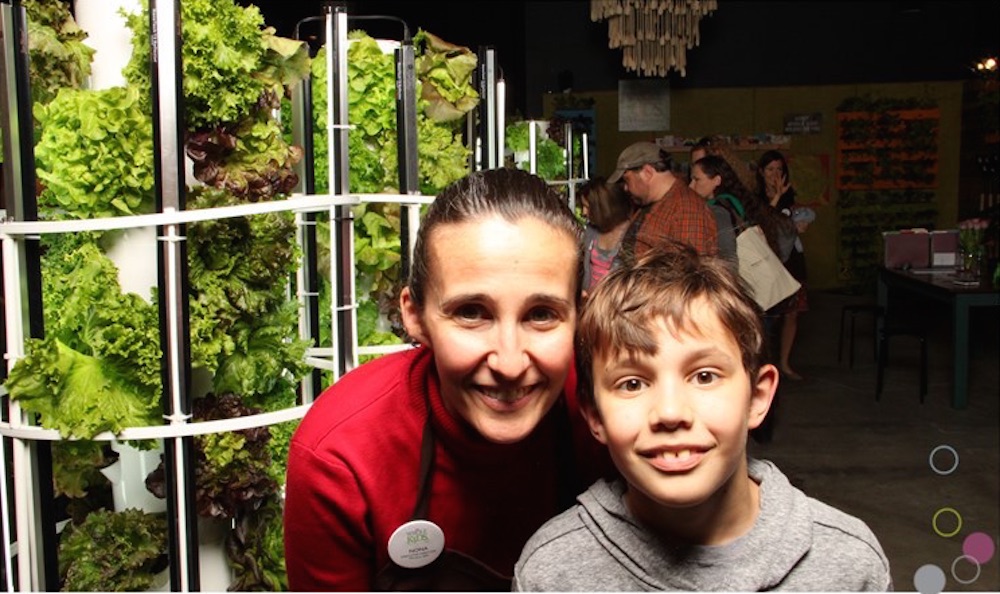
nona-evans

By Lela Nargi

Nona Evans calls her latest job, as Executive Director of Whole Kids Foundation (WKF), penance for the past working lives of her ancestors. “My grandfather on one side of the family owned an Italian restaurant, and my grandfather on the other side started a candy store. They put a lot of sugar and calories out in the world!” she laughs.

Evans started her own work life in a conventional grocery store, in marketing and PR, before she found her way to organic specialty market chain Whole Foods. There, she headed the company’s foray into educating its customers about what children across the country were eating for lunch, and how it affected how they were performing in school. Response to the program was so successful that it became larger than her job description. So, in 2012 she went to the company’s powers that be and they voted to translate her work into WKF, to provide schools with grants to start gardens and salad bars. Evans has been its fearless and passionate leader ever since.

What were you hoping to get out of this project when you started the Foundation four years ago? 
We fully believe that a school garden is the most reasonable investment a school can make. We did lot of research and found that a grant of $2,000 is adequate for a school to implement garden for first time, or for a school with an existing garden to make meaningful transformation: triple it so every class can have bed, or add an outdoor classroom, or add irrigation. But when we started, the idea of gardening at school was just beginning to become something parents and teachers and administrators could consider. Today, awareness of its impact and importance is so much greater, and there’s an openness to the type of learning that can be accomplished with it. I don’t think we’re at the tipping point of being mainstream just yet—the USDA did a survey at end 2014 and found there are only an estimated 20,000 school gardens across the US—but I’m encouraged by the experience of Whole Kids so far.

Well, what are the benefits of a school garden?
The most important thing that school gardens do for our kids is add a hands-on, nature-based learning environment. There are three types of learners: visual, artistic, and kinesthetic. One and three learn best in school garden, so it enhances educational effectiveness for two-thirds of the population. It actually makes the academic portion of what a school is challenged to do more effective. We know from research, and from what Alice Waters did with her Edible Schoolyard Project, that when kids know where their food comes from, they’re more willing to eat a new vegetable. They want to understand the connection between what they eat and how their bodies work: how it helps them perform on the soccer field, or whatever they’re passionate about. The most powerful ingredient we activate is curiosity.

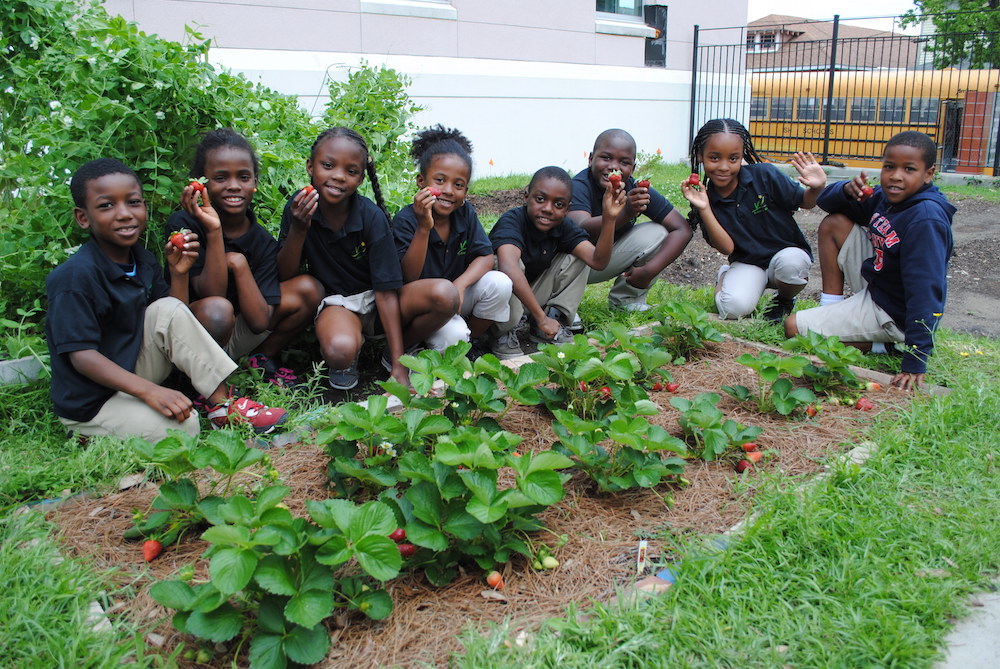
kids-in-garden
WHOLE KIDS SCHOOL GARDENERS. PHOTOGRAPH COURTESY OF WHOLE KIDS FOUNDATION.

Do you do garden experiments on your own kid?
I have a 12-year-old son, Patrick. He’s best case study I could ever have been given. He ate absolutely everything till he was 4 years old. Then one day he came home and said word “yuck,” and I almost fell out of me chair. His girlfriend at daycare, Summer, had said “yuck,” and he became a picky eater, because he could. He would pick the green stuff out of everything. We live in Texas, where we have Tex-Mex rice with everything, and he would pick out every iota cilantro. So, we started gardening. Funnily enough, he decided he wanted to plant cilantro . And he started eating it by handful, because he had that connection. He had grown and nurtured it himself. Even now, I bought some cilantro seedlings a few weeks ago and I found him sitting at the kitchen table, with every leaf picked off it. My caterpillar son!

That experience is very similar to what we find and advocate for with Whole Kids. Give kids a choice and the world opens up. Implement a salad bar at school, and kids are empowered to pick what they want for lunch. They may begin by picking lettuce and carrots and croutons, but by end of the school year, they’re experimenting because of positive peer pressure. They’re eating garbanzo beans.

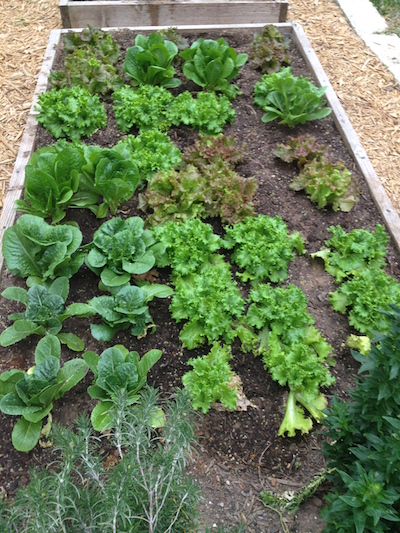
greens-in-gardenHave you always been a gardener?
Actually I have to credit my husband, John Spillers, who’s a police officer. He was a gardener long before it was fashionable; he was a fan of Square Foot Gardening, that PBS show. He really enabled us to garden as family. Once, for Valentine’s Day, he gave me two new raised beds with spectacular soil in them, a mix of compost and vermiculite and peat moss that produced beautifully. Four years ago, when we moved so we had more room to garden, he moved my dirt.

We make a good team. I’m laissez faire and he’s meticulous. I had the good fortune three years ago to visit the White House garden—talk about meticulously cared for! I came back with every intention of having a pristine garden. But no matter how much time I have to spend in garden, nature is an amazing thing and so much grows, both literally and figuratively. We make sure to take care of our pollinator friends, so this year I planted zinnias for them, and we always put in milkweed for the monarch butterflies, which are experiencing a lot of habitat loss. Last year, we had so may caterpillars, they made a chrysalis across our front door. We saw so many butterflies emerge, which is like it’s magic.

How’s your neighborhood for gardening?
We live in Shady Hollow, which has lots of the old-growth oak trees that are native to area, which is wonderful. But in terms of gardening, I think we were the original catalyst in the neighborhood. There’s a wonderful young man next door, Caulden, who when he was 3 years old wandered into our yard. He tugged on some greens and out came carrot. I still remember the amazement on his face. His mom said he’d never eaten that before and in 10 seconds, it was gone. The kids around here expect them, now. I’m constantly delivering fresh greens and tomatoes to people. I always have bountiful rosemary, sage, thyme, oregano, parsley, enough for everyone. And we’ve created a neighborhood share; these days, we’re a wonderful gardening community. Our next door neighbors just started raising chickens. All the kids around here benefit.

Do you also cook from your garden every night?
We’re a two-parent working family. Cooking is my therapy, and I specialize in getting dinner on table 15 minutes or less, and whatever I make it always has lots of herbs from my garden. I love to cook with herbs. But it’s important to have go-to paces for dinner when don’t have energy or time to cook. We try and find places that serve locally-grown ingredients. Anything that has a vegetable combo on the menu, it’s definitely on our list.

What’s your advice for starting a garden for other Austinites, or for anyone who wants to plant something in the ground?
Start with what you love to eat, and don’t be afraid to experiment. There are tons of places in Austin for seeds and seedlings: there’s The Natural Gardener, which promotes native species. There’s a nursery called It’s About Thyme that’s locally-owned; I love anyplace where you can get to know the owners. And we love High Mowing Organic Seeds, which is one of the best seed suppliers in the country—you can order seeds online. But it’s also important to remember that you don’t have to have a huge back yard. Your garden can be as small as a windowsill or a pot you put on your patio. Just give it a shot!

Photographs of Nona and Patrick, and bed of greens, courtesy of Nona Evans.

Carina Tannenberg Wants to Demystify Poop for American Kids and Parents

Carina Tannenberg

By Lela Nargi

Carina Tannenberg is the owner of online shop Sweden Toys, which brings a whole host of adorable, educational Scandinavian playthings to American tots.  But perhaps none of the shop’s offerings is quite as…unexpected as its duo of plushies called Pee & Poo.

You read that right: Pee & Poo plushies, meant to lift some of the mystery for kids from the always tedious and challenging event of potty training. Here, Tannenberg, not a mom herself but doting auntie to Maya, age 10, and Noah, age 8—they call her their “extra mom”—talks about what she sees as some critical differences between raising kids in the U.S. and raising them in her native Sweden.

Where did you grow up, and when did you move to the U.S.? I moved here in 1996 to go to film school. I currently live in LA’s Westwood area, where I’ve been for the last 15 years. There are some similarities here to back home in Stockholm: I live in a residential area in a big city. I think it’s a good place for kids to grow up, but it is not as free here for them. My niece, Maya, rides on the Stockholm subway by herself or with friends. I think that shows a lot about the difference in how we perceive a child’s maturity.

What are some of the differences you’ve seen between Swedish and American parenting styles? I know many of my Swedish friends who are parents feel locked into all the rules. But in Sweden you can easily have a career and be a mother. Here, it is very difficult, as schools seem to expect mothers to spend a lot of time with the school’s programs, as if they have a free schedule.

I also see is how important it is for kids to see that they can do things for themselves; being so dependent on their parents, as they must be in LA to get everywhere, can prevent them from evolving freely. I would add that there is a gender difference that is imposed more here than in Sweden. We are very careful in Sweden not to impose our ideas on our kids, and to try to let them learn and grow freely.

What’s your background, and how did you get involved in selling kid’s toys?I have a degree in Building Engineering from a university in Stockholm, Art and Graphic Design from a university in Paris, and Film Producing and Business from a school here in LA. Overall, I am interested in design and wellbeing, but especially for kids. I have Swedish friends who have designed these amazing products, and I wanted to get them out there.

The response to Pee & Poo has been great! I believe that even at a very young age, kids like to learn responsibility. I think this is why they love dolls and puppies so loved much—caring for them is in our nature. Once we find that teddy bear we love, we become very involved and “listen” very carefully to what it needs. With the Pee & Poo characters, we can get the child’s attention and explain how Pee & Poo needs to go to the potty and not in the diaper. We will also soon come out with Apps for Pee & Poo potty training, so that the child can be part of a rewarding program for their potty visit.

You are a breast cancer survivor. How has this changed your perspective on what you do? I was diagnosed in 2010 and I have been clear for 5 years, so I can call myself “cancer free!” I have always been interested in health and wellbeing—both physical and mental, they go together. I believe this interest started at a young age, so working with kids and health makes my life so exciting.

Going through cancer was life changing. When you don’t know if there is a tomorrow, you let go of all of your expectations and start to look at life as new again. Everything in front of you becomes a blessing because you no longer can expect anything—like a child; children are so excited about everything. It’s amazing to be able to have that again as a grown.

Women Helping Women is The Hivery’s Greatest Gift—To Women

hivery-woman

By Lela Nargi

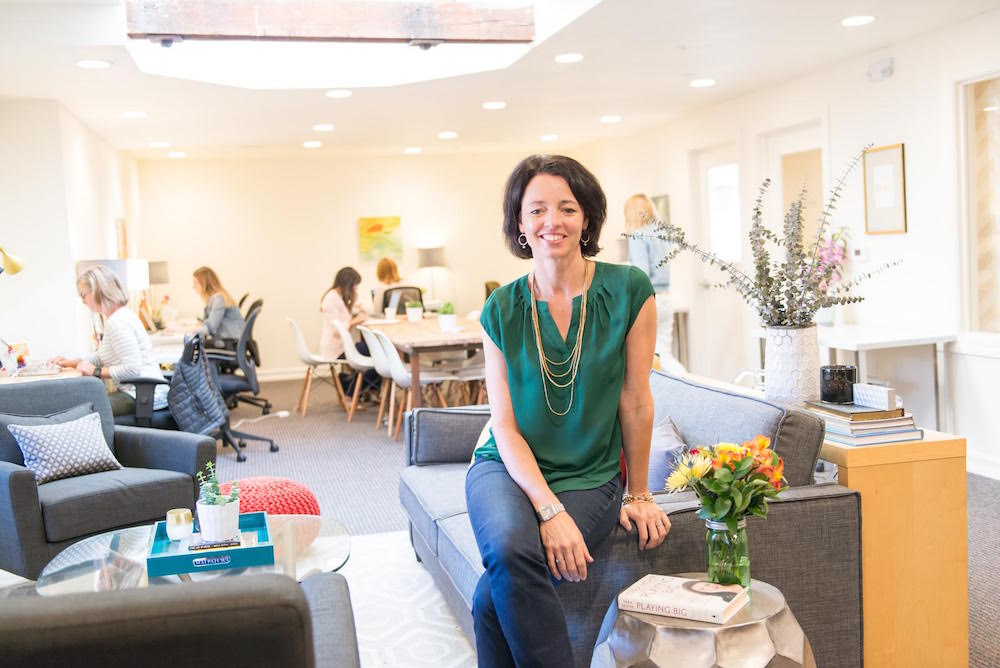
What does a mom who’s eager to get back to work—or start a new chapter of her worklife— want for the holidays? If she lives within striking distance of Mill Valley, CA, no doubt she wants a membership to The Hivery, a two-year-old cooperative workspace, where women can meet and brainstorm whatever comes next in their lives. Mothers helping mothers is a concept as old as human society, and in this newest iteration, many other like-minded organizations have sprung up across the country. But to find out what’s so important about this sort of community, and why its time has so assuredly come, we caught up with Hivery founder and former ballet dancer Grace Kraaijvanger.

Where did you grow up and what was the worklife that was modeled for you? I grew up in a house full of girls; I was the oldest of four daughters. I am very close to my sisters, Emily, Maggie, and Abby. My dad was a pilot in the Air Force so we moved every few years. I grew up having to be flexible and make new friends often. I think that has served me well as an adult as I’m not afraid of change. My mom worked when I was younger and then stayed home later in my childhood. She was my hero as she was the perfect blend of a progressive, modern woman, but she also loved and respected her role as our mom. She passed away four years ago and there isn’t a day that goes by that I don’t miss her. She was a huge inspiration for me in opening The Hivery, and caring for her was my biggest lesson in not waiting on the things that make us feel vibrant and alive. I hope to pass on to my kids—Jane, 12, and Ben, 10—the unconditional love she gave to me and my sisters, as well as her sparkle, zest, and her feisty humor.

What’s your own work background? I studied marketing at the University of Arizona. I received a dance scholarship there and was thrilled to be part of their dance department. Ultimately, I received a degree in marketing, and my first job out of college was in the marketing department for a big tech firm, but I missed the community of dance and the arts. I created a marketing consulting firm so that I’d be able to pay the bills with marketing work, and still rehearse and perform with amazing professional dance companies and choreographers in San Francisco. I felt like I was able to blend business and the arts, by melding two very different careers. The Hivery was a further extension of creating a vibrant, creative community, with a business that serves a very specific need. I knew that women are seeking connection with other vibrant women, and that we all want to create meaningful work that fits into various stages and responsibilities within our lives. The Hivery is a place of creative connection and support, in addition to being a gorgeous, vibrant, co-working space for women.

When I became a mom, it became even more apparent to me how much we seek connection and support from other women in our community. We need to know that we aren’t in it alone, both as moms, and outside of motherhood. We need to know that it’s okay to want to create something meaningful for ourselves, and that we can count on other women to empower us to do that in a way that feels authentic.

How do you see this happening? At The Hivery, we talk a lot about cultivating what’s next for women. We provide programs and workspace for women to explore their next career, start their own business, or create work that works in their lives. I’m in the lucky position of getting to hear from women about what inspires us, and also what scares or stops us from doing work we truly want to do. The Hivery isn’t just about a place to work (although we have created a stunning place for that) but it’s also about connection and the idea that whole is greater than the sum of the parts. The Hivery is founded on a firm belief that together, women can do anything.

Do you have plans for your second year of business and beyond? We certainly have plans to expand The Hivery, with new locations opening in 2016. This first location has been a beautiful guide for us on what women want and need to create work enlivens them, and how to clarify what’s next for them. We have women asking us constantly when we will open The Hivery in their area, and our answer is SOON! We are thrilled to have received such support and momentum, and we know that this is part of a movement for women to support and empower each other.

hiverys-focus-loungeWhat’s your family life like? We live in Mill Valley, California, just over the Golden Gate Bridge from San Francisco. I am in love with where I live. We are surrounded by redwoods and stunning hiking trails, yet can be in the energy of San Francisco in just 15 minutes. I feel so fortunate to live and build my business here. We lead busy lives like so many parents in our time, but we love taking it slow, too, and spending the day at the beach or taking a long hike together. Both my kids love to surf, ski, and mountain bike and I love that they can take advantage of all those things where we live!

When I need an urban fix, we hang out in our old neighborhoods in the city, the Mission, and wander the eclectic and creative streets of Valencia Street. As a lifetime dancer, I never tire of seeing professional dance, and love taking the kids along when I can. I think that seeing other artists in action reminds them of the creativity and potential they have inside, as well as broadening their minds to all that humans can do!

Photographs courtesy of Grace Kraaijvanger

Meet Phoebe Hayman, founder of Seedling, Los Angeles, CA

Phoebe and her family

As told to Lela Nargi

Where are you from originally? I spent much of my childhood in the US and then moved back to New Zealand (where I was born) in my tween years. I studied Fine Arts in Auckland, and it made me understand what an important role creativity plays in our lives. I naturally sought out creative and hands-on experiences when my kids were little and realized how limited the offering was to create quality creative moments for kids; I thought there had to be a simpler and more positive experience out there. Kids are so excited and curious around exploring what they can do with their own two hands, I really wanted something that fully supported that spirit. So, I created [activity kit site] Seedling!

You’re living in L.A. with your family now. What made you choose this location? My husband, Suraj, and our two sons Kieran (age 12) and Ashwyn (age 10) moved back to open a US office for Seedling. I have been humbled and thankful for how supportive my family has been around this. We choose L.A. because it is still close to home but has everything Seedling needs to succeed: great talent, an inspirational startup community, easy access to the rest of the US and our favorite venture capital investors. We just visited New Zealand for the holidays and our favorite thing is seeing all our wonderful family, closely followed by the food which we ate far too much of! We often have family visiting and the handy thing is that L.A. is a stopover for many New Zealanders traveling around the world, so we get to see a lot of family and friends throughout the year.

We love living in Southern California, because we really enjoy the opportunities our kids have to experience the diversity of communities. Just going in any direction 20 minutes puts us in a different culture we love exploring. When my family visits, we love taking them to the beaches and eating at our favorite restaurants; when we go to New Zealand, we love visiting the beaches and eating at our favorite restaurants. I guess we are creatures of habit.

What’s a typical day like for your family? I get to enjoy breakfast with the kids before getting on the train to go to work. My husband takes the kids to school and then their sports in the afternoon, while I work through a day of meetings. We enjoy dinner together most nights, if the kids’ sports schedules allow it.

On the weekends, we usually have some kind of sporting commitment but when we don’t, we love to go on walks, play tennis, go to the beach, or hang out at home doing our own projects. My kids love to read and build things, I love to read and paint, while my husband enjoys tennis and catching up on current events. I also love taking photos of my favorite people so there are photos all over our house; actually, we all enjoy our creative moments so there are works of art all over the place (even my husband, who doesn’t think he is creative, has a masterpiece on the fridge)

When we get the chance to go a little further afield, we love experiencing new communities, a few of our favorites are Laguna for the arts festivals and San Juan Capistrano for the amazing mission village but we’re still discovering so many spots!

Are there any issues that are really important to your family? Supporting our communities at a local level is important to us and you’ll often find us volunteering at the various sports and school communities that we belong to. Without this level of support, kids wouldn’t have the opportunities they have and we are big supporters of opportunities for kids both in our personal and professional lives.

And what about Seedling—what’s in store? Big plans! There are so many ways that kids love to play and we’re focused on supporting it in many forms. If we can imagine an open-ended play opportunity, we plan on building it and bringing it to families around the world. 2016 will see some very big product releases for us and we’re super excited about it. Watch this space!

Meet Kate Talbot: Successful Author, Content Creator, and Digital Strategist… and an UrbanSitter Babysitter!


kate-oh-snap

Kate Talbot has built her successful career by using digital storytelling to empower communities at brands like Kiva and Virgin America, as well as scale early-stage startups for growth. In her free time, she writes for online publications like Social Media Examiner and KISSmetrics, educating small business owners and entrepreneurs on how to successfully use millennial social media platforms like Instagram and Snapchat to build their brands. Recently, she published a book on the topic of Snapchat Marketing. Of course, like any city girl she was at the Dry Bar downtown on a recent Monday morning getting glam for an important event and ran into UrbanSitter CEO Lynn Perkins (whom she babysat for years back) and they got to chatting…

Here, Kate shares with us her experiences with UrbanSitter, what it’s been like having written a successful book, and more insight into her career and life.

Can you tell us a little bit about how you know UrbanSitter CEO and Co-Founder, Lynn?
For me, I am all about the side hustle. SF is expensive and any avenue in which you can use technology to create multiple revenue streams is important. My girlfriends and I (as many of us) have babysat since our tween years, and after business school in 2012 we all signed up for UrbanSitter. This was a great way to supplement our job incomes off the bat.

I learned from my friend Lisa, who is a babysitting all-star, that the best way to build your babysitting profile is to reply to jobs right away and babysit on a Saturday night. From doing so, I ended up replying fast to a query and booked a job during the 2013 holiday season for Lynn. I had a wonderful time babysitting for her son and she was highly supportive of my own story and helping me succeed. We connected on LinkedIn, and I always loved following all the news about UrbanSitter; especially this amazing feature in the First Round Review on Lynn and UrbanSitter.

As fate happens, I ended up running marketing for a First Round Capital company—which also funds UrbanSitter—so at a dinner roundtable I met Daisy [Downs, Co-Founder of UrbanSitter] too! I let the other attendees know that even though I was in the tech space, I also was an UrbanSitter babysitter, which delighted everyone.

You mentioned going to business school, where did you study?
I went to the University of San Francisco, where I focused on Marketing and Entrepreneurship.

I grew up in Moraga in the East Bay —I have lived in New York City, too—but I knew I wanted to be in the Bay Area long-term. My dad and brother both went to USF for law school, so I knew I’d be getting a great education.

Can you tell us a little bit about what you’re doing now?
I have my own consulting firm where I lead growth marketing for early stage startups—whether that’s influencer marketing tools or cybersecurity technology—it really runs the gamut but I love it all.

I also write on the side. I do that because it’s a passion of mine.

In fact, when I babysat I am able to write when the kids are asleep. One of my favorite articles I wrote on Snapchat was written in a Pacific Heights apartment overlooking the Bay, while babysitting for a great family.

You just wrote and published a book about Snapchat, what was the process like?
I combined the writing which was already published on the topic and leveraged my community. I’m extremely fortunate to have contacts across all industries at big brands and media entities, and they were able to provide case study insights into their own execution of the platform. My mentor, a VC from Onset Ventures, who encouraged me to write the book, wrote the foreword about the future of enterprise marketing and Snapchat.

I also mentor at Stanford for an undergraduate course in media and technology. From this class, I was able to hire a recent graduate to design all the creative assets. That was probably my favorite part, because we had so much fun thinking outside the box and what would help the audience understand the platform from a visual perspective.

What interested you about Snapchat enough to write about it ?
I’ve always been really in tune with the millennial, and now Gen Y, audience on what the next trends will be. As a user myself and talking with my 22-year-old god-sister and her friends, I realized the power of Snapchat as an authentic way of telling stories and connecting with friends. Since I’d already been writing about social media for Social Media Examiner, I pitched the topic of Snapchat for Business. I was one of the first writers to do so, and it’s led to amazing opportunities speaking at business schools and conferences. I figured next steps, why not write a book!  

What has the reception been like for your book?
It did amazingly well! I felt so thankful for my community that downloaded it. During the 5-day free promotion, it went to the #2 spot in all of Business Marketing and Sales on Amazon. It was also #1 on Amazon for Advertising and Professional Development and #1 on Product Hunt books.

To wrap up: If you could give advice to sitters using the service, what would it be?
My advice would be to think of your profile as a personal brand. Fill out your profile in the best light possible. Also, remember parents are really looking forward to their date night or event they are off to, so be as professional as possible and always make sure you are doing your best! I know it can be tough sometimes, but keep trying to babysit more and more even if you get overwhelmed.

Babysitting in SF is a great way to explore the different neighborhoods—I didn’t know about all the parks that were out there—and connect with the families! If I hadn’t followed up with Lynn, I wouldn’t be in this position. You never know what will happen!

You can pick up a copy of Kate’s book, Oh, Snap! You Can Use Snapchat for Business, on Amazon, follow her on Twitter and Instagram, and see more of her work on her website at http://www.katetalbot.me/.


Meet Katie: Nurse Practitioner, Hockey Fan, & Babysitter

Katie Bell

As a pediatric nurse practitioner at the top hospital in the US, Katie makes her living helping children. Since joining UrbanSitter in 2015, she’s expanded her services to include babysitting for some of Boston’s coolest families. A lifelong Chicago Blackhawks fan, she says she uses her own passion for sports as a tool for connecting with new families and kids, and loves babysitting because of the lasting relationships she builds with families.

A Chicago-native, Katie recently moved to Boston to attend graduate school. Here, she tells us more about her life as a nurse practitioner, her passion for helping others, and what she loves about living in Boston.

You’re from Chicago originally. What brought you to Boston?
I came out here to go to grad school at Boston College, where I studied pediatric nursing.

Tell us a little bit about your work as a nurse.
I’m on the inpatient general surgery service as a nurse practitioner, and I manage children ranging in age from hours old to well into their 20s. Patients come from all over the world to have the surgeries that our hospital offers. My job mostly entails before and after surgery; getting patients prepared for the operation and making sure they are healing appropriately afterwards. At the end of the day, you have this goal of doing something good and changing a child’s life for the better. It can be hard, but it’s also really rewarding.

As a pediatric nurse and a babysitter, what is your schedule like?
I work four shifts of ten hours a week and then every fifth weekend, so I have random periods free time during the week. I have a lot of families that I sit for regularly, and I’ll send them my work schedule and they’ll work around it. A lot of families I babysit are not typical 9-5 families; they’re doctors or lawyers and so the changing hours work for both of us.

Can you tell us a little bit about some of the families you sit for?
Boston is such a big city and so the families you meet are all very unique. I have babysat for dozens of families in Boston; some just once and some regularly. I’ve built relationships with parents who are professors, prosecutors, doctors, stay at home moms, and families traveling together for vacation or business who need a break from their kids.

Each family is unique and I enjoy the challenge of having to adapt to each family. I have one family that doesn’t even have a TV and another family that is fine with just giving the kids the iPad and letting them entertain themselves.

How did you first get into babysitting?
I was probably 12 when my neighbors asked if I could watch their kids for a few hours. I did it all through high school, and it was never about the money but more about helping out families that I knew. I’ve always loved kids! I was also a hockey coach in Chicago. I had a family that I met when coaching hockey and I loved the kids so much that I would have offered to sit for that family for free.

How did you first discover UrbanSitter?
When I was in grad school, I chose not to work. So when I graduated it was top of my list to get back into babysitting. Before I sat for my nurse practitioner boards, I was working at a prep school summer camp and one of the girls working there told me, “You have to get on UrbanSitter!” I’ve been using it for about a year now. I babysit maybe 3-4 times a week, and I make enough that I can afford the monthly payments on my student loans.

What do you do in your spare time?
We live right in the heart of downtown Boston, which I think is so fun. Being able to afford to live in the middle of the city and experiencing everything here is so great. My girlfriend and I also travel a lot, which we’re very fortunate to do. We’ll go skydiving, book an impromptu trip in Europe, or jump on a flight to visit friends across the US. We figure, why not do the fun stuff now?

From Portland to San Francisco: Meet Katherine, A Part-Time Babysitter and Nanny

Screen Shot 2016-07-05 at 2.35.07 PM

Portland-native turned San Francisco-transplant Katherine describes childcare as her “absolute passion.”  She’s been a sitter and nanny on UrbanSitter for the past four years, using babysitting as a way to help her pay her way through college, and has done everything from overnight sitting jobs to traveling internationally with families. She’s worked with over 100 different families in the San Francisco Bay Area, and now nannies part-time for a family with a young daughter.

Katherine graduated from the University of San Francisco with a degree in Media Studies in June and recently joined the UrbanSitter corporate team as a summer intern! Here, she shares a little bit more about her life, time as a babysitter, and experience with UrbanSitter.

When did you first start babysitting?
I started working with kids in high school, as a mother’s helper and teaching Sunday school at my church. When I went into college I didn’t think childcare would be my passion as much as it is has become. I moved from Portland to San Francisco to attend USF, and didn’t start to babysit again until my sophomore year. And it just captured my heart. I was studying Media Studies at the time, and I added Child & Youth Studies as a minor.

How did you discover UrbanSitter?
I found all of my college babysitting jobs via UrbanSitter. I was in a Lyft one day, talking to my driver about my life. I didn’t know if my studies we’re taking me in the right direction, and the driver happened to tell me about UrbanSitter and I signed up. The first family that booked me hired me because I speak French, and from there on [UrbanSitter] felt like home. It felt really intimate and wasn’t a faceless, soulless retail job. It was the best thing, it was like coming home.

What has your experience been like as a sitter on UrbanSitter?
For a lot of college students, the opportunity to shape their own lives is not always afforded to them. So to have the resource of UrbanSitter has been confidence building in a lot of ways, it’s like being my own boss. And the families are so incredibly generous with me, beyond even words. I’ve been able to pay my way through college because of the families [I’ve met on UrbanSitter]. They’ve been so supportive of my college career, as far as working with my schedule, giving me advice, and just supporting me in every way.

What’s the most rewarding thing for you personally about working in childcare?
I really prefer to form relationships with families and with kids, and so it’s rewarding both for myself and for the kids and the families. The family that I work for now, I started when their daughter was 6 weeks old and now she’s turning two, and she continually surprises me and just gets better and better. There are so many things that I could never have predicted about [the child I nanny], that are solely her own making. And so to be an observer of that, fulfills my soul in so many ways. To see the personality traits that are so uniquely her is so special. It gets to be my job that I get to nurture somebody and be a part of somebody’s family. It’s wonderful.

The bonds I have with my bosses just get deeper and deeper, and I don’t feel like an employee but like a member of the family. It’s beyond words. I get to go on vacation with them, I eat all my meals at their house. I get paid for something that I love doing. It’s actually a career for me.

What’s the hardest thing for you about working in childcare?
It’s definitely hard when families move away. It’s hard to emotionally handle it when you’re attached to the children and the family.

What would you consider your philosophy as a nanny/sitter?
My childcare philosophy is somewhat influenced by how I grew up, I went to Waldorf school for the first 8 years of my life. As I was going through college, I decided to take some classes in RIE parenting (Resources for Infant Educarers). I’m a huge fan of it. As far as child care goes, I’m a firm believer in saying ‘no,’ though I wouldn’t never say ‘no’ without a reason. Instead of saying, ‘Don’t touch the stove’ I’ll say, ‘Don’t touch the stove, because the stove is hot’ or that sort of thing. I think discipline is very important to teach children, but I never want to force my opinion on a child. RIE is really about respecting the child, and I like that.

Tell us a little bit about your own childhood.
I’m from Portland, Oregon and we spoke french in my home growing up because my dad is french. I had a really happy childhood. Portland is a really incredible place to grow up, because the people are really, truly kind. I have a really wonderful relationship with my parents and my brother who is six years younger than me.

When you aren’t babysitting, what do you like to do?
Ride my bike! Portland is a pretty bike friendly city, and my parents are avid bikers. My dad built a beautiful bicycle for my mom as a wedding present, so I inherited that when I moved down to San Francisco. Now I bike in Marin and the East Bay. I just love it.