Sun Smarts 101: Teaching Kids Sun Safety


Part of raising kids to be mindful of their health and safety is teaching them the importance of protecting themselves from the sun’s harmful rays. Nearly a quarter of the damage they receive from the sun in their lifetime will happen before their 18th birthday. Since they are under your care during those childhood years, you can limit their exposure and help them to build healthy sun protection habits that will stick with them a lifetime.

11

Here are the ins and outs of proper sun protection and helpful tips for giving your kids a healthy dose of sun smarts.

Mastering Sun Protection

  • Everyone – regardless of age, race or color of skin –  should use sunscreen daily. Even on cloudy days, skin can burn – one bad sunburn in childhood is said to significantly increase chances of a melanoma later in life.
  • The exception to applying sunscreen is babies under six months. Keep them out of direct sunlight until they are old enough to safely wear sunscreen.
  • Look for sunscreen that shields against both UVA and UVB rays. Sunscreen that contains zinc oxide or titanium dioxide (rather than chemicals that are absorbed into the skin) will physically block the harmful rays by acting as a shield.
  • Apply sunscreen about 30 minutes before going outside, so that a layer of protection can form. Don’t forget to cover lips, hands, ears, feet, behind the neck, and the top of the head.
  • Make a habit of taking a break every two hours while you’re outside so you can reapply sunscreen. You’ll need to reapply more often after swimming.
  • Wearing sunglasses is important, even for kids. UVA light can damage the eyes and the skin around them, even on overcast days.
  • While we feel protected from the sun when we put on a shirt, we’re not giving ourselves much more than a SPF of 4. You can better protect by buying clothing with extra SPF protection, such as the Coolibar line.
  • Keep kids hydrated. They can’t sweat like adults do, so they are more prone to dehydration, especially when they are in the hot sun.
  • If your child gets a sunburn (despite your best efforts), avoid over-the-counter pain relievers, which can cause sensitivity to the sun – rub aloe vera gel on the burned areas, instead.
  • Give a sunburn time to heal by keeping your child out of the sun for three to four days.

Tips for Teaching Your Kids Sun Safety & Building Healthy Habits

  • Talk to kids about the importance of protecting their skin and eyes from the sun and remind them to incorporate sun protection into the every day, not just on sunny days or during the summer.
  • Get them in the habit of applying sunscreen as part of their morning routine and make sure they have extra sunscreen on hand to re-apply throughout the day. Stash a stick of sunscreen in their backpack and make sure childcare providers are well versed in the importance of applying it.
  • Teach kids to avoid being outside during peak UV hours – 10 am and 2 pm. Schedule visits to the park or pool in the morning or later in the afternoon so that they relate those times of day when the sun isn’t its strongest as the times to play outside.
  • Encourage kids to take shade breaks when they are outside for long periods of time.
  • Wearing sun-protective clothing, like rash guards, is an effective way to reduce sun exposure. You can find really cute SPF clothing for kids, too. Make sure their swimwear includes a protective option.
  • Be a good role model by practicing what you preach. Let kids see you apply sunscreen regularly, wear sunglasses and opt for a hat and long sleeves when you’ll be in the sun for long periods of time.
  • Tell your sitter to have sippy cups and water bottles handy and get your kids in the habit of packing a water bottle for school and daytime outings. Kids can quickly learn that sunscreen and water go with them when they leave the house.

Practicing sun smarts doesn’t have to be tedious or complicated. Kids can learn to enjoy the sun while being protected with just a few easy steps added to their daily routine. Don’t forget to share your family’s sun protection routine with your sitter, and make sure she’s well prepared to protect your kids while you’re away. They’ll all enjoy the sunshine a lot more if they don’t have to worry about a burn!
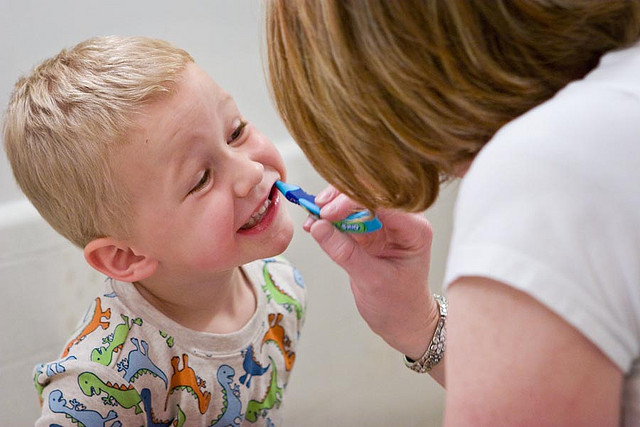
Tips for Keeping Kids Cavity-Free and Smiling Bright

The American Dental Association recently changed its recommendations for children, now advising caregivers to start brushing children’s teeth with fluoride toothpaste as soon as the first tooth comes in, rather than waiting until age 2. The change was made in response to a study that found that 25 percent of children in the U.S. develop cavities before entering kindergarten.

via makelessnoise
via makelessnoise


Tooth decay affects children in our country more than any other chronic infection or disease. Left untreated, it can lead to problems eating, speaking and even learning. The good news is that there effective tips you and your family’s caregivers can follow to protect your children’s teeth and help them to develop good dental habits that will last a lifetime.

Tips for Oral Health in Infants:

  • Clean infant gums with a warm washcloth. You can even brush gums with a soft children’s toothbrush and water.
  • As soon as teeth appear, brush twice daily with fluoride toothpaste.
  • Start flossing when two teeth touch each other.
  • Don’t put your baby to bed with a bottle of juice, formula, or milk.
  • Help your child break the pacifier habit by age 2. Long-term use can affect their bite and overall dental health.

Tips for Oral Health in Young Children:

  • Kids can start brushing their teeth with help from an adult by age 2 or 3, though some are not ready to brush on their own until age 6.
  • You should help children floss until they are age 10 and able to go it alone.
  • Don’t give kids a choice when it comes to brushing their teeth at least twice a day. If necessary, motivate them with stickers or small rewards (not candy!).
  • Don’t give kids mouthwash until they are easily able to spit out.
  • Pediatricians advise limiting kids to no more than 4 ounces a day of 100% fruit juice to avoid sugary beverages bathing the teeth.
  • Kids should avoid the foods that are bad for their teeth or brush after eating them. Sticky, gummy sweets come to mind when you think of foods that are harmful to teeth, but starchy foods (such as white bread), dried fruit and foods that are both sweet and acidic – such as soft drinks and chewable vitamins – are also culprits.
  • Encourage kids to eat food high in nutrients that help teeth grow and stay strong and healthy, including foods high in Vitamin C (citrus, tomatoes), calcium-rich foods and vegetables, such as sweet potatoes and broccoli, that are high in Vitamin A.

Remember, healthy dental habits are meant to be followed everyday. When you are away from your kids, your sitter can be a helpful advocate in keeping  your kids’ teeth healthy and strong.

How do you get your kids to brush their teeth? Share your tips in the comments!

Tips for Helping Your Family Fight Seasonal Allergies

Spring’s longer days and warm breezes may be bringing more than you’re bargaining for if you or your children suffer from seasonal allergies. The itchy, watery eyes, runny nose and mouth breathing associated with seasonal allergies, often called hay fever, are an unfortunate part of spring for many.

julia-Toddler on grass offering flower

While there is no cure, there are some simple things you can do to help your kids avoid exposure to the allergens – such as mold spores and tree and grass pollen – and to alleviate the unpleasant symptoms often associated with them:

  • Over-the-counter antihistamines are some of the best defenses you have against seasonal allergies. Allergists advice starting them early, even before allergy symptoms start if you know you or your child suffers from hay fever, to get the biggest bang for your buck. You should talk with your doctor before giving any medication to your children.
  • As tempting as it is to throw open your windows, leave them shut to keep out the tree and grass pollen blowing in the spring breeze, especially in the mornings when pollen counts are their highest.
  • Regularly replace air filters in your home to eliminate dust, pollen and mold.
  • Check local weather reports to monitor local pollen counts. Choose indoor activities when pollen counts are high, which unfortunately, is typically on dry, warm days.
  • Make your home a shoe-free zone. Leave shoes at the door when you arrive home so you don’t track the nasty offenders into your home.
  • Change your kids’ clothes when they come in from playing outside.
  • Bathe and wash kids’ hair daily to keep allergens out.
  • Include salmon and yogurt in their diet. Doctors have found that an omega-3 fatty acid found in salmon may lessen allergy symptoms and possibly prevent hay fever thanks to its anti-inflammatory properties. They also believe that a probiotic found in yogurt may lessen allergy symptoms. Look for yogurt containing l. casei.
  • Avoid using humidifiers since high levels of humidity promote mold growth.

Following these simple tips will go a long way in helping your kids’ avoid nasty allergens and to enjoy the long-awaited warm spring days ahead.

What are your tips for fighting seasonal allergies?

What’s In Season: Feeding Your Kids the Best of the Fresh

After a really long winter, it’s exciting to see fresh spring produce start to show up on grocers’ shelves and in farmers’ markets. Even though we can get most any produce any time of year, the fruits and vegetables that have traveled long distances to get to us are no comparison to the foods that are in season locally.

via madlyinlovewithlife


There’s no denying that they taste so much better, are more nutritious and are budget-friendly. Cooking with the bounty of the season is one of the best ways to give your family the freshest, healthiest, most flavorful food. Look for produce that is in peak season right now, including:

  • Artichokes
  • Arugula
  • Asparagus
  • Beets
  • Broccoli
  • Fava Beans
  • Oranges
  • Papayas
  • Peas
  • Rhubarb
  • Strawberries
  • Turnips

While they are likely so tasty that you could simply eat them at they are, why not let them be the stars of your family’s meals and snacks.

6 recipes that make the very most of spring’s fruits and veggies

Spring Leek Pesto Sauce
A veggie-loaded sauce you can serve with pasta or as a spread on bread. It’s a flavorful, sweet and pleasing sauce that’s an  ideal way to introduce kids to leeks. Since it’s made in the food processor, it’s quick and easy and fun to cook with kids.

via Babble
via Babble


Spring Salad
A salad so beautiful, you won’t have to nudge your kids to eat it. It’s a delightful surprise for a salad, leaving out the lettuce and loading up with the best of spring produce – juicy strawberries, sliced radishes, and crisp sugar snap peas.

via BHG


Toast with Lemony Pea Mash
What a lovely snack this would make. Get kids involved by having them help shell the peas – a perfect job for little fingers.

via Bon Appetit
via Bon Appetit

Sesame Shrimp and Asparagus Stir Fry
Satisfies your craving for Chinese take-out without blowing up your diet. You can whip it up quicker than you’d have to wait for the delivery guy.

via Menu Musings
via Menu Musings

Fava Bean Bread Salad
Simply toss together fresh fava beans, greens, olive oil and vinegar, and pile the mix atop of a few slices of grilled (or not) bread. Voila! It’s dinner.

via Fit Sugar
via Fit Sugar

Rhubard Crisp
When you think of a rhubarb dessert, you likely think of the old standby strawberry-rhubarb pie. While no one can knock the pie, it’s nice to make use of spring’s brilliantly red rhubarb in this one-dish crisp. It’s a simple recipe using apples, pecans and oats to make it hearty and sweet.

via Dish Base
via Dish Base


What are you cooking for your family this month? We’d love to hear how you’re making the most of the season’s best.

25 Candy-Free Ideas for Easter Baskets

For many, Easter is synonymous with loads of chocolate bunnies, candy eggs and sugar-coated marshmallows piled into a basket delivered by the Easter Bunny. While you might be fine with leaving your little ones a few sweet treats on Easter morning, why not replace some of the sugary bounty with fun alternatives that are sure to be met with just as much joy. Here are 25 surefire picks for candy-free treats for the Easter basket.

IMAG0048


1. Sidewalk chalk (you can even make your own!)

via Brit+Co.
via Brit+Co.


2. Sticker books

via Amaz
via Amazon


3. Bath toys

via Boon
via Boon


4. Rainbow Loom rubberbands

via Etsy
via Etsy


5. Adhesive name labels (great for sticking on sippy cups, camp gear and even birthday gifts).

via Sticky Monkey Labels


6. Coloring Books

Screen Shot 2014-04-14 at 11.58.19 AM
via Amazon


7. A new marker set for budding artists

via Crayola
via Crayola


8. Twilight Constellation Night Light

via Amazon
via Amazon


9. A kid’s subscription box

via Kiwi Crate
via Kiwi Crate


10. Hair bows for little girls (even DIY!)

via Tip Junkie
via Tip Junkie


11. Swimwear for the upcoming summer months

via Gap Kids
via Gap Kids


12. Swim essentials like goggles (we love these fruit-scented ones!)

via FINIS
via FINIS


13. Nail polish and lipgloss pots. Piggy Paint makes a great all-natural polish in shades that are just right for kids.

via Piggy Paint
via Piggy Paint


14. Mini gardening gear – a watering can, pail and kid-sized shovel

via Amazon
via Amazon


15. My First Garden Seed Pack, to go with the gardening tools!

via American Meadows


16. Homemade gifts, such as this adorable bunny hand puppet

via Amazon
via Amazon


17. Travel games or activities for a Spring Break road trip, try these downloadable activity sheets!

via minitime
via minitime


18. Special, handmade toys, like these colorful Fairy Rings from Etsy

via Etsy
via Etsy


19. Giant bubble kit

via Amazon
via Amazon


20. Festive snacks, like these goldfish wrapped in a carrot package

via Reasons to Skip the Housework


In a pinch? These last-minute gifts can be easily purchased at a local store:

21. Jump rope or set of Jacks for outside play

22. An Easter or Spring book – or the latest release from a favorite series

23. Notebook or journal

24. A puzzle

25. Small toy, such as Hotwheels car,  Polly Pockets or My Little Pony doll


We’d love to hear what the Easter Bunny will be delivering to your house this year. Share with us your ideas and fun finds!  

5 Lifesavers for Family Travel

When traveling with kids by plane or by car, the contents of your carry-on or diaper bag can easily make or break your family trip. Keep everyone happy on your family vacation this Spring or Summer by making sure your everyday parenting essentials are packed and within easy reach, and add a few extras that will make the ride a little smoother for everyone. We guarantee that these 5 suggestions can be traveling lifesavers.

IMG_1867

5 Lifesavers for Family Travel

1. Super cool art supplies and an easy way to use them

Throwing a few crayons into your bag to occupy the kids while dining out is likely second nature to you by now. When traveling, you’ll need to bring in the bigger guns! We love Eeboo Scratch Paper and your kids will, too. With the provided tool, they scratch off the paper’s black coating to reveal surprising colors and designs – continuous surprises every time they make a mark will keep them doodling far longer than they do with their usual art supplies. Ideal for kids age 5+. $11.95 for 20 sheets.

via Eeboo
via Eeboo

Even the coolest paper and pens are worthless without a stable, flat surface to write or draw. Include a Dry-Erase Clipboard in your bag – it serves as a lap desk that securely anchors papers and it stashes in a bag without taking up much room. The personalization makes it extra special, and the dry-erase surface gives you one more activity to add to your traveling arsenal.  $19.95 via frecklebox.

clipboards frecklebox
via frecklebox

2. A little something to keep the littlest one happy

Babies need more than just warm bottles and clean diapers to make them happy on a long flight or car ride. Don’t forget to include some soothing entertainment in your bag. Teething babies will dig the 100 percent Silicone beads on the Chewbeads Mulberry Teether. You can breathe easy knowing that the beads are free of BPA, phthalates, cadmium, lead or any metal. The colorful “bracelet” is so cute, you can easily get away with sliding one on your wrist to have at the ready. $16.50 via Amazon.

via Amazo
via Amazon

3. Germ prevention.

Think of all the places little hands will touch in a single day of traveling  – door handles, airplane trays, high chairs, restaurant tables, even your handbag that’s been perched next to your feet on a well-traveled commuter train or plane. Ugh! Do your best to keep germs at bay by squirting busy hands with all-natural hand sanitizers that kill the bugs without spreading equally nasty chemicals. $5.95 for a two-pack via Honest Co.

via Honest Co.
via Honest Co.

4. Mini backpacks loaded with loot.

The experts at Conde Traveler suggest giving each child their own backpack to carry. Before they leave home, load it with loot you can buy from the $1 isle, including toys and activities to keep kids busy on the plane or in the car. Your best bet are stickers, coloring books, mini notebooks, and trinkets. Make a deal with the kids before you leave home – the content is theirs as long as they carry the bag and don’t open it until you give them the green light. Skip Hop Zoo Pack Backpacks starting at $14.29 via Fat Brain Toys.

via Fat Brain Toys
via Fat Brain Toys

5. Emergency Kit

No matter how much you hover, someone is bound to end up with a scraped knee, itchy bug bite, or a fever… and hopefully nothing more serious. Be prepared by having a mini first aid kit stashed in your bag. The Red Cross has a handy list of what to include in a standard first aid kit for the family. When traveling with little kids, remember to include Baby Tylenol, Benadryl for an allergic reaction and plenty of bandaids. Turn to quick ship sources for a handy take-along emergency kit designed for easy travel. Medi Buddy First Aid Kit available for $6.99 via Amazon.

MediBuddy
via Amazon

No matter how well you’ve prepared, your sanity might need a bit of lifesaving of its own, once you arrive at your destination. Remember that nothing beats a babysitter! UrbanSitter has you covered in major metropolitan areas nationwide. Book one for a night out or a few hours to yourself.

How to Help Your Family Fight Flu Season

It’s that time of year when it seems nearly impossible to steer our families clear from aches, pains and sniffles, especially when we’re often surrounded by people coughing, sneezing and wiping runny noses. Following these tips for good health will help to give you and your family a fighting chance against pesky bugs and the seasonal flu this winter.

OLYMPUS DIGITAL CAMERA

Help Your Family Fight Flu Season

  • It’s not too late – get vaccinated. According to the Center of Disease Control, the flu season in the United States typically peaks in January and can last as late as May. Since it takes about two weeks after you receive the vaccination for antibodies to develop in your body and start protecting against the virus, do not delay. Everyone who is at least 6 months of age should get a flu vaccine this season. It’s the single best way to stay healthy.
  • Wash your hands frequently. Don’t let recent studies about the effectiveness and possible dangers of antibacterial soap turn your family lax on washing hands. Stick with soap and water or an all-natural sanitizer, such as the ones by Clean Well which use thyme rather than harsh and potentially dangerous chemicals. Germs are spread by droplets from infected people when they sneeze, blow their nose, or wipe their nose or eyes. Remind your kids to keep their hands out of their mouths and avoid rubbing their eyes, in addition to washing their hands thoroughly several times a day. Also, remember to clean your baby’s hands often.
  • Stay home when you are sick. Going about your normal business while you are sick is a double whammy. You’re expending energy your body could be using to fight infection. In addition, being out in the world spreads infection to others. Do yourself and everyone else a favor and stay home for a little TLC. The same goes for your kids. Keep them home from school and daycare when they’re under the weather.
  • Don’t skimp on sleep. It’s often the best medicine, as it allows our bodies to recover and it strengthens our immune systems. Experts recommend 14 to 15 hours of sleep per day for infants, 12 to 14 for toddlers, 11 to 13 for preschoolers and 10 to 11 for school-age kids.
  • Make time for exercise and increase your overall physical activity, regardless of the weather. It’s natural to want to wrap ourselves in blankets and retreat to the couch when it’s blustery outside. Fight the urge. Bundle up the kids and get everyone outside for a walk or sled riding, or find indoor activities to keep everyone moving.
  • Drink up. Dry winter air, indoor and out, can dry out the lining of your nasal passages, creating tiny cracks that make you susceptible to infection. Drinking water can help moisten those membranes, so keep your water bottle handy and make sure to fill your children’s often, too.
  • Eat well. This time of year, especially, make sure your diet includes a hefty dose of Vitamin C and E, vitamins credited with boosting immunity. Also make sure your family steers clear of excess sugar, as it impairs the body’s ability to fight infection. Time to create some new nutritious family staples for you and yours? Check out our Pinterest board – Easy, Kid-Friendly Dinners for Busy Parents for delicious, healthy recipes to feed your family.
  • Have a back-up childcare plan. Realistically, chances are pretty good that either you or your child will need a sick day sometime this winter. Whether your child gets sick and can’t attend daycare or school or your in-home babysitter or nanny calls in sick, you’ll need a good childcare network and a back-up childcare plan. Whether it’s a helpful neighbor, a nearby family member or your UrbanSitter network of sitters, know where you’re going to turn if your normal childcare routine goes haywire. It will save you from undue stress and last minute juggling.
  • Know when to call the doctor. The flu can be dangerous, especially to young children. Remember that cold and flu symptoms are often the same and easily confused, though they are much worse with the flu. Watch for symptoms, including high fever, cough, sore throat, runny nose, body aches, fatigue, vomiting and diarrhea that don’t improve after 24 hours and often increase in severity.

With a little prevention, planning and a commitment to a healthy lifestyle, you’ll be helping your family stay healthy and happy this flu season and well beyond.

Find last-minute babysitters who care for sick children at UrbanSitter.

Healthy Halloween Treats

Halloween usually means one thing to children — candy! Of course it also means costumes, trick-or-treating and spooky fun. But candy ranks up there as most kids’ favorite treat when October rolls around. Here are a few healthy indulgences that most little ones will enjoy — mummy and daddy, too.

URBS_halloween_candy


1. Pumpkin bread. Mmmmm…baking a loaf of pumpkin bread makes your whole house smell like Fall. The cinnamon and cloves, the canned pumpkin — which is super high in Vitamins A and C, as well as beta carotenes — come together in a delectable way. Most supermarkets sell an easy mix, or if you’re inspired, make it from scratch. Throw in some chocolate chips to seriously up the yum factor.

2. Oranges with a celery stem. Easy as (pumpkin) pie. Peel oranges (or clementines) and stick a celery stalk on top. Voila! Mini pumpkins with an edible stem.

3. Pumpkin seeds. Roasting pumpkin seeds is a classic tradition for many families. Kids can help scoop out the mucky insides of a pumpkin and spread onto a foil-lined baking sheet. Add a little olive oil, toss with salt and bake for 15 minutes at 375 degrees. Crunchy and filled with vitamins to boot, these little guys are sure to be gobbled up quickly. Change up your recipe by adding cinnamon sugar or garlic salt for a different taste altogether.

Image via Rachel Tayse

4. Hard boiled ghost eggs. These make a perfect breakfast for little ghouls and boys. Just boil a few eggs, let them cool, then make a jagged cut across and bottom and add eyes and mouth with black food coloring. Frightfully easy!

5. Spider web pizza. This one is a great take on a popular kid-friendly dinner. Take standard pizza crust, add tomato sauce, and then thinly peeled string cheese in the shape of a web. Other toppings can be added, too. Bake at 450 degrees for 8-10 minutes and dig in.

Whatever you choose to indulge in this Halloween, do it with gusto! Your little monsters are sure to enjoy the process as well as the result.

Search for babysitter and nannies online at UrbanSitter.com.

How to Start Cooking with Your Kids

cooking_with_kids
flickr/D Sharon Pruitt

Little kids are known for their insistent plea, “I’m big enough to do it!” especially when it comes to helping out in the kitchen. While it’s often easier and just plain quicker to do it yourself, experts say kids benefit in many ways from helping to prepare food at an early age.

Why should I teach my child to cook?

  • Kids who help in the kitchen are more open to trying new foods
  • Have a greater appreciation for whole, fresh ingredients
  • Learn how to understand and follow a recipe
  • Enjoy the pride of contributing or creating something of their own
  • Build life-long healthy eating habits

If you’re sold on the idea of getting your kids to help in the kitchen, but not sure how to begin, read on for suggestions from the experts. You may find these are helpful guidelines for age-appropriate kitchen tasks:

Beginning Kitchen Tasks for Toddlers and Preschoolers

  • Tearing lettuce
  • Washing fruits and vegetables
  • Adding pre-measured wet and dry ingredients
  • Stirring ingredients
  • Inserting cupcake or muffin liners
  • Sprinkling cheese
  • Adding sprinkles
  • Frosting a muffin or cake
  • Flouring a pan

Kitchen Tasks for Bigger Kids

* In addition to the tasks for younger kids, and under adult supervision, especially when it comes to using sharp objects or hot stoves.

  • Measuring wet and dry ingredients
  • Scooping batter onto a waffle iron or dough onto baking sheets for cookies
  • Stirring over low heat
  • Cutting soft fruits and vegetables with supervision
  • Cracking eggs

Ready to Tackle a Recipe?

Keep these easy, starter ideas and recipes up your sleeve so you can respond to your child with a surprising and delightful, “I have just the thing for us to make!”

Super Simple Recipes for Wee Little Ones:

Smoothie – There’s no shortage of smoothie recipes out there and for good reason. Smoothies are the perfect recipes to tackle with a little helper. We love this Strawberry Peach recipe because it tastes great as is, and can be easily tweaked by adding more protein or other fruits and even some greens.

Strawberry Peach Smoothie
Strawberry Peach Smoothie via Weelicious

Cookie Cutter Fruit –  When you need to really keep it simple, here ya go. Place sliced fruit on a baking sheet or cutting board and let kids use cookie cutters to create fun shapes that double as healthy snacks.

cookie-cutter-watermelon
cookie cutter watermelon via Kids Stuff World

Chocolate Dipped Frozen Fruit Pops – Slice fruit, such as kiwi and banana, insert sticks and freeze flat on a baking sheet. Once frozen, you and the kids can dip it into chocolate and various toppings to create this yummy summer treat.

frozen_fruit_pops
frozen fruit pops via Our Best Bites

Suitable Recipes For Bigger Kids:

Easy Homemade Bread – No need to wait around for yeast to rise with this no yeast, no oil bread made with whole wheat flour. It’s the perfect recipe for learning to bake.

bread_recipe
bread recipe via love food eat

Mini Apple Turnovers – Unroll crescent roll dough, brush with melted butter,  sprinkle with cinnamon sugar, fill with apple slices and bake. Yum!

mini_apple_turnovers
mini apple turnovers via Cookin Up North

Pad Thai –  Yes, it’s a bit more ambitious than the other recipes, but it’s totally doable for kids to create with you (or a sitter) as the lead. And you’ll have dinner covered! Think how proud your kids will be!

pad thai
pad thai via The Kids Cook Monday

Check out UrbanSitter’s Cooking with Kids Pinterest board for more inspiration, recipes and tips for getting your kids helping in the kitchen.

Tips to Help Your Baby Go “Green”

baby go green

Making sense of what you can do to keep your baby clean and “green” can be overwhelming! It can be difficult to cull through the deluge of information and warnings out there to decipher what you should do to simply steer clear of environmental dangers that may affect your baby’s health. Here are some simple suggestions from experts:

Choose, store and serve food with care.

  • Once your baby is old enough for solid foods, make your own purees with organic produce and hormone-free meat and dairy products. Be sure to wash and peel produce before pureeing it.
  • Check with Healthy Child’s Safe Fish list for help in choosing the safest fish at the grocery store.
  • If you warm bottles or food in the microwave, use glass containers rather than plastic or plastic wrapped containers to avoid chemicals potentially leaching into the food they hold.
  • If you use plastic bottles or containers, look for those with a 1, 2, 4 or 5 recycling symbols on the bottom. These are free of harmful BPA, phthalates and PVC.

Clean and treat your home and garden wisely.

  • Choose all-natural cleaning products, including homemade solutions of vinegar and baking soda, to keep harmful fumes out of your home.
  • Use nontoxic pesticides in your home and on your lawn and garden. According to an article on BabyCenter provided by Healthy Child Healthy World (a nonprofit organization dedicated to protecting the health and well-being of children from harmful environmental exposures) boiling water kills weeds, and basil plants repel flies and mosquitoes.

Promote clean air.

  • Open your windows! You can improve the air quality in your home by simply opening windows on a daily basis. First, make sure it’s not a high-ozone day (check AirNow.gov), and if you’re in an urban or industrial area or have seasonal allergies, use an air purifier instead of opening the windows.
  • Ensure that your baby is not exposed to second-hand smoke, including smoke from the fireplace.
  • Install carbon monoxide and smoke detectors, and test for radon gas.
  • Buy household plants to help cleanse indoor air.

Read labels before choosing baby products that are applied to the skin.

Many popular personal care baby products that have been around for years contain chemicals that may be absorbed through the skin. If you want to keep it all-natural for your baby, but you aren’t sure what to look for and what to avoid when choosing baby products, check labels and avoid products that contain the following known carcinogens:

  • Phthalates, a man-made chemical that is used to make plastics flexible and used in many products to prolong  a fragrance’s scent.
  • Parabens, a preservative found in many personal care, food and pharmaceutical products.
  • Two harmful chemicals – formaldehyde and 1,4-dioxane – are often found in personal care products but are hard to avoid because they aren’t listed as ingredients. They are released over time as a by-product of commonly used ingredients, such as the preservatives quaternium-15 and DMDM hydantoin. Choosing all-natural products will help avoid these harmful additives.
  • Avoid harsh chemicals in sunscreen by choosing sunscreens that use minerals, such as zinc and titanium, instead of chemical barriers.
  • For a more complete list of ingredients to avoid in personal care products for your baby, see the list provided by Earth Mama Angel Baby.

Find and book trusted babysitters at UrbanSitter.com.