Citrus Recipes Kids Will Flip For

Fruit makes a perfect snack for kids, no matter the season. And all kids seem to love the tender, juicy bites they get from ever-popular mandarin oranges. To mix things up a bit, we asked our friends at Halos for their take on how to get kids eating right with citrus—at snack time and beyond!

Mandarin and Quinoa Chicken Bowls
Serves 4

Quinoa is hearty, healthy, and easy to make. Spoon it into a bowl and top it with Wonderful Halos mandarins, grilled chicken, cilantro, black beans, and savory chipotle lime vinaigrette for dinner or a packed lunch.

1 cup quinoa
3⁄4 teaspoon kosher salt
1⁄2 teaspoon chili powder
3⁄4 teaspoon ground cumin
2 boneless, skinless chicken breasts
2 cups baby spinach
1 15-ounce can black beans, drained
1 small red bell pepper, sliced
1 avocado, pitted and sliced
1 scallion, sliced
4 Wonderful Halos mandarins, peeled and segmented

Chipotle Lime Vinaigrette:
1⁄4 cup lime juice
1 garlic clove, sliced in half
2 tablespoons honey
3 teaspoons adobo sauce, from canned chipotle in adobo 1 teaspoon kosher salt
1⁄3 cup olive oil

1. Cook quinoa according to package directions and set aside to cool.

2. Heat a grill or grill pan over medium-high heat. Mix together the salt, chili
powder and cumin and rub on chicken. Grill chicken on both sides until cooked through; set aside to cool, then slice.

3. Make chipotle lime vinaigrette by whisking together all ingredients. Discard halved garlic cloves.

4. Spoon quinoa into 4 bowls. Top each bowl with remaining ingredients and drizzle with vinaigrette e. Tip: If making ahead for lunch, pack vinaigrette separately so bowl stays fresh.

Prosciutto Bruschetta Bites

Toasted crostini is topped with a little slice of savory prosciutto, Wonderful Halos mandarin segments and shallot chutney for a sweet and salty appetizer bursting with flavor.

1 baguette, sliced and toasted
Olive oil, bowl for brushing baguette 1 teaspoon olive oil
2 cups shallots, sliced
1⁄2 teaspoon kosher salt
1⁄2 cup white balsamic vinegar
1⁄2 cup brown sugar
1 bay leaf
1 teaspoon crushed coriander seeds 13 slices prosciutto
1 cup Wonderful Halos mandarin segments, roughly chopped
1⁄3 cup toasted hazelnuts, crushed
1 tablespoon fresh thyme

1. Heat oven to 375oF. Slice baguette thinly, brush with olive oil and bake until just toasted. Let cool.

2. Make mandarin chutney: In a skillet over medium heat, sauté the shallot and salt in 1 tablespoon olive oil until soft and translucent, about 20 minutes. Add the vinegar, brown sugar, bay leaf and coriander seeds and let simmer until vinegar is reduced and almost gone. Add the mandarin segments and stir; remove from heat.

3. Top toasted baguette slices with a 1⁄2 slice of prosciutto and a spoonful of mandarin chutney; sprinkle with hazelnuts and thyme.

Smoothie Pops
Serves 12

Sweet Wonderful Halos mandarins transform healthy breakfast smoothies into crave-able frozen Smoothie Pops. You can enjoy these nutritious breakfast popsicles on-the-go or as an afternoon snack—your kids will never miss the sugar.

Version #1: Smoothie Pops with Mango 4
Wonderful Halos mandarins, peeled
1 cup pineapple, diced
1⁄2 cup banana, sliced
1 cup mango, diced
1 tablespoon flax meal
3⁄4 cup vanilla yogurt
Extra Wonderful Halos mandarin segments

Version #2: Smoothie Pops with Strawberry
5 Wonderful Halos mandarins, peeled
1⁄2 cup pineapple
1⁄2 cup banana, sliced
1-1⁄4 cups strawberries, sliced
1 tablespoon flax meal
3⁄4 cup vanilla yogurt
Extra Wonderful Halos mandarin segments

1. For each flavor, combine all ingredients in the pitcher of a blender. Cover and blend on high speed until very smooth, about 2 minutes. Pour into ice pop molds and add extra Wonderful Halos mandarin segments to each pop; insert sticks.

2. Freeze until solid and remove from molds; serve immediately or store in a zip lock bag in the freezer.

Let Kids Get Down and Dirty—for Their Health

By Lela Nargi

As you get ready to pack the family off for a daytrip to the country, to visit goats and sheep, maybe plant something in dirt or pick whatever’s grown if the season is right, consider this: a visit to the farm might seem like a diverting novelty. But it might also be good for your children’s health.

Beyond the benefits of frolicking in the Great Outdoors, dirt—that’s right, dirt—has been shown in a recent study published in the magazine Science to help kids avoid developing asthma and allergies. According to Bart Lambrecht and Hamida Hammad, the study’s co-leads from Ghent University, 25 percent of kids who grow up on a farm—compared to 45 percent of children who grow up elsewhere—react to such common allergens as dust mites, mold, pollen, and animals.

A protein called A20 is likely responsible. In mice, it was found protecting the lungs during exposure to allergens; when it was removed from their systems, they experienced allergic reactions. As Dr. Lambrecht explained to the Washington Post, “The first cells that recognize the allergen are not so much the cells o the immune system, but structural cells that make up the inside of the lungs…A20 was not a coincidence, it was really necessary.”

So go ahead and let your kids get good and farm-grimy. Although, you may want to draw the line at bringing home a pony.

Photograph by Angelina Litvin

News You Can Use: No Need to Eat for Two When Pregnant

Pregnant woman

By Dawn Van Osdell

Researchers at Imperial College London have proven that there’s no need for pregnant women to “eat for two,” because their bodies adapt to absorb more energy from the same amount of food they would normally consume. Thanks to a hormone secreted during pregnancy—even as early as fertilization—a mother-to-be’s digestive system dramatically grows, stimulating her body to store more fat to support the demands of a growing fetus.

“We normally think of our internal organs as being a fixed size, but the fact is that they are not. They can grow and change, and we show that this is important for making babies,” says Irene Miguel-Aliaga, the lead researcher in the study conducted at the Medical Research Council’s Clinical Sciences Centre in London.

Until now, scientists had thought that a pregnant woman’s appetite increased as her baby’s demand for energy increased. This new research—performed in fruit flies, which have genes that are also present in humans—is the first to show that a “juvenile hormone” triggers the changes to the intestine and fat metabolism, similar to the way human thyroid hormones regulate energy demands. “Studies in fruit flies have been very valuable in providing insights into human physiology,” say Joe McNamara, M.D. and author of the study. “This research points to a new scientific explanation why eating for two during pregnancy is not necessary, and may even be harmful, as a growing body of evidence indicates that a mother’s diet can impact a child’s propensity to be obese in later life. “

The research also sheds some light on why some women may have trouble losing weight after pregnancy. If hormone levels fail return to normal after birth, a mother’s intestine may remain abnormally large, so she will continue to extract extra energy from her food.

Eating for two may be an old wives’ tale some pregnant women will be sad to see go. But in the long run, we and our growing families will be healthier and happier having forgone that third trimester cupcake binge!

Photograph courtesy of UrbanSitter

News You Can Use: Quality Sleep is More Important Than Quantity

cool-kid-in-grass
By Dawn Van Osdell

It’s no surprise to parents of newborns or kids with sleep challenges that waking several times throughout the night can really put you in a foul mood. A study just released from Johns Hopkins Medicine proves that your bad mood is more likely due to lack of quality sleep, than the reduced quantity of sleep you get. To feel better, you’re better off getting the same shortened amount of sleep without interruption.

“When your sleep is disrupted throughout the night, you don’t have the opportunity to progress through the sleep stages to get the amount of slow-wave sleep that is key to the feeling of restoration,” says the lead author of the study, Patrick Finan, Ph.D., an assistant professor of psychiatry and behavioral sciences at the Johns Hopkins University School of Medicine.

The study, reported in the journal Sleep, evaluated 62 healthy men and women who in a research setting were assigned to three consecutive nights of either forced awakenings, delayed bedtimes, or uninterrupted sleep.  Researchers monitored the subjects’ sleep stages using polysomnography, a test that records brain waves, blood oxygen levels, breathing, heart rate and movements during sleep. At the end of each night, participants were asked to report how strongly they felt positive or negative emotions, such as anger or cheerfulness.

The study found that after the second night, those who were awakened several times during the night reported a 31 percent reduction in positive mood. The delayed bedtime group showed a 12 percent decline. It also found that the interrupted sleep group experienced shorter periods of deep sleep—the sleep stage that is important for the body to repair itself and maintain health— and that disturbed sleep impacted certain aspects of their mood, including energy level, friendliness, and feelings of sympathy.

The effects of interrupted sleep on positive mood can be cumulative, the study also showed, which helps to explain why depression is often a symptom reported by those suffering from insomnia or chronic sleeplessness. “You can imagine the hard time people with chronic sleep disorders have after repeatedly not reaching deep sleep,” Finan says. It can be a real downer. And the same holds true for parents who wake repeatedly throughout the night to feed or soothe an infant or child.

Further studies are needed to learn how long it takes us to recover or make up for lost sleep. For now, we know it’s more important to get our kids to sleep through the night—so we can, too—than it is for us to turn in early.

Photo by Sander Smeekes via Unsplash

Healthy Living with Dean, Anne, Lucas & Jasmine Ornish, Sausalito, California

By Dawn Van Osdell

Dean Ornish, M.D., his wife Anne, and their two children—Jasmine, age 6 and Lucas, age 15 (from Dean’s previous marriage)—live the holistic lifestyle they teach others by embodying a simple motto: “Eat well, stress less, move more, and love more.”

Dr. Ornish is passionate about helping people live healthier, happier lives by making better lifestyle choices. He’s the founder of the nonprofit Preventive Medicine Research Institute, a clinical professor of medicine at the University of California, San Francisco, and the author of six best-selling books that claim that lifestyle and diet can reverse aging and improve chronic diseases—such as heart disease, type 2 diabetes and prostate cancer—and can also change your genes by turning off disease-promoting elements. “We’re committed to creating healthcare, rather sick-care,” he explains about his pursuits. Anne, a former yoga instructor, is the digital director for Ornish Lifestyle Medicine at Healthways, Inc., focused on bringing their holistic principles to the masses by providing inspiring tips for creating a better balanced life.

The couple took time away from their work to talk with us about their daily life with Jasmine, a rising first-grader at Mark Day School in San Rafael, and Lucas, who is returning from summer camp and starting his freshman year at The Bay School of San Francisco in the Presidio, which is just over the Golden Gate Bridge from their home in the picturesque, water’s-edge town of Sausalito.

the ornish family in 2014

THE ORNISH FAMILY IN 2014

What makes Sausalito conducive to living the healthy lifestyle you teach?
Dean: I’ve lived in Sausalito since 1988. It allows us to embody the principles we teach others, and to implement them into our daily lives. We can walk to work, find healthy foods from local farmers’ markets, and incorporate exercise into every day. It feels good just being in Sausalito.

Anne: Sausalito has a network of stairs—our daughter calls it “the secret passageway”— that take us from home to our office, and comes out by Poggio, one of our favorite restaurants. We almost never have to get in our car. We have electrical packs on our bikes so when we leave Sausalito, we can bike all the way to Point Reyes, Fort Baker, Cronkhite, Cavallo Point, or to the (Bay Area) Discovery Museum. We have a special, covered doggy basket on our bikes for our Maltipoo, Cocoa, so she can come, too.

Aside from walking and biking as transportation, how else do you incorporate exercise into your busy lives?
Anne: We have two double kayaks with recumbent pedals that are like sea turtle paddles. We kayak bayside—around Sausalito and Mill Valley, or head out to Belvedere and Angel Island.

Dean: If exercise is fun and easy to incorporate into daily life, it works for me. In addition to walking to work, riding bikes with my family, and kayaking, I like to swim and play tennis. I have a treadmill desk at work so I can get some exercise while I’m checking my email. I also have a personal trainer who comes to my home gym and helps me incorporate strength training and cardio.

Building a stronger mind/body connection and reducing stress are a big part of your lifestyle philosophy. Is this something you practice daily?
Anne: For me, mind/body practice, like yoga, is essential. I was a private yoga instructor in my 20s. Now, like all working mothers, I practice whenever I can squeeze it in. On busy workdays, that usually means meditation time in the morning to get grounded and focused. On other days, I get in longer practices. I can’t always practice everyday, but if the majority of my seven days are well balanced, the whole week seems balanced.

Jasmine must have been a yoga teacher in a former life—she’s a natural, even in her mannerisms. She’s always teaching me something, especially with our dog around to show her some poses!

Where do you like to go when we venture away from home?
Anne: We like to take the ferry from Sausalito into San Francisco, especially when we have guests. Last weekend, the grandparents were visiting and we took them to the Ferry Building for the great restaurants and market, visited the Exploratorium, and the Academy of Sciences.

On the mainland, as we like to call it, we like to visit Big Sur, Napa and Sonoma, where we recently visited the beloved Train Town. Additionally, we spend a couple of weeks every year in Kauai. It’s like a healing sabbatical for us—our time to recharge and enjoy the fresh food, like the amazing local bananas and mangoes.

You have so many fantastically healthy, flavorful recipes on your site and in your books. What are some of your family favorites?
Anne: We have four or five salads that everyone loves that are in rotation right now. We tend to think in themes: Asian or kale/Brussels sprouts, for instance. But then we’ll go the farmer’s market and throw in whatever is fresh, like a perfect peach. Right now my favorites are shredded Brussels sprout salad, similar to the Kale and Brussels Sprouts recipe on our site, and a kale and mint salad we make with sugared pecans and sliced apples. Having so many great markets nearby makes it easy to get fresh, good food. We all enjoy going to the farmer’s market in San Rafael, where they have pony rides for the kids on Thursday nights. It’s like a street fair.

kale and brussels sprouts salad, an ornish family favorite.

KALE AND BRUSSELS SPROUTS SALAD, AN ORNISH FAMILY FAVORITE.

Where do you enjoy eating out around Sausalito?
Anne: In addition to Poggio, we like Sushi Ran; Fish, which offers sustainable fish and local, organic produce; and we’ve just tried and really enjoyed a new restaurant, Barrel House—we order all the vegetables and eat them family style, with a great view.  We also really like Greens in San Francisco.

Do your kids eat what you eat? If so, what’s the trick!?
Anne: If left to her own, Jasmine would eat the food all kids like. But we’ve been exposing her to what we eat since she was very young, and working at developing her palate. If kids see what everyone else is eating, they want to be a part of it and will usually want to eat the same thing. Sometimes it’s about picking the parts that work for them.

Photos: Grapes via Maja Petric at Unsplash; Kale and Brussels Sprouts Salad via Ornish Lifestyle Medicine; Ornish family photo via the Ornishes

Nona Evans of Whole Kids Foundation Wants to Turn Every Kid Into a Passionate Gardener—And Eater

nona-evans

By Lela Nargi

Nona Evans calls her latest job, as Executive Director of Whole Kids Foundation (WKF), penance for the past working lives of her ancestors. “My grandfather on one side of the family owned an Italian restaurant, and my grandfather on the other side started a candy store. They put a lot of sugar and calories out in the world!” she laughs.

Evans started her own work life in a conventional grocery store, in marketing and PR, before she found her way to organic specialty market chain Whole Foods. There, she headed the company’s foray into educating its customers about what children across the country were eating for lunch, and how it affected how they were performing in school. Response to the program was so successful that it became larger than her job description. So, in 2012 she went to the company’s powers that be and they voted to translate her work into WKF, to provide schools with grants to start gardens and salad bars. Evans has been its fearless and passionate leader ever since.

What were you hoping to get out of this project when you started the Foundation four years ago? 
We fully believe that a school garden is the most reasonable investment a school can make. We did lot of research and found that a grant of $2,000 is adequate for a school to implement garden for first time, or for a school with an existing garden to make meaningful transformation: triple it so every class can have bed, or add an outdoor classroom, or add irrigation. But when we started, the idea of gardening at school was just beginning to become something parents and teachers and administrators could consider. Today, awareness of its impact and importance is so much greater, and there’s an openness to the type of learning that can be accomplished with it. I don’t think we’re at the tipping point of being mainstream just yet—the USDA did a survey at end 2014 and found there are only an estimated 20,000 school gardens across the US—but I’m encouraged by the experience of Whole Kids so far.

Well, what are the benefits of a school garden?
The most important thing that school gardens do for our kids is add a hands-on, nature-based learning environment. There are three types of learners: visual, artistic, and kinesthetic. One and three learn best in school garden, so it enhances educational effectiveness for two-thirds of the population. It actually makes the academic portion of what a school is challenged to do more effective. We know from research, and from what Alice Waters did with her Edible Schoolyard Project, that when kids know where their food comes from, they’re more willing to eat a new vegetable. They want to understand the connection between what they eat and how their bodies work: how it helps them perform on the soccer field, or whatever they’re passionate about. The most powerful ingredient we activate is curiosity.

kids-in-garden
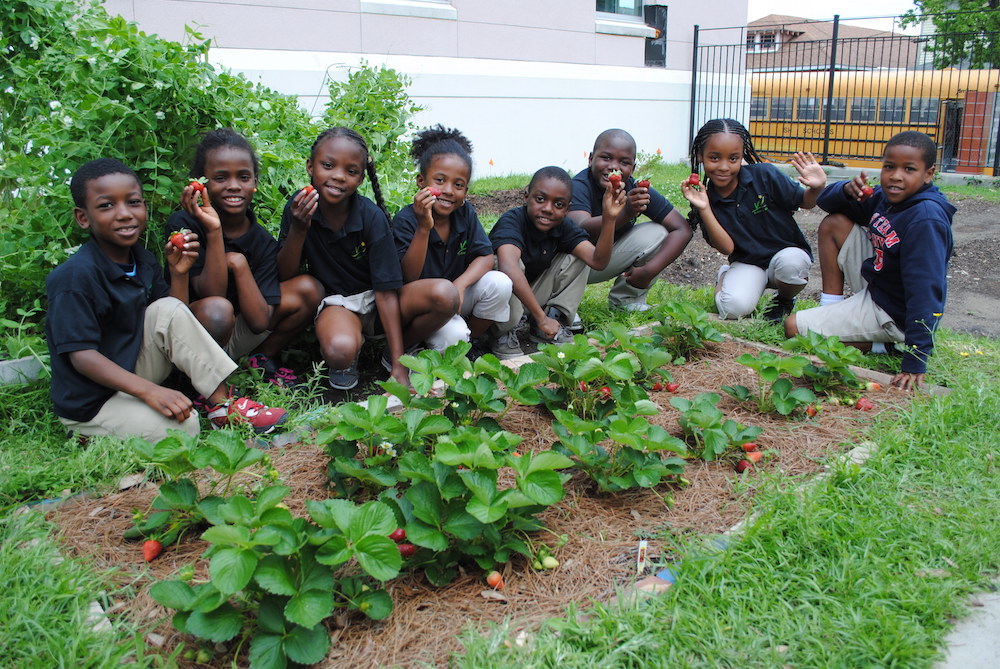
WHOLE KIDS SCHOOL GARDENERS. PHOTOGRAPH COURTESY OF WHOLE KIDS FOUNDATION.

Do you do garden experiments on your own kid?
I have a 12-year-old son, Patrick. He’s best case study I could ever have been given. He ate absolutely everything till he was 4 years old. Then one day he came home and said word “yuck,” and I almost fell out of me chair. His girlfriend at daycare, Summer, had said “yuck,” and he became a picky eater, because he could. He would pick the green stuff out of everything. We live in Texas, where we have Tex-Mex rice with everything, and he would pick out every iota cilantro. So, we started gardening. Funnily enough, he decided he wanted to plant cilantro . And he started eating it by handful, because he had that connection. He had grown and nurtured it himself. Even now, I bought some cilantro seedlings a few weeks ago and I found him sitting at the kitchen table, with every leaf picked off it. My caterpillar son!

That experience is very similar to what we find and advocate for with Whole Kids. Give kids a choice and the world opens up. Implement a salad bar at school, and kids are empowered to pick what they want for lunch. They may begin by picking lettuce and carrots and croutons, but by end of the school year, they’re experimenting because of positive peer pressure. They’re eating garbanzo beans.

greens-in-gardenHave you always been a gardener?
Actually I have to credit my husband, John Spillers, who’s a police officer. He was a gardener long before it was fashionable; he was a fan of Square Foot Gardening, that PBS show. He really enabled us to garden as family. Once, for Valentine’s Day, he gave me two new raised beds with spectacular soil in them, a mix of compost and vermiculite and peat moss that produced beautifully. Four years ago, when we moved so we had more room to garden, he moved my dirt.

We make a good team. I’m laissez faire and he’s meticulous. I had the good fortune three years ago to visit the White House garden—talk about meticulously cared for! I came back with every intention of having a pristine garden. But no matter how much time I have to spend in garden, nature is an amazing thing and so much grows, both literally and figuratively. We make sure to take care of our pollinator friends, so this year I planted zinnias for them, and we always put in milkweed for the monarch butterflies, which are experiencing a lot of habitat loss. Last year, we had so may caterpillars, they made a chrysalis across our front door. We saw so many butterflies emerge, which is like it’s magic.

How’s your neighborhood for gardening?
We live in Shady Hollow, which has lots of the old-growth oak trees that are native to area, which is wonderful. But in terms of gardening, I think we were the original catalyst in the neighborhood. There’s a wonderful young man next door, Caulden, who when he was 3 years old wandered into our yard. He tugged on some greens and out came carrot. I still remember the amazement on his face. His mom said he’d never eaten that before and in 10 seconds, it was gone. The kids around here expect them, now. I’m constantly delivering fresh greens and tomatoes to people. I always have bountiful rosemary, sage, thyme, oregano, parsley, enough for everyone. And we’ve created a neighborhood share; these days, we’re a wonderful gardening community. Our next door neighbors just started raising chickens. All the kids around here benefit.

Do you also cook from your garden every night?
We’re a two-parent working family. Cooking is my therapy, and I specialize in getting dinner on table 15 minutes or less, and whatever I make it always has lots of herbs from my garden. I love to cook with herbs. But it’s important to have go-to paces for dinner when don’t have energy or time to cook. We try and find places that serve locally-grown ingredients. Anything that has a vegetable combo on the menu, it’s definitely on our list.

What’s your advice for starting a garden for other Austinites, or for anyone who wants to plant something in the ground?
Start with what you love to eat, and don’t be afraid to experiment. There are tons of places in Austin for seeds and seedlings: there’s The Natural Gardener, which promotes native species. There’s a nursery called It’s About Thyme that’s locally-owned; I love anyplace where you can get to know the owners. And we love High Mowing Organic Seeds, which is one of the best seed suppliers in the country—you can order seeds online. But it’s also important to remember that you don’t have to have a huge back yard. Your garden can be as small as a windowsill or a pot you put on your patio. Just give it a shot!

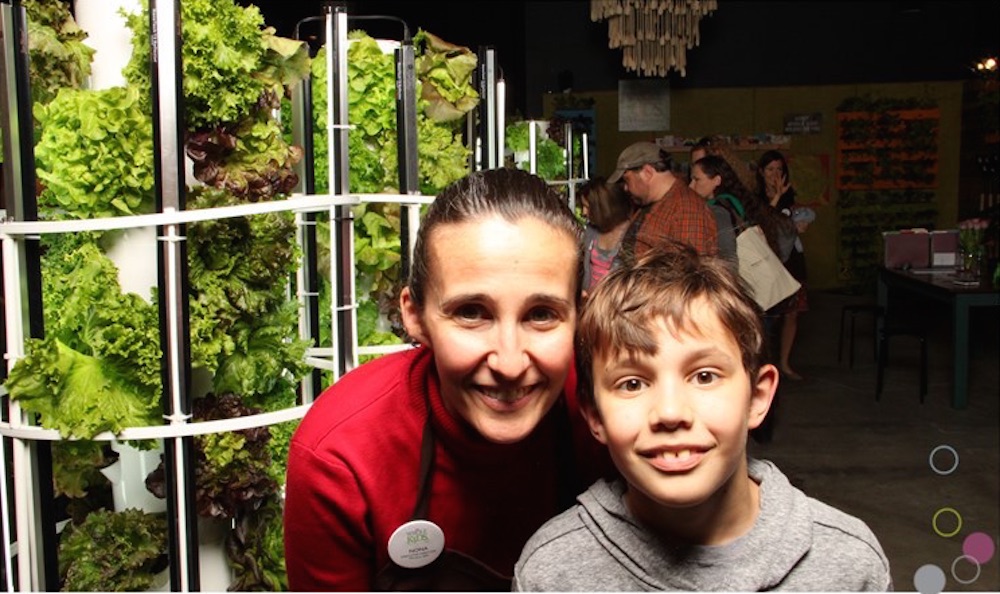
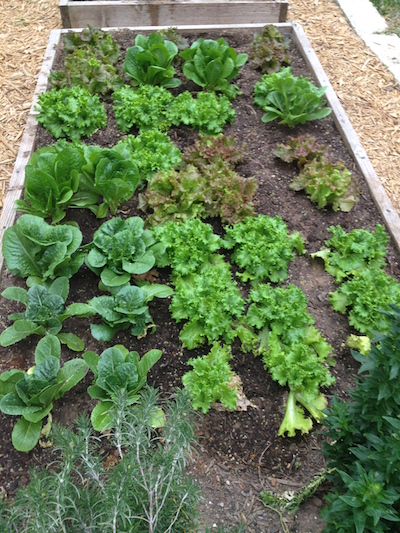
Photographs of Nona and Patrick, and bed of greens, courtesy of Nona Evans.

10 Tips for Feeding a Picky Eater


image via Fit Kids Healthy for Life

No matter how sophisticated your palate or how much you appreciate good food and proper nutrition, you may be or may become the parent of a picky eater.

Feeding a child with strong feelings about what he will or will not eat is a tiring, frustrating battle, but the experts tell us the behavior is pretty darn common and is often a normal part of your child growing up and gaining his independence.

Here are 10 tested tips for getting your child (or the one you’re babysitting) to eat a more balanced, nutritional diet without losing your cool.

1. Realize that kids need less than you may think.

Children’s appetites go up and down. They naturally eat relatively little some days and some days feel much more ravenous. Serve smaller portions so you don’t overwhelm them, and understand that a few bites of the veggie they may refuse is often enough to provide benefit.

2. Limit snacks and sugary beverages.

Kids will readily fill up on snacks and have no room in their bellies come mealtime. Provide small, healthy snacks at a routine time, likely mid-morning and mid-afternoon, and have them hold off on eating any more until the next meal. Food is much more appealing when they are hungry.

3. Teach them to eat a rainbow, everyday.

Even little kids can grasp the concept: Eat a variety of colorful fruits and vegetables – something from every color of the rainbow – everyday. By using a rainbow as a guide, you can ensure that your kids are getting a wide range of vitamins and minerals. One food can’t do it all.

4. Don’t be afraid to hide fruits and veggies.

Jessica Seinfeld made a bestseller out of the idea of hiding healthy food in more kid-friendly recipes, such cauliflower in macaroni and cheese and spinach in brownies. While we don’t agree that it’s always best to trick your kids into eating well, it’s a not a bad idea to sneak a bit of extra nutrition in wherever it works. For instance, add some finely chopped carrots and zucchini into a well-loved pasta sauce or sneak some greens into a smoothie. Kids will likely never know the difference, and you’ll stress less about their diet when you know they’ve had an extra does of nutrition here and there.

 5. Get them involved with food.

Research proves kids are more likely to eat foods they help select and prepare. Let your kids help make a grocery list, find items in the store, and help to prepare a meal by cleaning, prepping and cooking with you. Make the tasks age-appropriate so they don’t get injured or overwhelmed. In addition, take kids on a trip to the farmer’s market or farm and use the outing as an opportunity to talk about healthy choices. The next time you’re grocery shopping together, show them the beautiful array of local produce and let them choose something new to try at home.

6. Work up an appetite.

Your kids will eat more and better when they are hungry. Help them work up an appetite each and every day by ensuring that they get at least an hour of physical activity and whenever possible, fresh air.

7. Make peace with condiments.

As much as you may cringe at the thought of smothering lovely, fresh veggies in dressing or dunking a nice bite of fish in ketchup, let your kids do whatever it takes to make their food appealing to their young palates. Consider making fresh condiments, rather than clunking a big bottle of high fructose loaded ketchup or bottled Ranch dressing on the table. It’s quick and easy to make your own condiments, and the taste is far superior.

8. Respect mealtime.

You can teach kids the value of eating well by teaching them to respect mealtime. Outlaw all electronics, yours included, from the table, and whenever possible, eat together as a family. Make meal time enjoyable, talking about your day and things you look forward to doing together. Avoid fighting about what your child will or will not eat. Keep it positive time together.

 9. Make “good for you” good.

Transform ordinary foods into special treats. You can turn berries into an easy cobbler, a freeze fruits and yogurt to make handfuls of frozen grapes, cups or sticks of yogurt, homemade juice pops, and fruit smoothies.

 10. Don’t prepare a separate meal.

We don’t want our children to starve and after a long day, the last thing we want to do is go to battle with them over food. It’s tempting to avoid the battle and ensure that they eat by making them a separate meal. Resist the temptation. You don’t have time to be a short order cook, and you’re really only reinforcing your child’s will to refuse what the family is eating.

Instead, stick with healthy recipes that are reasonable for a young child and occasionally introduce new sides or variations to gently expand their palate. Mark Bittman, the esteemed food writer and home chef, recently said in a column in the New York Times that he never made separate meals for his kids when they were young, but allowed them something simple that they could make themselves – think a peanut butter sandwich, bowl of cereal or toast – if they did not want to eat what was cooked for dinner.

Whichever tips work for you and your picky eater, remember to be consistent. Don’t forget to share your tips and rules with your babysitters and make sure your kitchen with well stocked with healthy treats and meals for them to serve your kids while you’re away.

Tips for Helping Your Teething Tot

Teething can be a difficult time for both babies and their caregivers. You can help a little one through the process by knowing what to expect, how to spot the telltale signs and by following helpful tips for easing discomfort.

image via mass distraction, flickr

What to Expect

Since babies can’t tell us what’s going on, parents are often left wondering why their normally content baby is cranky or fussy. Knowing when to expect new teeth will help to know if teething is to blame for the discomfort.

Teething typically begins as early as 3 months with your baby’s first tooth starting to push through between 4 and 7 months old. The first teeth to appear usually are the two bottom front teeth, also known as the central incisors. They’re usually followed 4 to 8 weeks later by the four front upper teeth (central and lateral incisors). About a month later, the lower lateral incisors (the two teeth flanking the bottom front teeth) will appear. Next to break through are the first molars (the back teeth used for grinding food), then finally the eye teeth (the pointy teeth in the upper jaw). Most kids have all 20 of their primary teeth by their third birthday.

Signs to Watch For

When your baby is cutting a tooth, she may experience any or all of these symptom and sometimes none at all.

  • Drooling more often than normal
  • Desire to chew on things, such as your finger, a toy, blanket or clothing
  • Periods of irritability or crankiness
  • Crying spells
  • Disrupted sleeping or eating patterns
  • A slight rise in temperature due to swollen gums

According to the experts, some babies feel no discomfort at all while teething and others are quite uncomfortable throughout the process. If your baby is unusually fussy, talk to your doctor.

Tips and Toys for Easing Teething Pain

  • Wipe drool to prevent skin irritation.
  • Offer a cold, wet cloth for baby to chew on. While a few minutes in the freezer will make the cloth cold enough to provide some relief, freezing it too long can cause irritation to your child’s gums.
  • Gently massage gums with a clean finger.
  • Give baby a chilled teether, such as this one MAM that has a handle that won’t get too cold to hold.MAM BPA Free Cooler Teether, Toys R Us
  • Offer a teething necklace. Chewable necklaces and jewelry, such as Chewbeads have been popular. The latest trend in teething necklaces is Amber Beads, reportedly safe and naturally soothing for gums.Chewbeads, Amazon
  • If she’s eating solid food, offer frozen food, such as a banana or peach. Munchin Fresh Food Teether allows you to put the frozen food in an enclosed mesh bag so you don’t have to worry about your baby getting too big of a piece in her mouth.

Munkin Fresh Food Teether, Diapers.com

  • The famed Sophie the Giraffe. Why is this rubber toy so popular…and why pay $20 for a chew toy? Sophie is made of all-natural rubber that feels great on the gums, squeaks to keep baby entertained, and even comes in a Vanilla scent that is said to sooth.Vulli Sophie the Giraffe Teether, Amazon
  • Try more than one teething toy, as all babies are different and may find toys some more comforting than others.
  • Ask your doctor about giving baby pain reliever, such as Advil or Tylenol for babies.

Teething is no fun for babies or those who care for them, but knowing what’s coming and how to ease the pain can make the process a lot easier on both of you. Make sure you tell your sitter if your child is cutting a tooth, and share these suggestions for soothing a sore mouth.

Achoo! Keep Your Family Healthy & Avoid the Flu

Tis the season! October marks the official start of the dreaded cold and flu season. Summer is hardly over, and schools, daycare facilities and medical offices across the country are already reporting a spike in cases of flu and viral infections.

The media has parents especially anxious about the rise in super viruses, such as the Enterovirus D68 that is causing severe respiratory problems in infants and young children. You can help to keep your child safe from the virus and other nasty bugs by taking proactive efforts and having back-up childcare plans to avoid spreading viruses your child may catch to others.

JakeCopy


Tips for Staying Healthy and Preventing the Spread of Infection

  • Washing hands frequently is the number one thing you can do to help your kids avoid getting sick, especially before eating. Use soap and water.
  • Remind kids to avoid touching eyes, nose and mouth.
  • Teach them to cough or sneeze into their elbow, rather than their hands.
  • Clean and disinfect your home regularly, especially places touched often, such as door handles, light switches and surfaces in the kitchen and bathroom.
  • Keep your child home from school or daycare if he is sick and has a fever. Most facilities require a child to be fever-free, without fever-reducing medications, for at least 24 hours after he’s had a fever.
  • Be sure to have a back-up plan in place in case your child does get sick and is unable to go to school or daycare. Urbansitter makes it easy to find a sitter when you’re in a pinch, and some sitters are willing to care for an infant or child home sick. Also talk to your employer and know your workplace policies for taking time off to care for a sick child.
  • Don’t forget to get your child vaccinated against the flu. Everyone over the age of 6 months is advised to get a flu vaccine. This year, the CDC recommends the nasal spray vaccine for healthy children 2 years through 8 years of age when it is available and if the child has no contraindications or precautions to that vaccine.
  • Remember to ensure that your child has a healthy diet with plenty of fruits and vegetables, stays hydrated, and gets plenty of exercise and sleep.

Symptoms of the flu and dangerous viruses like the Enterovirus often mimic those of a cold, including runny nose, coughing, fever and aches. If your child does get sick and has these symptoms, keep an eye on her and contact a doctor if she experiences breathing difficulties (wheezing, difficulty speaking or eating, belly pulling in with breaths, blueness around the lips) or high fever.

While the spread of dangerous bugs is always scary, you can help to keep your family safe by being smartly proactive and well prepared for sick days.

5 Healthy Lunches for Parents on the Go

[maxbutton id=”1″]

Parenting rarely seems to go at a relaxed pace. This time of year especially is a whirlwind of to-dos. Between filling out back to school paperwork, making carpool arrangements, scheduling team photos, packing lunches and shuffling kids to and from after-school activities, there’s rarely a spare minute to take care of yourself.

If you find yourself eating the PB&J crusts off your kid’s plate and calling it lunch, this post is for you. We’ve found 5 delicious recipes for quick and easy, healthy lunches that even the busiest parent can prepare and take to work, enjoy in those few quiet moments when the baby naps or to eat on the go. Not only do they taste great, they’ll also give you the energy you need to power through the day.

Greek Chicken Salad Sandwich
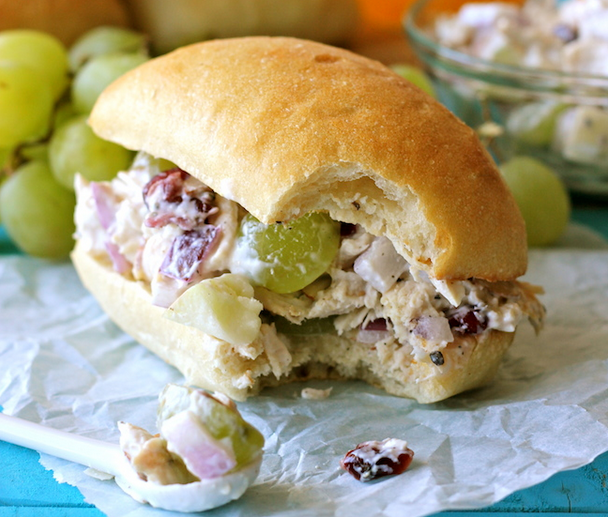
Lightened up chicken salad loaded with healthy fruit and veggies, via Damn Delicious. In a large bowl, combine chicken, red onion, apple, grapes, dried cranberries or currants, sliced almonds, Greek yogurt, lemon juice, garlic powder, salt and pepper, to taste. Eat it on a green salad, wrapped in a tortilla or on nice hearty bread.

Screen Shot 2014-09-23 at 11.25.45 AM

 [maxbutton id=”3″]

10-Minute Tomato Soup
Don’t let the goldfish crackers in the photo fool you, this soup is not just for kids…but they might want some! Puree tomatoes, celery and broth in a blender until smooth. Season, to taste, with salt and pepper, lemon juice and maple syrup. Stir in cream. Keep a pot in the fridge so you can heat a cup at home or take it along in a thermos. Thank you, Food Network!

via Food Network


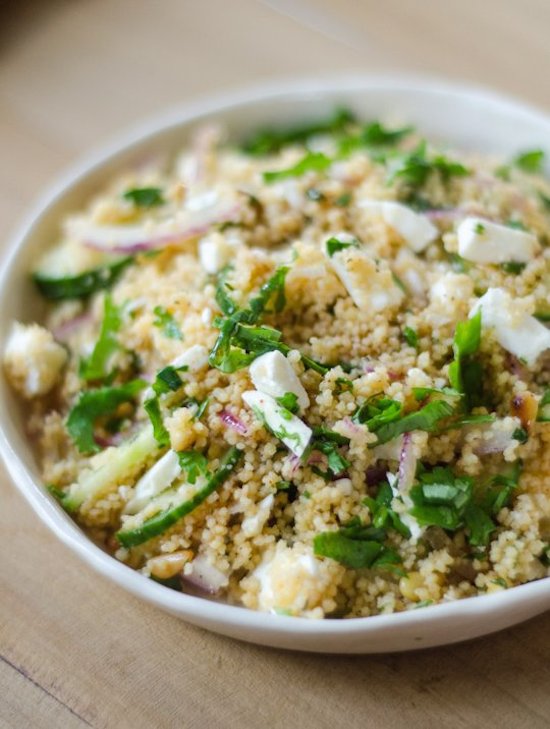
Couscous Salad with Cucumber, Red Onion and Herbs
This salad resembles tabbouleh, but it’s heavier on the grains and has even more fresh vegetables. Toss finely chopped herbs with the couscous, as well as the sliced cucumber, onion, and lemon zest. Whisk together the lemon juice, olive oil, honey, chili powder, and cumin, then toss this dressing with the couscous. Stir in the pine nuts. Crumble the feta and stir in. Taste and season generously with salt and pepper.

via The Kitchn

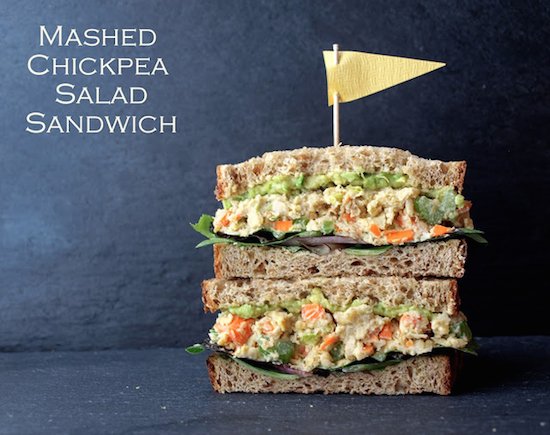
Mashed Chickpea Salad
A little like potato or egg salad, but healthier. This hearty salad from Simple Veganista is awesome on a leaf of lettuce with a squirt of lemon and a handful of pumpkin seeds, or slather it on your favorite bread with some leafy and mashed avocado and you have one great sandwich. It’s full of protein, fiber, texture and flavor.

via The Simple Veganista

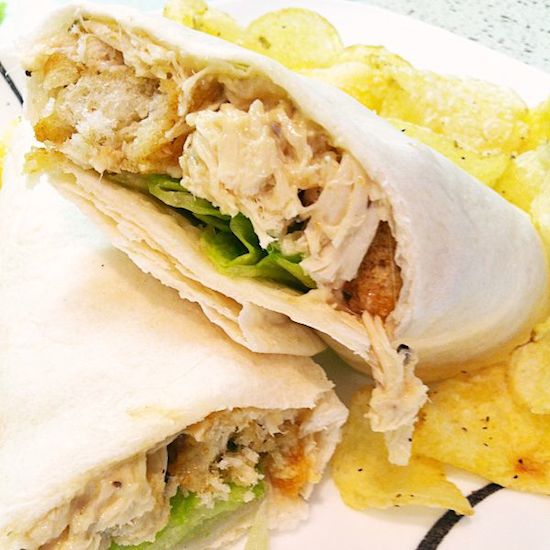
Slow Cooker Chicken Caesar Sandwich
It doesn’t get much easier than this. Throw a few ingredients in a slow cooker in the morning, and have a hot lunch at the ready come noon. This one from Chef in Training makes a great dinner, too.

via Chef in Training

These picks certainly trump the ho-hum turkey sandwich…or scraps from your kid’s plate. Wouldn’t you agree!

[maxbutton id=”1″]