5 Strategies for Prying Away the Halloween Candy

halloween candy haul

For children, Halloween is almost too good to be true. They simply show up at a neighbor’s door, dressed as their favorite character, and handfuls of candy are tossed into a bag that’s already bursting with sugary treats. For parents, it means days of fighting to keep their children from eating their body weight in sugary junk.

Veteran parents will tell you your best bet for dealing with Halloween candy is to let your little ones choose a few favorite pieces and hand over the rest of their bounty. To make the transaction go a little smoother (and to limit disappointment) try one of these proven strategies for getting kids to let loose of their Halloween candy without a fight:

1. Buy It!
Get your child to “sell” you his Halloween candy in exchange for something he really wants. If you prefer, call it a trade. You might offer a new toy or a special activity in exchange for the bag of candy.

2. Donate it.
Sell it to your child as helping others while also having fun in a reverse trick-or-treating kind of way. You can package the candy and make a few stops around town, donating it to those who could really use a treat. Good donation spots include shelters, a local Ronald McDonald house, nursing homes, and food pantries. There are also organizations who will ship the candy in care packages to US military troops away from home.

3. Become Mad Scientists.
If you haven’t yet stumbled on the very cool web site, Candy Experiments, pre-Halloween is the perfect time to check it out. It’s loaded with simple science experiments to do with candy in your own kitchen. Bookmark the link and do a little advance planning to make sure your kitchen and pantry are locked and loaded to turn into a fun science lab. You’ll quickly turn the sugary loot into a distant memory and have a great time doing it.

4. Get crafty.
What’s almost as good as eating candy? Playing with it! Here’s the perfect craft for turning candy into a mosaic.

5. Create a Halloween dessert
It sounds counterintuitive – offering yet another sweet extravagance, but it’s the perfect solution to doing away the candy without losing the treat. Young children won’t realize that it doesn’t take all their candy to create a fun Halloween dessert, and older kids will enjoy creating and consuming it to give much thought to the price they’ve paid. Start a fun tradition of making a Halloween dessert the day after trick-or-treating. Here’s a simple, satisfying salty sweet bark made with candy, pretzels and a bit of dried fruit.

Whatever your strategy, stick with it year after year and it’ll quickly become part of your family’s Halloween fun!  

8 Mindful Trick-or-Treating Reminders

safety tips for halloween

Halloween is an exciting holiday and especially fun for kids. If you’re having a trusted sitter celebrate the holiday with your family this year, you’ll want to share these important Halloween safety guidelines before sending her trick-or-treating. They’re also helpful reminders for you, even if you’ve led the candy collecting charge many times before.

Tips for Mindful Trick-or-Treating

  1. Use a flashlight to see where you’re going and take advantage of reflective tape or glow sticks to make kids visible in the dark. This protects them from cars and also makes it easier for you to keep an eye on them in the dark.
  2. Choose well-lighted neighborhoods with sidewalks and easy accessibility or opt for an organized trick-or-treating event at a local school, park or shopping center.
  3. Use crosswalks or cross at corners and remind kids to always look both ways before crossing the street. They should know never to dart out into the street.
  4. Have a Do Not Enter rule for houses and cars.
  5. Always stay in a group.
  6. Keep a phone on hand for emergencies, but make sure you aren’t glued to it instead of keeping an eye on the kids.
  7. Remind kids to stay away from candles and jack-o-lanterns with open flames.
  8. If no one is home at your own house while you’re out trick-or-treating, opt for a jack-o-lantern with an LED candle.

Choose Smart Costumes

  • Test make-up before Halloween night to make sure your child is not allergic to it.
  • Make sure costumes are safe and easy to walk in. Have kids wear comfortable shoes instead of unprotective slippers or dress- up shoes that can cause blisters and pinched toes.
  • Avoid masks or costumes that block or hamper vision. Make sure hats don’t slip over their eyes.
  • Check to make sure store-bought costumes are flame-resistant.
  • If kids’s costumes include swords, wands or other hand-held props, make sure they are short and not sharp.

Be Selective with Treats

  • Feed kids a healthy, satisfying meals before they go trick-or-treating to discourage them from filling up on candy.
  • Examine all treats for choking hazards and tampering before eating them.
  • Limit kids from eating too many sugary sweets.
  • Avoid homemade treats.
  • Don’t allow young children to have hard candy or gum that could cause choking.
  • Devise a plan for dealing with the loads of candy your child will bring home. Many families have kids choose a certain number of pieces, and trade the rest in for a toy or special activity.

You can make sure your family has a safe and fun-filled Halloween by taking a few minutes to remind yourself of these safety tips and to share them with your sitter. 

Crafty Kids: 3D Origami Spider for Halloween!

Origami spider

By Stephanie Martyn

Spiders don’t always have to be creepy! This sweet-looking barnyard arachnid will get lots of friendly pats if you leave him lying around the house when the trick-or-treaters come through.

When complete, this project lies horizontal. Construction starts at the head of the spider, which you’ll see at the bottom of the diagram. You’ll notice the pieces that stick out from the diagram: those are the legs of the spider. These pieces don’t need to be constructed until the main body is completed. Each leg has 3 origami pieces.

What you’ll need:
84 pieces of “Size B” black paper, folded according to the instructions below
All-purpose glue
Scissors
White paper for eyes
Black marker
Hot glue gun
Yellow Paper for mouth

Key:
Upside-down V: Rough side facing upward (structure lies horizontally)
Star symbol:  Placement of eyes

To start, fold the black paper into V’s like this (yes, there are a lot of steps, but they’re easy, we promise!):

1. Take a piece of paper and fold it in half the long way.

2. From here on out, it’s important that the opening to this folded piece is facing down. Fold down the middle the short way to make a crease, then unfold.

3. Fold down half the piece at an angle (on both sides of the crease) so that the folded edge lines up to the crease in the middle. Be sure not to overlap these folds.

4. Flip the piece over.

5. Fold the bottom right corner up diagonally.

6. Repeat symmetrically on the other side. Be sure not to overlap onto the top half, otherwise the pockets won’t turn out properly.

7. Fold one bottom triangle upward.

8. Fold the other bottom triangle upward so the whole piece now looks like a triangle.

9. Fold across the middle. (Flaps should be on the inside of the triangle.) Ta-da! Your 3D origami piece is complete.

10. These are the “pockets” for constructing. This is where the “points” will be inserted.

11. This is the “smooth side” of a 3D origami piece. It’s shown by a in the diagrams for each project.

ORIGAMIPIECEM.jpg

12. This is the “rough side” of a 3D origami piece. It’s shown by a V in the diagrams for each project.

Now, start constructing at the head of the Spider.

1. Your first row will have 3 pieces. Start by holding 2 black folded pieces next to each other with their points up and rough side facing you. With a third piece, hold it in the same direction and insert its pockets into the middle points of the first 2 pieces. This should join the first 2 pieces. Glue as you go.

2. You have 3 pieces attached to one another, which makes up part of row 1 and 2 of the diagram. To construct off of this, take another black folded piece and hold it right next to the 2 pieces from row 1. Use another black folded piece and insert it into row 2. This piece’s pockets will be inserted into the points of row 1, thus joining the pieces of that row. You should now have 3 pieces in row 1, and 2 pieces in row 2. Keep gluing!

3. Continue building and following the diagram. On all rows with 6 pieces across, the outer pieces must be inserted with the point into the inner pocket of that piece. This is so part of the folded piece will hang out from the body and you will have something to construct the legs off of.

4. Construct each leg by taking 3 folded pieces and inserting them directly into one another’s pockets (2 points of a piece will be inserted into the 2 pockets of another).

5. The legs will attach to the body at the 8 areas where the flaps are hanging out. Remember to glue!

6. Cut 2 small circles out of white paper and use a black marker to color a smaller circle in the middle. Hot glue the eyes to the structure.

7. Finally, cut the mouth out of yellow paper and hot glue it under the eyes.

9. He’s ready to crawl away!

Excerpted from 3D Origami Fun!: 25 Fantastic, Foldable Paper Projects by Stephanie Martyn. Copyright © F+W. Used by permission of the publisher. All rights reserved. Photography by Stephanie Martyn and Elisabeth Lariviere.

Top 10 Last Minute Halloween Costumes For Kids

Did Halloween sneak up on you? Are you now realizing that it is less than a week away and your kids still don’t have a costume? We totally get it. Sometimes life happens and things fall through the cracks. Have no fear. We have pulled together our favorite kid’s costumes and the best part is, they are all available on Amazon Prime.

[maxbutton id=”1″]

1. Wonder Woman

Screen Shot 2018-10-22 at 1.07.26 PM

2. Paw Patrol

Screen Shot 2018-10-22 at 1.09.38 PM

3. A Spooktacular Dragon

Screen Shot 2018-10-22 at 1.10.26 PM

[maxbutton id=”1″]

4. A Magical Mermaid

Screen Shot 2018-10-22 at 1.12.22 PM

5. Harry Potter 

Screen Shot 2018-10-22 at 3.11.37 PM

6. Jedi Knight

Screen Shot 2018-10-22 at 3.12.32 PM

7. Baby Jack


Screen Shot 2018-10-23 at 8.12.42 AM


[maxbutton id=”1″]

8. Baby Yoda

Screen Shot 2018-10-23 at 8.17.05 AM

9. Baby Hootie the Owl

Screen Shot 2018-10-23 at 8.18.47 AM

10. Super Baby

Screen Shot 2018-10-23 at 8.19.40 AM

*All photos via Amazon.com

[maxbutton id=”1″]

A Garage of Their Own: Brooklyn Robot Foundry’s Jenny Young Gives NYC Kids Space to Build

By Lela Nargi

“Because I’m a girl engineer, everyone always thinks I started this business with my husband,” says Jenny Young with a laugh that only vaguely disguises her frustration. An airplane pilot, a graduate of Purdue University’s mechanical engineering program and now, owner of Brooklyn Robot Foundry—one of the borough’s hippest destinations for the under-12 set—Young is, alas, no stranger to cross-eyed looks from a certain stripe of “traditionalist” who thinks that science is better performed by boys and men. And although she owns that women engineers are a definitely minority in the US, “For me, it’s not an issue,” she says.

This may be because of the strong and encouraging start she received from her parents growing up in Chagrin Falls, Ohio. “They were both very hands-on,” Young says. “My dad built a car from scratch, and the lawnmower, and the rototiller, so I was always with him in the garage, building stuff. And my mom makes all kinds of things with her hands.” For a while, Young thought she’d pursue a career as a pilot, then decided to focus on aerospace engineering instead. She moved to New York and began working for a software engineering company called Wireless Generation—where she met both her husband, Ken, a computer scientist, and her original business partner (now out of the picture), David VanEsselstyn, who works in education. And pretty quickly, she began to long for the various joys and liberties that come along with fabricating things on your own.

“It was hard not to have a workspace with all my tools in it,” Young says. “I needed that continuation of being able to build.” She joined an early, shared maker space in artsy East Williamsburg. And then, one fateful afternoon in 2012, she reserved time at a sewing studio further south, in the now gentrifying neighborhood of Gowanus, to stitch up little books for her pending wedding to Ken. She befriended the owner, who asked if she’d be interested in subletting the space. And Brooklyn Robot Foundry in its first incarnation—there’s now a second location in Manhattan’s Tribeca—was hatched.

Young’s own experiences—as an engineer, as a maker of things, and now, as a mom to 2-1/2 year old daughter, Adalina (son, Ero, is on the way)—heavily influenced the weekend, afterschool, and summer curricula she’s developed for toddlers through 7th graders (and sometimes adults). “The way I was raised in the Midwest, we were always taking things apart and asking questions,” she says. “We didn’t watch much television; we were doing things with our hands. It makes your brain work in a different way, and it makes you wonder, how does that work? If you don’t get that experience as a kid, you don’t think about those questions, and that’s a shame.”

A few years back, Young asked an early group of urban kid robot builders, “How does a stoplight work?” Their answers were funny—and slightly unsettling (one example: “There’s a mini Mickey Mouse in there!”). But under her and her assistants’ tutelage, says Young, “By the end of a week, they totally get how things work.” And they’ve learned simple construction and coding skills to boot.

On a recent summer morning, the Gowanus output of the Foundry was humming with tweens collaborating on a host of robot projects. “It’s a nice hum, though, isn’t it?” Young asked. “It’s the hum of people working who are doing things they enjoy.” The robots were being assembled by their excitable but focused overlords out of simple and often up-cycled materials like aluminum foil and cardboard boxes, and were attached by wires to batteries, servos, circuit boards, and laptops, and in some instances, such bells and whistles as LED’s, sound and motion sensors.  They included at least two candy dispensers, a mousetrap, and a maze for racing homemade hexbugs and they were being (mostly) patiently programmed using a language called CREATE Lab Visual Programmer, created at Carnegie Mellon.

Surveying the scene, Young smiled—and continued to smile, ever wider, as she visited worktables and asked and answered questions. “Kids are so much more creative than we are,” she said. “[Adult] people ask me, Why don’t you do Lego robotics? But that’s expensive, and I want kids to know, this is a motor that costs a couple of bucks at RadioShack, this is a gearbox. And you can make anything you want out of whatever you’ve got around, because you have the confidence and the ability.”

The assembled group included some girls—not the almost 50 percent Young can see among younger classes of participants, but somewhere closer to 25 percent. Like female scientists before and concurrent to her, Young is baffled by how, not to interest girls in STEM topics in the first place, but to keep them interested and engaged as they get older. “When it comes to the gender breakdown, the thing I find most disturbing is that the numbers tank around second grade. We’re hoping that as we’re here longer, we can get them excited and keep them longer. I really think you have to catch them young and show them how cool these things can be. That’s how you get them to come with you. I hope.”

Young’s also been doing concerted outreach toward both girls and their parents, with a, women in tech lecture series, meant to act as a sort of sampling of the diverse and fascinating panoply of STEM-related jobs that real women have; and a girls club where parents and daughters can come in and build together. Nevertheless, “We don’t do specific projects for girls,” she says. And perhaps steering clear of this sort of restrictive thinking will help Young yield significant changes in attitudes about girls in math and sciences, as well as how they should act and behave. “I’m an engineer, and I was also a princess for every single Halloween growing up,” she says. “We give them the base of understanding about how to turn components into, say, a crane. Then, if they want to make it look like a princess, we don’t care! We just want them to understand that it’s cool to build.”

Photographs by Roy Beeson

Kid-Lit Author Linda Urban on the Joys of Reading

By Lela Nargi

Having just released her latest book, an action-packed mystery for kids age 7-10 called Milo Speck, Accidental Agent, kid novelist Linda Urban took time out of her busy author schedule to chat with us about the importance of reading, writing, and building worlds on a page to allow kids to explore who they really are.

There’s a lot of talk about why picture books are so important for kids. But what’s so special about middle grade? When we’re in kindergarten, people say, What do you want to be when you grow up? And we can say, I want to be a fire fighter, or a doctor. And people say, That’s so great! In the middle grade years, when people say, What do you want to be and you say, I want to be a doctor, they say, Well you better start studying! Suddenly, the future has this weight that before was all play, but we want that play to persist. Middle grade novels let us figure out who we are and where we fit; they let us hold on to that childish imaginative past while also recognizing that the decisions we make might have an impact on the future.

My son, Jack, is about to turn 11. He reads adult-level physics books, but he also believes it’s possible that he’s going to get his Hogwarts letter. He both knows and doesn’t know, believes and is skeptical. That’s what so perfect about writing for that age and being that age. My daughter, Claire, is 13 and it’s harder and harder for her to hold on to that magic.

Many kids still love to be read to in the middle grade years. Are you hoping that will happen with Milo? Milo is written with a rhythm and I hope it will be read aloud with a parent or in a classroom. It also has a relationship between a father and son, and I hope a parent reading it aloud will get a connection with his kids as he’s reading to them.

Did anyone read to you as a kid? I have a memory of being read Charlotte’s Web in the 2nd grade by a teacher who was otherwise terrifying. She had a bad temper and was nearing retirement and could see it waiting for her outside the classroom door. But at read-aloud, it got very quiet and we all sat in what we now call criss-cross-applesauce on the green carpet in front of her chair. And her voice changed and her demeanor changed, and it was this magical bubble where we were all safe. At the time, I identified with Fern and Wilbur, but years later when I read the book aloud to my kids, suddenly I was Charlotte—I had never identified with her before. By the end of the book I was bawling and my kids were like, Mom she’s a spider and Wilbur’s fine!

What was the importance of books in your childhood? I grew up outside Detroit, a suburban existence in a subdivision—kind of a Judy Blume childhood. Although, I always felt uncomfortable reading her. I was such a late bloomer I would think, Is that going to happen to me? Am I supposed to be thinking or feeling that? Because I don’t!

But the books that made the biggest difference to me when I was young were all the Beverly Cleary books. I loved Ramona; she was so not like me. I was very well behaved and wanted to please. The audacity of Ramona was just so appealing to experience on the page. I loved the Little House books, too, and I was Laura Ingalls for many a Halloween. I also was child of the bicentennial year, which was so formative. I read every revolutionary biography that there was. I begged to stay up late to see the Bicentennial Minutes on CBS. It made me wish I was an East Coast person, so I could be truly a patriot.

But after 4th grade, I went to a Catholic school where the library was locked all the times unless there was a volunteer, and most of the books were 30 or 40 years old. So when you did get to take a book out, it was about a girl who was deciding whether to become a nurse or just get married. I kind of stopped reading then. But when I did read, I liked a book that saw me in one way or another, and that’s what I want to do for kids—write about small things that matter in a big way to them. Milo Speck is an exception, because it’s an action adventure, but even then, Milo is a small boy in a big world who’s in over his head. That is how I felt often.

We’re sitting today in BookCourt, a great independent bookstore in Brooklyn. Do you think it’s important to bring kids to places like this? Very early on, kids learn by watching us what things are important to us. I lived with my parents near Detroit during a recession and there wasn’t a lot of disposal income around. But when my parents had the money, we got a book. That said to us, This is a valuable thing, and we value you enough to give you this thing. It can be hard at the picture book age to spend $17.95 on a book that has 32 pages that may or may not become that favorite book the kids reads over and over. But when you get one of those for your kids, you’re telling them, This is where our priorities lie. My own kids know I never say “no” to books and art supplies.

Your son is about Milo’s age. Does he identify with him? Milo was actually written for Jack. My first three books are very introspective and, even though I don’t believe in girl books or boy books, they have girl protagonists and they’re quieter. But my son came to me and said, Your books are pretty good but I want you to write something for me. I said, What’s that? And he said, I want HAM. I said, Like lunchmeat? No, like Hero, Action, Mystery.

As I was writing, Jack was reading and he would tell me when he didn’t understand something and he’d laugh at the good jokes and squint at the not-so-good jokes. He was incredibly valuable to me. As far as identifying with Milo, Jack is not as mechanical as Milo is, but he liked that Milo could look at the internal workings of a dryer and figure out how that would work and how you could ruin it, and foil the plot. For Jack, that whole idea of “even a kid can make a difference” was really, really appealing.

Everyone has their own answer to the question, Why is reading important? What’s yours? On a hard day, my daughter can go to the stairs to the attic, where we keep our picture books, and she’ll take down some of her favorites from when we were little, like Miss Rumphius, and some that I didn’t even know meant something to her. She’ll grab those and will be in her bed with them for the evening. It’s a total comfort.

But I think one of the best things that books do is they allow you to say, What would I do in that situation? What would I do for my friends? What skills do I have, abilities, weaknesses? Am I strong enough to say “no” in a terrible situation? Both my kids are really good at “what if.” They don’t always make the right decisions, but they’ve practiced through stories to think outside what everyone else is doing. And that gives them power.


5 Easy, Hearty Dinners for Halloween Night

Halloween is no time to be fussing over dinner. You have costumes to assemble, kids to dress up, parties to attend and trick-or-treating to spearhead at home and on the street. Take the stress of “what’s for dinner?” off your plate. You can ensure that your kids have a warm, healthy meal to fuel them before the big night by planning and preparing a make-ahead meal. These five meals are just right for making in advance and heating and serving before the Halloween festivities begin.

image via Blue Apron

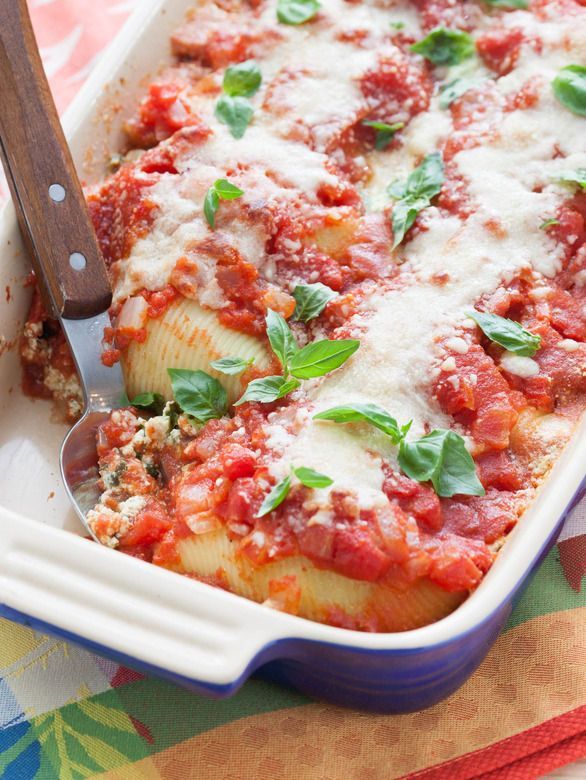
Stuffed Shells with Spinach Ricotta: No jarred pasta sauce or processed cheese required, this recipe is just as simple without the shortcuts. The surprising combination of ricotta, lemon, cinnamon and basil makes it extra special, while keeping it kid-friendly. (via Blue Apron)

Screen Shot 2014-10-29 at 8.38.59 AM

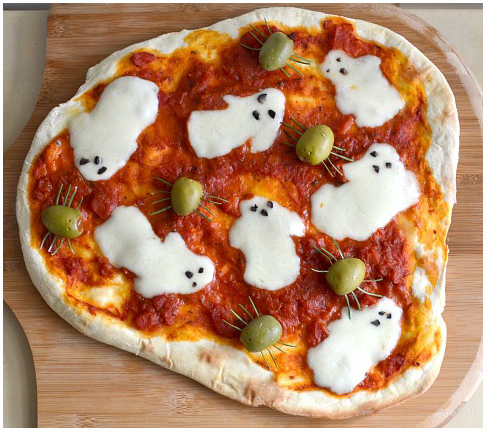
Spooky Ghost Pizza: Keep the kids busy before it’s time to get ready for trick-or-treating by having them help assemble this ghostly pizza. Keep it simple by asking the deli to slice thick slices of mozzarella and use a cookie cutter to turn the cheese into ghosts. Keep the pizza in the refrigerator until you’re ready to bake it. (via Chef Mom)

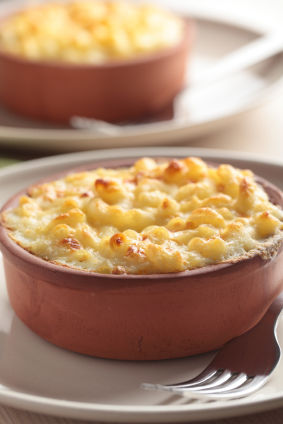
image via The Stir

Easy Pumpkin Mac and Cheese: Just right for a chilly night and spot on for Halloween. Thanks to the creamy, nutritious pumpkin, this is no ordinary mac and cheese. (via The Stir)

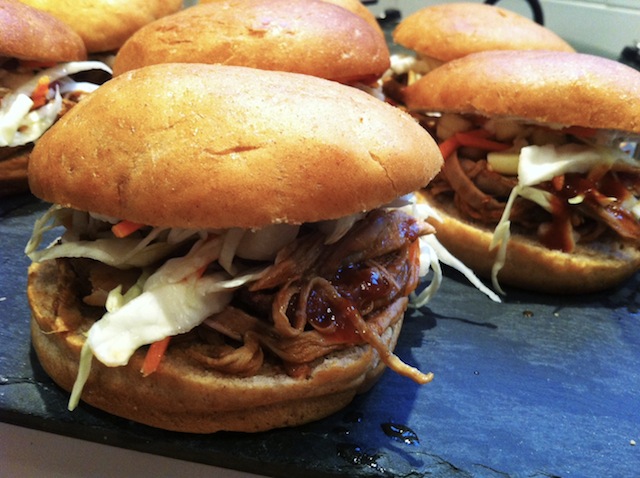
image via Mom's Kitchen Handbook

Slow Cooker Braised Pulled Pork Sandwiches with Apple Cabbage Slaw: Need a little meat to fuel your fire? Throw a pork tenderloin in the crock pot for a deliciously simple pulled pork sandwich filling and add a fresh apple cabbage slaw for a balanced meal. (via Mom’s Kitchen Handbook)

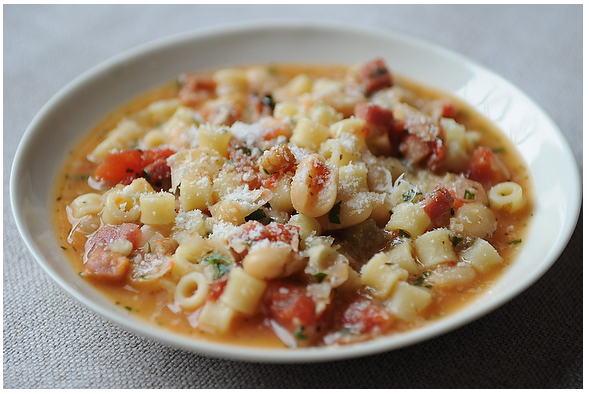
Screen Shot 2014-10-29 at 8.45.34 AM

Pasta e Fagioli Soup: This hearty soup is just right to have at the ready. Make a batch to keep in the refrigerator and reheat when it’s time to eat. (via Food52)

Pick one of these delicious, make-ahead meals for Halloween night, and you’ll feel good knowing your kids’ bellies are filled with warm, nutritious food before the onslaught of candy begins!

10 DIY Family Costumes for Halloween

Put your DIY skills to good use by copying one of these outstanding Halloween costumes for the whole family. These get-ups are so great, your childless friends will be wishing they had kids, too!

11
Burglars via Instagram
Rapunzel, Flynn Rider and Pascal via Cara Loren Via Cara Loren
Rapunzel, Flynn Rider and Pascal via Cara Loren via Cara Loren
Skeletons Via Parents.com.
Skeletons via Parents.com
Chefs and Lobster in a Pot via Buzzfeed
Milk and Cookies Via Costume Works
Milk and Cookies via Costume Works
Cat in the Hat via Costume Works
Cat in the Hat with Thing 1 and Thing 2 via Costume Works
Flintstones a Life Full of Whimsy
Flintstones via A Life Full of Whimsy
Wizard of Oz Buzzworks
The Wizard of Oz via Costume Works

For more awesome costumes for babies, kids, families and even pets, check out our Halloween Pinterest board!

12 Tips for Fantastic Family Photos

Whether you’re the family photographer or you plan to hire a professional to capture your kids or the entire family, you’ll want to check out these helpful tips for getting incredible photos that you’ll cherish for years to come. Improve your chances of getting the shots you want with these effective tips that help you plan ahead, prepare your kids, and assist your photographer.
dvo

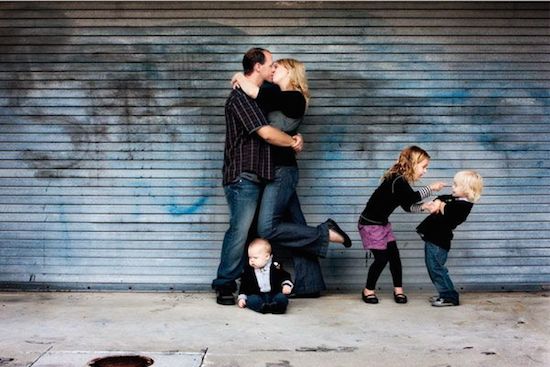
1. Let kids be kids. One of the hardest parts of getting a great family photo is getting the kids to cooperate, especially if there are little kids in the bunch. Rather than stressing over getting them to sit still and smile at the camera, let them be themselves – laughing, wiggling, poking at the baby or hanging on your leg. You might not get the perfect, posed photo you thought you wanted, but you’ll get one that truly speaks to who you are as a family.
2. Capture the time of your life. This goes along with letting kids be kids. It’s helpful and really effective to choose a tone and feeling for a photo based on the stage of your life. If you have a newborn, consider a close-up, quiet photo that captures emotion as much as it does tiny fingers and toes. If you have toddlers and your everyday life is a constant whirl of activity and silliness, why not go for a shot that’ll help you remember the wild and silly days?

photo via Ants Magazine

3. Be original. Rather than pose the family in front of the fireplace or on the steps in front of your house, find something really unique, such as an amazing silhouette shot that captures the family’s similarities and differences and shows how they all fit together.

photo via Babble
photo via Babble

4. Bring everyone close together. Having everyone posed close and tight together gives the photo an affectionate feel.  Professionals often overlap family members or siblings to show a loving family. Interestingly, they also often group a family on the side or corner of the photo’s frame for a more interesting photo than the dead center shot.

5. Stay indoors with tiny babies. Outdoor photos are wonderful, thanks to the natural light and surroundings that make for pretty backdrops. However, new babies are better captured up close and without several layers to keep them warm.

6. Consider creating photos that will make for fun, unique holiday cards. Snapfish suggests out-of-the-box ideas for fun holiday cards, including shots of school pageants, family vacation photos, action shots of kid sporting events, and family reunions. Wouldn’t it be nice to have the photo for your holiday card taken care of, well before Halloween!?

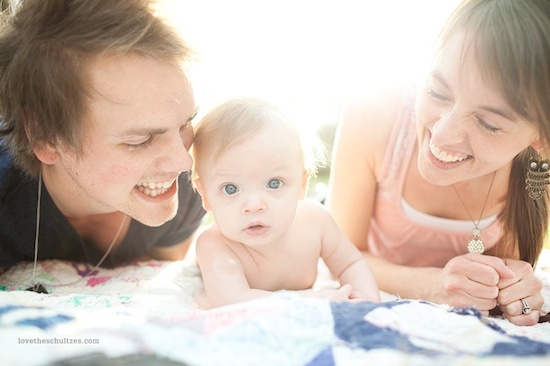
photo via Love the Schultzes

7. Consider how traditional you are or aren’t. If you’re a traditional family, go for matching or coordinated outfits. Otherwise, let everyone express their style (and age) with colors in the same color family with a matching accent color.

8. Consider black and white. Black and white photos are timeless and take care of the worry over coordinated clothes. They can look crisp and contemporary, classic and sophisticated. They won’t, however, capture the steel blue eyes of a newborn or the baby blond hair that may change as she gets older.

photo via A Complete Life

9. Consider how you’ll display photos. If you plan to hang the photos in your home– maybe as a gallery wall collage – think about the colors in your home and choose clothes to coordinate, or at least not clash.

10. Plan around naps. Attempting to photograph a tired, cranky child is no fun. If you’re shooting indoors, choose a time that works with the nap schedule. Outdoor lighting is best during the hours near sunrise and sunset, so if the photo will be taken outside, consider adjusting your child’s schedule accordingly.

11. Bring a well-stocked diaper or tote bag and an extra set of hands. To keep kids happy, bring a few mess-free snacks and drinks and a favorite toy or lovie. Make sure they get plenty of breaks to eat, drink, burn energy and blow off steam. You might also want to bring along a helpful grandparent or sitter to help you pose more than one child and keep everyone focused and happy. Treats or rewards for cooperation and good behavior won’t hurt, either!

12. Do your prep work on Pinterest. Pinterest is chock full of awesome photos of babies, kids, couples and families. Poke around for photos that appeal to you, considering the tone and emotion of the photos, poses, setting, colors and clothes. Don’t forget to check out our board Photographing Babies and Kids to see our favorites!


Send us your favorite family shots! We’d love to see them.  

6 Festive Kids’ Crafts That Are Good Enough to Eat

For busy parents and babysitters, what could be better than a delightful kid’s craft and a snack wrapped into one? Edible art projects keep kids entertained, engaged and fed without much fuss. This is incredibly helpful especially when you are preparing holiday meals and entertaining guests. These are also great projects to have grandparents or guests spearhead while you cook–or set these up with your sitter for a fun afternoon activity.

Edible Festive Kids’ Craft Projects

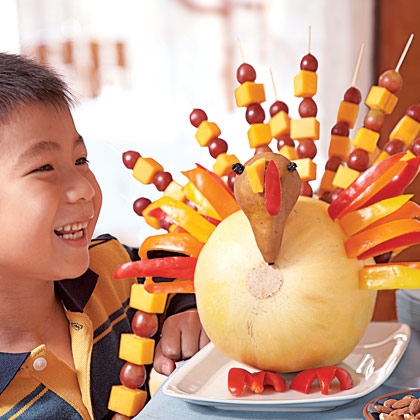
Fruit Gobbler Turkey

via Spoonful
via Spoonful

Unload some of your holiday dirty work by letting the kids create the centerpiece for the big Turkey Day table. This big turkey is loaded with fruits and veggies that your kids will love assembling (while you work on dinner), and enjoy gobbling up just as much. You’ll need:

Bosc pear (head), Melon (body), Cheese (beak and tail feathers), Red pepper (snood, feet and side feathers), Raisins (eyes), Grapes (tail feathers), Bamboo skewers, Toothpicks.

Find complete instructions at Food.com.

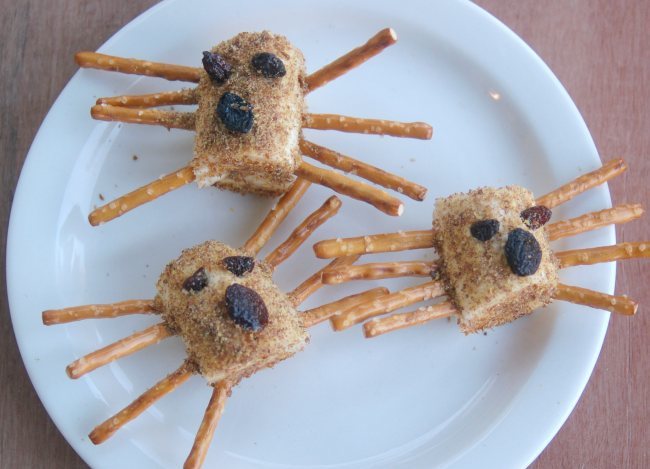
Hairy Spider

via Kids Activities Blog

Forget about the Halloween craft featuring a fat marshmallow as the body of a creepy crawler. These hairy spiders are of the healthy variety and for tots fascinated by bugs and they work any time of year. We can thank Kids Activities Blog for showing us how to easily create a healthy snack with a chunk of banana dipped in flax seed, pretzels for spider legs and raisins for eyes.

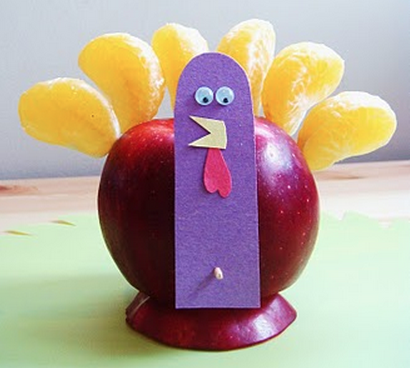
Another Turkey to Gobble

via Cute Food For Kids

There’s no shortage of edible turkey crafts to tackle. We think this guy is pretty darn cute and simple enough for little kids to handle without frustration. There are two options – a healthy one made with clementine sections and a “special treat” version that uses skewers of candy for feathers. Both work the same way: cut the bottom off of an apple, flip it around and stick it to the other end with a toothpick to create a stable base. Next, thread oranges or candy and marshmallows to toothpicks and insert for the bird’s feather. Create a head and face out of construction paper, and let your own little turkey stick it on the apple body with another toothpick.

Candy Necklaces

via Blondie and Brownies

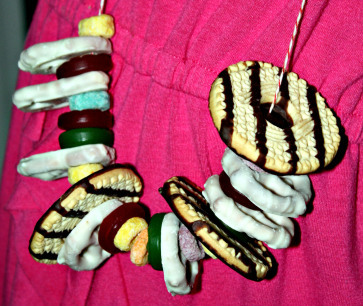
Creating candy necklaces is a smart activity to help kids practice counting and patterns and to improve their fine motor skills. It also makes for a great project for a party, since it’s relatively simple and low fuss. There are tons of options for edible bits to string for a DIY edible necklace. Think fruit loops, mini marshmallows, Cheerios and pretzels. Blondie and Brownies suggests buying a few yarn darners, essentially large-eyed needles, to help with the threading (she found a set of 7 at Walmart for under $2).

A Mouthful of Teeth

via Kid Spot
via Kid Spot

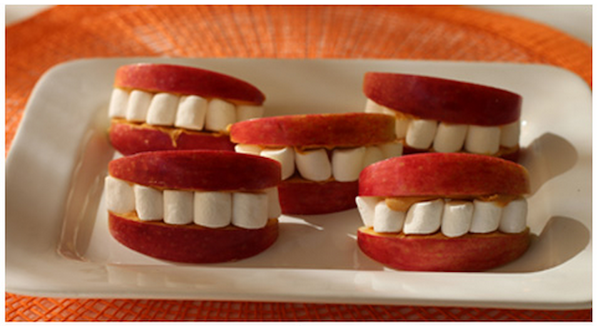
Apple slices + peanut butter + mini marshmellows = a mouthful of teeth! No detailed instructions are needed for this adorable and yummy craft. Simply slice apples, spread with peanut butter or a nut-free alternative (cream cheese would work well) for denture cream, and stick mini marshmallows along the “gums” for teeth. Voila! Who wouldn’t smile at these?

Cheesy Reindeer

cheesereindeer
via Cute Food For Kids

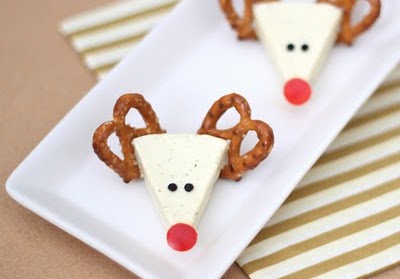
You may cringe at the thought or jump for joy, but November 29 marks the start of the Christmas season! Get your kids in the spirit by plunging into a wintertime craft. Adorable reindeer are perfect for little hands to create with a Laughing Cow cheese wedge, pretzels for antlers, olives for eyes and a bit of red pepper for a nose. Cute Food for Kids provides a handy tip – use a straw from a juice box to punch out tiny eyes from an olive, and a fatter straw to create the nose from a bell pepper.

Leave these handy craft activities with your sitter while you’re out holiday shopping – search for babysitters online at www.UrbanSitter.com.