Meet Kate Talbot: Successful Author, Content Creator, and Digital Strategist… and an UrbanSitter Babysitter!


kate-oh-snap

Kate Talbot has built her successful career by using digital storytelling to empower communities at brands like Kiva and Virgin America, as well as scale early-stage startups for growth. In her free time, she writes for online publications like Social Media Examiner and KISSmetrics, educating small business owners and entrepreneurs on how to successfully use millennial social media platforms like Instagram and Snapchat to build their brands. Recently, she published a book on the topic of Snapchat Marketing. Of course, like any city girl she was at the Dry Bar downtown on a recent Monday morning getting glam for an important event and ran into UrbanSitter CEO Lynn Perkins (whom she babysat for years back) and they got to chatting…

Here, Kate shares with us her experiences with UrbanSitter, what it’s been like having written a successful book, and more insight into her career and life.

Can you tell us a little bit about how you know UrbanSitter CEO and Co-Founder, Lynn?
For me, I am all about the side hustle. SF is expensive and any avenue in which you can use technology to create multiple revenue streams is important. My girlfriends and I (as many of us) have babysat since our tween years, and after business school in 2012 we all signed up for UrbanSitter. This was a great way to supplement our job incomes off the bat.

I learned from my friend Lisa, who is a babysitting all-star, that the best way to build your babysitting profile is to reply to jobs right away and babysit on a Saturday night. From doing so, I ended up replying fast to a query and booked a job during the 2013 holiday season for Lynn. I had a wonderful time babysitting for her son and she was highly supportive of my own story and helping me succeed. We connected on LinkedIn, and I always loved following all the news about UrbanSitter; especially this amazing feature in the First Round Review on Lynn and UrbanSitter.

As fate happens, I ended up running marketing for a First Round Capital company—which also funds UrbanSitter—so at a dinner roundtable I met Daisy [Downs, Co-Founder of UrbanSitter] too! I let the other attendees know that even though I was in the tech space, I also was an UrbanSitter babysitter, which delighted everyone.

You mentioned going to business school, where did you study?
I went to the University of San Francisco, where I focused on Marketing and Entrepreneurship.

I grew up in Moraga in the East Bay —I have lived in New York City, too—but I knew I wanted to be in the Bay Area long-term. My dad and brother both went to USF for law school, so I knew I’d be getting a great education.

Can you tell us a little bit about what you’re doing now?
I have my own consulting firm where I lead growth marketing for early stage startups—whether that’s influencer marketing tools or cybersecurity technology—it really runs the gamut but I love it all.

I also write on the side. I do that because it’s a passion of mine.

In fact, when I babysat I am able to write when the kids are asleep. One of my favorite articles I wrote on Snapchat was written in a Pacific Heights apartment overlooking the Bay, while babysitting for a great family.

You just wrote and published a book about Snapchat, what was the process like?
I combined the writing which was already published on the topic and leveraged my community. I’m extremely fortunate to have contacts across all industries at big brands and media entities, and they were able to provide case study insights into their own execution of the platform. My mentor, a VC from Onset Ventures, who encouraged me to write the book, wrote the foreword about the future of enterprise marketing and Snapchat.

I also mentor at Stanford for an undergraduate course in media and technology. From this class, I was able to hire a recent graduate to design all the creative assets. That was probably my favorite part, because we had so much fun thinking outside the box and what would help the audience understand the platform from a visual perspective.

What interested you about Snapchat enough to write about it ?
I’ve always been really in tune with the millennial, and now Gen Y, audience on what the next trends will be. As a user myself and talking with my 22-year-old god-sister and her friends, I realized the power of Snapchat as an authentic way of telling stories and connecting with friends. Since I’d already been writing about social media for Social Media Examiner, I pitched the topic of Snapchat for Business. I was one of the first writers to do so, and it’s led to amazing opportunities speaking at business schools and conferences. I figured next steps, why not write a book!  

What has the reception been like for your book?
It did amazingly well! I felt so thankful for my community that downloaded it. During the 5-day free promotion, it went to the #2 spot in all of Business Marketing and Sales on Amazon. It was also #1 on Amazon for Advertising and Professional Development and #1 on Product Hunt books.

To wrap up: If you could give advice to sitters using the service, what would it be?
My advice would be to think of your profile as a personal brand. Fill out your profile in the best light possible. Also, remember parents are really looking forward to their date night or event they are off to, so be as professional as possible and always make sure you are doing your best! I know it can be tough sometimes, but keep trying to babysit more and more even if you get overwhelmed.

Babysitting in SF is a great way to explore the different neighborhoods—I didn’t know about all the parks that were out there—and connect with the families! If I hadn’t followed up with Lynn, I wouldn’t be in this position. You never know what will happen!

You can pick up a copy of Kate’s book, Oh, Snap! You Can Use Snapchat for Business, on Amazon, follow her on Twitter and Instagram, and see more of her work on her website at http://www.katetalbot.me/.


Meet Mara: Babysitter and Future Genetic Counselor!

mara-hernandez

Mara has been working with kids and families since she was in middle school so it comes as no surprise that she’s now pursuing a career in genetic counseling, where she’ll be able to help people each and every day. Since joining UrbanSitter in 2012 Mara has sat for around 100 different families, and says that babysitting has provided her with income while still allowing her to keep a schedule flexible enough for school, volunteering, and applying to a Masters program.

Here, Mara shares with us a little bit more about her life, her adventures in babysitting, and what she plans on doing in the future.  

How did you get started as a babysitter?
I grew up in a suburb of San Francisco in a neighborhood that had four cul de sacs that were connected, so it was a pretty good place to find babysitting jobs because there were a lot of families. I don’t remember how I got into babysitting exactly, if I decided if I was old enough or if a neighbor approached me.

We had this little newsletter for our neighborhood and it showed which families were in which houses and listed the names of the kids who lived in the houses, too. The kids’ names had boxes next to them that said whether or not they were willing to do yard work or babysitting or things like that.

I made $4/hour to start, as a Mother’s Helper. I was pretty bad at it, because the mom was working at home, and so the kids would just go bother her. And then I’d come home with my $12 dollars in my hand, but you have to start somewhere!

How did your babysitting career advance after that?
I wanted to do more babysitting as I got a little bit older. I took a class about babysitting at the local community center and of course got CPR certified. In high school I went around my neighborhood with flyers and knocking on doors and got a regular babysitting job out of that, that I had throughout high school and my first year of college.

I also took a gap year and was an au pair in Switzerland for 10 months. I went to the  German-speaking part of Switzerland and couldn’t even count to ten in German when I got there, but I picked it up. I was so excited about it that I went with the very first family who chose me (I applied through an online service not an agency) and just said “Yes! I will be your au pair!”

How did you first get started on UrbanSitter?
I’ve been on UrbanSitter for four and a half years, and it was pretty small when I started. I remember that somebody contacted me for a phone interview, and I remember being in a parking lot walking to my car and I got this call from a woman with a really beautiful Irish accent. Both parents were from Europe and the dad was working as a postdoc at UC Berkeley, they didn’t have any family in the area and hadn’t had a date night in forever.

It was a good start because they were a really nice family and just so appreciative. Their little girl was adorable. They gave me a good review and then someone else booked me. So [my time on UrbanSitter] started out slow, but it picked up from there.

You’re studying genetic counseling now, can you tell us a little bit about that?
A genetic counselor talks to people who might be at risk for hereditary medical conditions. Like cancer for example, if a person has a strong family history of cancer they’ll talk to a genetic counselor and decide whether or not to do specific testing to see if they have that genetic predisposition. Genetic counselors also meet with people planning a pregnancy or who are currently pregnant to provide information and counseling about any health problems that run in the family as well as about prenatal testing options.

Has babysitting had any effect on your choice to pursue genetic counseling?
In genetic counseling you’re working with a lot of different people, people trying to plan a family or start a family. And in my babysitting adventures each family is different, with different personalities, and I’ve always found that pretty interesting. In the field of genetic counseling I’ll get to continue to meet different people and work with different people, and I think it’s good to have a foundation in that already.

There’s a particular family that I work for regularly that goes out a lot. They were so, so supportive about this particular application process [for my Master’s program]. They would give me advice and try to help out. It’s a pretty competitive program that I was applying for, so I was very stressed. The dad’s sister is actually a genetic counselor and so he set up a meeting for us, and she gave me really helpful advice and support.  The kid is so great, too, she’s always cheerful and runs to the door when I get there – now that I’ve started graduate school, I find babysitting is a good way to relieve stress!

Babysitting has been really helpful, because I had to do a lot of volunteering to be accepted into the Master’s program that I’m in now. I’ve been preparing for this program for three years. In July of last year, I left my job at Children’s Hospital to be able to take on more volunteering, and an internship, and to take more classes. So babysitting was all of my income, and it let me be flexible.

Saturday night to me is like babysitting night. I think I’ve worked the majority of Saturdays in the last year. And that has really allowed me to support myself in this last year of preparation for the program. UrbanSitter was so helpful because I know I wouldn’t have found as many jobs as I did without it.

Sign up to be a babysitter today at www.urbansitter.com!


10 Ways to Tackle Reading Homework

Most school-aged children are required to read as part of their daily homework. It’s typically not much, 15-40 minutes of reading, but busy families with limited after-school time can have a tough time squeezing it in. It’s difficult to find time in their busy schedules and convince tired kids, especially early readers, to hit the books each night.

Rather than fighting with your little one to get the work done, why not help by making reading a family affair? After all, there’s no disputing how important it is for new readers to get consistent reading practice. Here’s how to help your child clock the time by doing it together as a family and by expanding his reading materials beyond the books he brings home from class. You’ll be surprised at how much your child enjoys the time and how quickly the reading minutes add up.

image via mytudut at compfight

Tips for Logging Reading Time:

  • Read a recipe and cook something together. Check out the UrbanSitter Cooking with Kids Pinterest board for delicious recipes that are just right for cooking with kids.
  • Make sure the books you have at home are the appropriate reading level. Experts suggest using the five-finger rule. Open a book to a random page and ask your child to read it to you. Put one finger up every time your child does not know a word on the page. If you have to put up more than five fingers before turning the page, the book is too hard for your child.
  • Play a board game together. Start by having your child read the instructions aloud. Fun, educational options include Scramble Junior and Boggle Junior, but any board game with cards to read will work.
  • Take a family trip to the library and have your child choose books that appeal to his or her interests. A reluctant reader may change her tune when she dives into a story she can relate to or that piques her interest.
  • Create a comfortable spot in your home for lounging and reading, and hang out there together as a family. No electronics allowed.
  • Have your child help you make the grocery list and read it aloud to you if you are shopping together.
  • Task your child with reading the menu at a restaurant.
  • Keep plenty of reading materials in your home, including books, magazines, newspapers and comic books. Make it a habit of having your child grab something to read while in the car or while waiting at an appointment or at his sibling’s soccer practice.
  • Commit to making bedtime stories a regular part of your nightly bedtime routine. Even older grade schoolers enjoy being read to and appreciate hearing a story they may not be able to tackle on their own. You might take turns reading, switching every page or every chapter.
  • Try interactive literacy websites, such as Starfall, Speakaboos and Spelling City for fun games that promote literacy.

The next time you have a sitter, be sure to share your reading tips and requirements and encourage her to read with your children and to supervise independent reading time. How do you encourage your kids to read each and every day? We’d love to hear your tips!

Tips for Summer Reading

Summer is all about unwinding and taking a break from the routine and demands of the school year, but it shouldn’t be an excuse to take a vacation from reading. Experts tell us that kids lose core reading skills and are at risk of falling behind when they don’t read over summer break. Reading keeps them sharp and improves skills to prepare them for the next school year, and it helps to foster a life-long love of reading and learning. Whether it’s scheduled quiet time for toddlers or emerging readers to look at a book, young readers to read alone, or for a parent or sitter to read to a child, time with books is time well spent.

melissa-grass


Here are helpful tips for encouraging kids to stick with the books this summer:

  • Schedule time during your day, at least an hour, for kids to spend with books. The quiet time will be a welcome break for all of you.
  • Be a good role model. When your kids see you read, whether it be a newspaper, magazine or a book, they see that reading is enjoyable and rewarding.
  • Ask your sitter to spend time reading with your child.
  • Have kids keep a reading journal. Keeping a record of the books they’ve read will give them a sense of accomplishment, which is a great motivator.
  • Join a library story hour or reading group to make the time social and a good way to connect. Many libraries have parent/child story time or book discussions or programs for older kids to read to younger children.
  • Make a visit to the library or book store a regular part of your summer routine. A weekly visit allows you keep your selection fresh.
  • Encourage (and incentivize!) older siblings to read to younger siblings. They’ll both benefit from the time.
  • Start a book swap with neighbors or friends so kids to share favorites and expand their reading choices. They may discover they enjoy genres they never would have chosen on their own.
  • Join an online summer reading program or challenge to motivate kids. There are several good national programs, or find one locally: Barnes and Noble Summer Reading: Read 8 books, record them in a journal and win a free book. Scholastic Summer Reading Challenge: Kids Read for the World Record, enter sweepstakes to win fabulous prizes, and earn digital rewards when they complete weekly reading challenges. Scholasic provides an excellent app for recording reading time.
  • Make sure books are easily accessible throughout your home. Make it as easy to grab a book as it is to turn on the TV or reach for the iPad.
  • Make a habit of packing books to read on road trips and vacations, and keep a few in your car for easy reading while traveling. Many parents swear by audio books for car trips.
  • Keep your Kindle or iPad well stocked with books for each of your children, and encourage them to read or look at a book, rather than choosing a game.
  • Keep up the bedtime routine you have during the school year, including reading together at the end of the day.
  • Spend some time exploring books that are age-appropriate so your child has choices that are engaging and a bit challenging, without being too difficult and frustrating for early readers. Amazon provides a good list of summer reading picks, divided by age groups starting with the baby – age 2 set.

We’re betting these tips will help even the most reluctant readers and the busiest toddlers learn to appreciate the joy that comes with reading a good book, even when the summer sun calls!

What are your tips for getting kids to read? Share them in the comments!

Teacher Gifts to Show Your Thanks

meg_son_flowerWith the end of the school year in sight, it’s time to think about teacher gifts for your children’s tireless educators. Teachers have one of the toughest jobs on the planet. Each September, families hand over their children, and entrust teachers to nurture, enrich and fill their minds with knowledge and responsibility to help prepare for the world.

How do you show your appreciation and gratitude? Whether you’d like to give a homemade gift or something practical, or you’re charged with buying or creating a gift from the whole class, we have thoughtful gift ideas that will go easy on your time and budget.

Group Teacher Gifts from the Class

If you’re the lucky parent charged with collecting contributions and choosing a class gift for the teacher, choose a collectively built gift that’s simple and sure to be loved. Choose a theme and assemble a gift basket or package that everyone in the class can contribute to fill.

To avoid the flurry of email communication that can flood your inbox when coordinating for a large group, rely on services such as Sign Up Genius, which will handle a lot of the coordination and help avoid duplicate purchases. To hold all the loot, use a cute bag or tote, which you or another family in the class can contribute.

Here are cute ideas for the class-contributed contents for a summer-themed package:

via Tidbits and Twine
  • Beach towel
  • Gift certificate for Mani/pedi
  • Magazine
  • Paperback book
  • Journal
  • Small photo album
  • Insulated tumbler and drink mix
  • Sunscreen
  • Lip balm
  • Summery nail polish
  • Gift card to department store, a sunglasses or sport store
  • Monogrammed Frisbee
  • Cute drinking straws or drink stirs
  • Cocktail napkins
  • Reusable ice cubes in a fun summer shape
  • Outdoor tumblers and a pitcher
  • Deck of cards or a game

Quick and Easy “Homemade” Teacher Gifts

Looking to go beyond a store bought gift, but have less time than inspiration? Rather than tackle a big DIY project, you can add an extra, homemade touch to a store-bought (or homegrown) gift of flowers or a potted plant. Personalizing an always appreciated gift of green shows you’ve gone the extra mile to show you care. Here are three sweet and simple ways to embellish a potted plant or bouquet of flowers.

1. Chalkboard Pot from The Idea Room on Skip to My Lou you can customize with a personal note to your child’s teacher.

via The Idea Room
via The Idea Room

2. Handmade Container from Love of Family and Home.

via Love of Family and Home

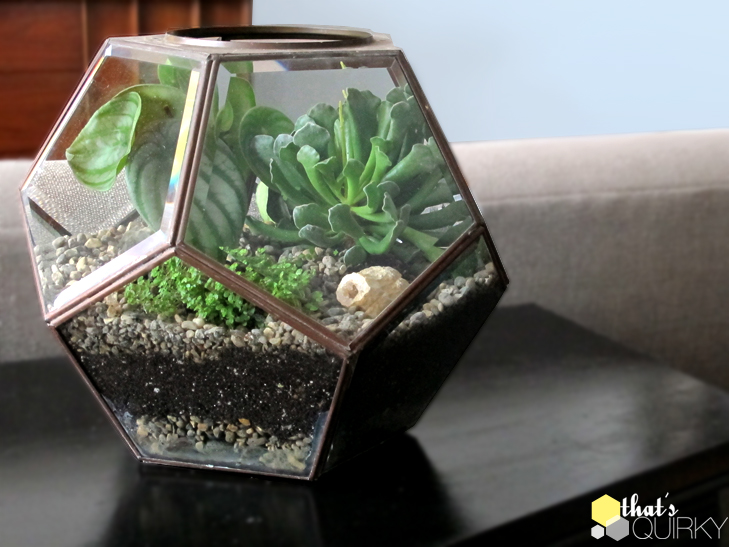
3. DIY Succulent Terrarium from That’s Quirky.

via That's Quirky
via That’s Quirky

Picking Up a Practical Teacher Gift and Packaging It Just Right

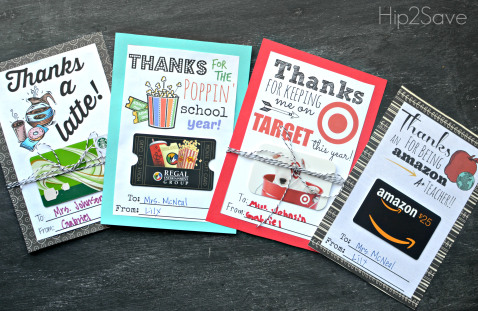
Save yourself the agonizing and shopping for the perfect gift. Nothing is more useful to a hardworking teacher on a limited salary than a gift card to a favorite store, café or restaurant. A gift card allows him or her to splurge or spend as they like. These fun, free gift card holders to print will personalize a gift that may seem a bit impersonal. There’s one for coffee, a book store, the movies and good ole Target.

gift holder hip2save
via hip2save

No matter how you choose to thank your child’s teacher, remember that a personal note of thanks from you and your child is often the most important gift of all. Find the perfect babysitter for summer break at UrbanSitter.

Entertaining and Educational Ways to Celebrate Earth Day

meg_son_grass

No matter where you live on the planet, April 22nd is Earth Day.

Don’t let the day pass you by without taking advantage of the opportunity to celebrate and help your family do its part in protecting our planet.  Here are fun ways to get the kids involved, build lasting memories and start healthy habits, too:

  • Maybe an obvious choice, but a certainly one not to miss – plant a tree, a small garden, even a few seeds for a burst of color in a pot. Follow these helpful tips from Kids F.A.C.E if you are new to planting a tree:

1. Dig a hole as deep as the rootball and twice as wide.

2. Check to see if the soil around the hole is too hard – if it is, loosen it up a bit with the shovel.

3. Remove the container from the rootball. (The roots are like the tree’s blood vessels and they work best if they are not all twisted and knotted up, so you might need to straighten them out if they are circling around after having grown in the container.

4. Place the tree in the hole, making sure the soil is at the same level on the tree as when the tree grew in the garden center. If your tree has burlap around the rootball, place the tree in the hole and then carefully untie the burlap. Leave the burlap lying in the bottom of the hole (this is Okay – the burlap will simply turn into organic matter over a period of time).

5. Fill in around the rootball with soil and pack the soil with your hands and feet to make sure that there are no air pockets.

6. Make a little dam around the base of the tree as wide as the hole with left over soil or grass clumps to hold in the water.

7. Give your new tree a good soaking of water to help settle it into its new home.

Trees to Breathe
Trees to Breathe
  • Brainstorm with your kids for ideas on how you can do a better job living green. Commit to just one small change or a whole list of intentions, and stick to it. Ideas: Change to CFL light bulbs in your home, kick the paper towel habit, or swear off individually packaged snacks.
  • Build your own compost bin  or buy a rainwater collection barrel for your home. Help kids feel they are part of the action by having them commit to simple acts such as turning off the water when they brush their teeth, using the same cup throughout the day so there is less to wash, and helping to water houseplants using leftover water from their water bottles brought home from school.
  • Get the whole crew spring cleaning with all-natural cleaning products that are safe for little helpers and their environment. A simple mix of one part white vinegar and one part water will do the trick for most general surface cleaning. You can add a few drops of tea tree oil, lavender or lemon essential oil to add a fresh scent. Fill reusable spray bottles with the mix and set your crew loose.
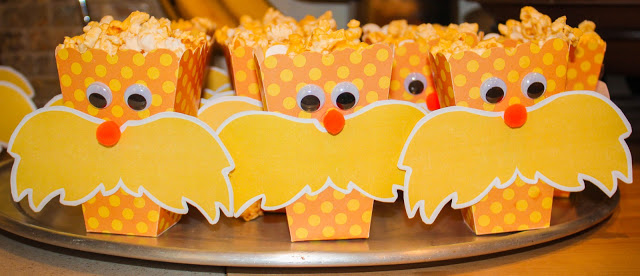
  • Have a “Lorax” Party. It is, after all, a celebration day. Pull the shades and have a Lorax movie showing, complete with themed snacks and recycled decorations. Smita from The Party Wall created an incredible Lorax-themed party, and took lots of photos to prove it. Take a look for some cool inspiration and get printables, too.
Lorax Party by The Party Wall
  • Park the family car and rely on your own two feet or public transportation to get you to and from today or better yet, for the rest of the week. If your commutes are too long or public transportation isn’t available, coordinate a carpool with other families to take at least car off the roads. Your kids will love the switch-up, as much as the environment will.
  • Recruit the neighborhood kids to join you to clean up a favorite park, beach, school yard or other public space.
  • Simply spend a family day outdoors. Maybe you can’t do it mid-week, but commit to spending a weekend day totally and completely outdoors. Take a family bike ride, spend time at the playground, visit local botanical gardens or take a hike. Dine al fresco, too. We all know how much kids love picnics.

IMAG0037_2

Find babysitters your friends know and love at UrbanSitter.

Celebrate Dr. Seuss’s Birthday (and Read Across America Day), March 2

Photo Credit: alternatePhotography via Compfight cc

The beloved children’s author and illustrator, Dr. Seuss, was born March 2, 1904. Children around the world celebrate his birthday by reading his treasured books and spending time in school and at home doing fun activities that reflect his brilliant work. Don’t miss out on the chance to have some fun with your kids!

Here are some fun, fan-seussical activities to do with your kids:

READ

  • The National Education Association has chosen Dr. Seuss’s birthday for its Read Across America Day, a nationwide reading celebration that shines a spotlight on the importance of reading to children. The obvious activity of choice for the day – read to your kids! There are 46 Dr. Seuss children’s books to choose from!
  • Dr. Seuss books are ideal for reading aloud to children, even infants who will be mesmerized by the rhymes and preschoolers who will get big kicks out of the nonsensical nature of the stories. Early readers get a boost of confidence from tackling “Hop on Pop,” or other beginner favorites.
  • The official Dr. Seuss website by Random House is chock full of activities for kids to do on their own and a Parents section to provide tips on maximizing both the quality and the quantity of reading time in your home. The website’s Books section provides a search tool to help you select Seuss books by your child’s age, a favorite character or series, and other criteria.

CREATE

  • Create a Reading Chart to track reading time and progress. The blogger of Mom Endeavors crafted a simple DIY chart centered on a favorite Seuss quote:

“The more that you read, the more things you will know. The more that you learn, the more places you’ll go.”

  • Use these free printables to have kids color and create bookmarks that encourage them to read well beyond today’s festivities.
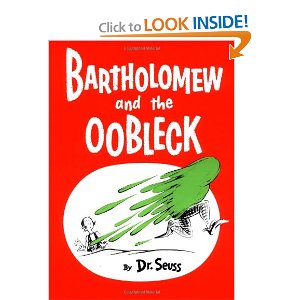
  • Make and play with Oobleck. This ooey, gooey not-quite-liquid-not-quite-solid play gunk is inspired from the strange stuff that falls from the sky in “Bartholomew and the Oobleck.” The non-edible recipe: Mix together 2 cups cornstarch, 3 drops of food coloring and up to 1 cup of water in a medium sized bowl. Add water slowly as you may not need entire cup. 
Dr. Seuss - "Bartholomew and the Oobleck" via Amazon
Dr. Seuss – “Bartholomew and the Oobleck” via Amazon

ENTERTAIN

  • One Fish, Two Fish Matching Game and Magnets. Before you can play this simple matching game with your kids, you’ll need to bust out a bit of DIY. You’ll need foam board, magnets, a Sharpie, and images from either printables or those you’ve traced or sketched yourself. Detailed instructions are here.
  • Record your early reader reading “Green Eggs and Ham.” This handy app makes it fun and easy to record and the accompanying games and activities will hold your child’s attention long enough for you to create the matching game listed above.
  • Host a playdate or a movie night (or afternoon) by popping some popcorn and showing a Seuss classic. “Horton Hears a Who” is entertaining for little kids and “The Lorax” is tops with older kids who can appreciate the environmental message, as much as the characters and cool animation.
One Fish Two Fish Matching Game via Just Paint It

EAT

  • A celebration isn’t a celebration without food! If you aren’t up to tackling The Lorax cake pictured below, there are many other simple treats to make the day even more memorable and fun.
  • Truffula Trees – Adorable mini cupcakes you can create with a cake mix, pretzel sticks and cotton candy, along with a few extras to make them look like the trees from The Lorax movie.
  • Do You Like Green Eggs and Ham? Here’s a Green Eggs and Ham recipe that will be just as appealing to adults as kids (and it doesn’t involved icky food coloring!). Try it, try it, you will see!
Lorax Cake via Diamonds For Dessert

And, for those with wee-little ones who shouldn’t miss out on the fun, how about this photo opt for the baby book?!

Dr. Seuss Inspired Hat and Tie from Sweet Pea Toad Tots via Etsy

Need a few more ideas to help you celebrate Dr. Seuss’s birthday with your kids? Check out the ultimate Dr. Seuss Links Collection. If you run out of time (or steam!), find a babysitter to lead the charge.

Chores for Children

Photo Credit: clogozm via Compfight cc

Part of being a parent is taking the time to teach kids about responsibility. Assigning kids chores is an ideal way to do just that, and also a way to instill self-discipline, routine, and the importance of being a contributing member of a family and eventually a self-sufficient member of society. Chores also help kids learn practical skills that will help them throughout their lives.

It’s often easier and quicker just to do these tasks on your own, but remember you’re teaching valuable lessons by taking the time to assign and enforce a chore routine in your family.

You can improve your success rate – get kids to be excited or at least not whine and complain too much about doing their jobs – by assigning chores that are age appropriate and building them into your daily routine.  It’s also helpful to keep the list short and simple so it’s not overwhelming for anyone, and decide ahead of time how you will motivate, enforce and possibly reward the work. Some say kids shouldn’t be rewarded for basic chores, i.e. doing what’s expected of them, and should instead earn a reward when they go above and beyond expectations.

We bet you’ll be surprised at what kids are capable of doing! Take a look at these suggestions for chores for kids age 2-8 years.

Ages 2-3: Toddlers

This is the age group that likely enjoys having a job to do and is most eager to help. You’ll get much better success if you accompany them in their work.

  • Pick up toys and books.
  • Take dishes to the sink after a meal (stick with plastic!)
  • Dust furniture.
  • Help put away groceries.
  • Water plants and flowers.
  • Put dirty clothes in a hamper.

Ages 4-5: Preschoolers

These budding learners can do a lot more than you think!

  • Toddler chores.
  • Empty trash cans.
  • Put clothes in their drawers or hang them in the closet. Hang a second, lower rod to make it easy for them.
  • Make a simple bed.
  • Help set the table.
  • Fold towels.
  • Get the mail.

 Ages 6-8: Early Elementary

Here’s the group most likely to put up a fight over doing their chores. Remember, positive re-enforcement and encouragement go a long way.

  • Toddler and preschooler chores.
  • Wash dishes and load/empty the dishwasher.
  • Fold clothes.
  • Pack lunches.
  • Sweep the floor.
  • Help with dinner. (Prepping, washing produce, measuring ingredients)
  • Wipe the bathroom counter.
  • Take out the recycling.

Use a chore chart to help your family stick to it and track when chores are done. We’ve found a few especially handy, printable chore charts to help. Find one that works best for you.  And, don’t forget to keep the babysitter in the loop so she knows the routine and what’s expected.

Chore Charts - Brought To You By the Letter B.
Free, printable chore charts from “Brought to You By the Letter B”

Free, Printable Chore Charts


Don’t forget to keep the babysitter in the loop so she knows the routine and what’s expected.

Educational Apps Your Kids Will Beg to Play

Now that you’ve downloaded the new UrbanSitter Mobile App for yourself, how about adding a new app to your phone or tablet for your kids? It’s likely the old stand-bys aren’t holding your kids’ attention like they used to.

Wondering how to find a game that’s fun to play and is also more than just candy for little brains? While experts are on the fence about whether or not little kids should be playing with apps, most agree that the best apps are those that encourage creativity, and feature colors, shapes, numbers and the good’ole ABCs.

So, forget Angry Birds, and check out 7 sure-fire apps that are sure to capture your kids’ attention and teach them a thing or two, too:

ABC Zooborns

This app features adorable photos, videos and interactive scenes of baby animals that on their own are worth the download. While its design is award-winning, its educational value is quite praise-worthy, too. It teaches about animals and conservation, links letters to words, builds vocabulary, and certainly entertains. By Peapod Labs LLC, $2.99. Ages 2 and up.

Storia

Scholastic’s new e-reading app for your PC, iPad or tablet, is fun, educational and interactive, providing your children with their own shelves of well curated books; tools, like a dictionary; and games. The download comes with five free books. By Scholastic, free. Ages 3-12.

Letter School

This very cool app has won all sorts of awards, including a top 10 ranking in iTunes Educational Category. It lets kids practice writing their letters right on the screen. The bold graphics help guide their finger through the ABCs, lower and upper case, and numbers 1-10. By Boreaal, $3. Ages 3 and up.

Rocket Math

Another award-winner, this app for young and older kids is a math practice session disguised as a game. For younger kids, it covers counting, addition and subtraction, and for older ones it dives into the tougher stuff, even entry-level algebra principles. By Dan Russell-Pinson, free. Ages 4-12.


Stack the States

Here’s a wildly popular app that finds a way to make learning the 50 states and their capitals fun. You answer questions about the state correctly to win the state, then rotate it and find its place on the US map, like a puzzle. By Dan Russell-Pinson, $.99. Ages 6 and up.

Toca Doctor HD

This is a puzzle game that teaches kids about the human body (anatomically correct, mostly) and keeping it healthy. They can solve medical problems (like a runny nose), give shots, remove splinters, and feed the patient healthy foods to ward off germs.  By Toca Boca, $3.99. Ages 2+ (with a 2-4 year old sweet spot).

Math Doodles

The three games in this app are attractive to kids who may not love math, but who love puzzles and want to solve things. The puzzles created look like doodles, and are solved through basic math and creative thinking.  By Carstens Studios, $3. Ages 4 and up.

Need a babysitter tonight? Download the free UrbanSitter iPhone app.