5 Ways to Teach Kids the Value of Volunteering

Cooking in kitchen

By Mark Palm

Parents today face an uphill battle when it comes to getting their kids interested in doing anything besides burying their faces in the screen of a phone or tablet. They might put their devices down to eat, play sports, and sleep, but otherwise engaging them in the physical world around them can be a serious challenge. Especially when it comes to generating interest in volunteering and humanitarian work.

Most parents don’t have the opportunity to do what I did; 10 years ago, my wife and I moved with our three young children to Papua, New Guinea, so I could establish a local service organization, Samaritan Aviation, through which I fly emergency rescue missions into remote jungle villages, picking up injured and sick people who would otherwise never receive professional medical care, and transporting them to the only hospital in the region. My wife and children have worked by my side over the years, helping to care for strangers in desperate times of need.

But to inspire yourself and your kids to help others, you don’t have to look any further than your own neighborhood. Here are some tips for getting the whole family involved in volunteering—a great way to start off the New Year!

1. Set an example. It’s hard to expect your children to want to give up their free time to help others if you are not doing the same. Talk about previous experiences you’ve had in helping others, even if it was a long time ago, then take steps to get yourself involved, even if it’s just volunteering to collect cans for a food drive at your office.

2. Incorporate their interests. An easy way to spark a child’s interest in volunteering is to find a charity that involves a sport or hobby they already enjoy. For example, if your child is artistic you could suggest ways for them to earn money to purchase art supplies for less fortunate children. Or, if your child loves animals, get her involved with a local rescue organization that needs volunteers to feed the cats, for example. The possibilities are endless.

3. Get friends involved. Talk to the parents of your children’s friends and find out if they would be okay with you bringing their children along on a volunteer experience as well. Kids can bond with their friends while helping others and having a friend along can help them to be bolder when trying new things—and to have a lot more fun while they are at it.

4. Provide a variety of experiences. Volunteer as a family at a local food bank, help out building a house with Habitat for Humanity, walk dogs at a local animal shelter, or help clean up at the local zoo. By introducing your kids to a variety of volunteer experiences, they can learn which appeals to them the most and find one they will be willing to contribute to long-term.

5. Let your kids take the lead. Help your kids organize a lemonade stand, bake sale, or car wash in your neighborhood to raise money for a charity of their choice. Around the holidays, give them supplies to decorate a wagon and have them go door-to-door, while you supervise, to collect coats and toys that can be donated to clothing and gift drives. Take them with you to drop of the donations, so they can experience the gratitude of the organization first hand.

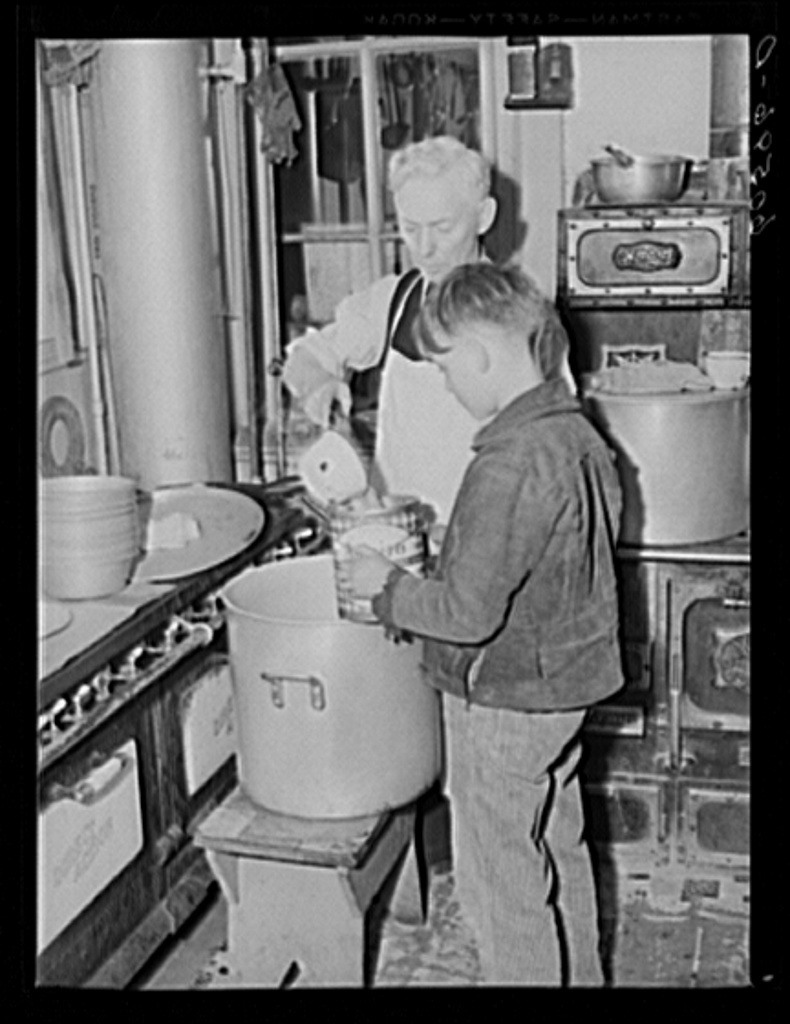
Photograph by John Vachon, via Library of Congress Prints & Photographs Division FSA/OWI Collection, LC-USF34- 060596-D

19 Books for Giving to Kids of All Ages

By Lela Nargi

Put off by the idea of giving the kids in your life a pack of toys they’ll only grow tired of by the time the new year hits? Then give them books—lots and lots of books. Here we get your list started with our picks for the brightest, most beautiful offerings of the season, for children of all ages. Happy reading!

Color Dog by Matthew Van Fleet & Brian Stanton. Finally, someone’s put adorable, freeloading puppies to work—helping tots learn their colors. This thick, colorful photo book has big, toddler-friendly tabs for puling to make tails wag and heads bobble, and foldouts galore, behind which a host of irritated cats would prefer to remain inconspicuous (ages 2+, $20).

Tough Guys Have Feelings Too by Keith Negley. Possibly the best gift of all for the sensitive kid on your list is the gift of self-confidence. The slim volume, enriched with vivid color block  illustrations, shows the toughest of men feeling sad, uncertain, and lonely and is certain reassurance that our feelings only make us more lovable (ages 3-5, $18).

The Mellops Go Spelunking by Tomi Ungerer. What could be more festive that a family of cave-hunting pigs?  This reissue of the classic learning/adventure tale follows father pig and his brood into Earth’s underworld, where they discover cave-pig paintings, stalactites and stalagmites, and the lair of perfume smugglers. Oink on! (ages 3-6, $15)

Classic Children’s Tales: 150 Years of Frederick Warne. The British children’s publisher Frederick Warne brought you, and your parents, and your parents’ parents, some of their favorite stories of all time, Beatrix Potter’s The Sly Old Cat not least among them. This compendium of six of their most famous offerings presents, too, their original, charming illustrations, along with introductions by contemporary children’s book authors and illustrators. A perfect read-aloud for the end of a holiday—or any—evening (ages 3-7, $25).

Robo-Sauce by Adam Rubin & Daniel Salmieri. This seriously ingenious little book within a book will have your kids manipulating its pages over and over to work its transformative trick. All the while, they’ll be reading a hilarious take on what happens when robots take over the world, and wishing upon any star that it will come true (ages 4-8, $19).

Oskar and the Eight Blessings by Richard Simon, Tanya Sin & Mark Siegel. In December of 1938, Christmas and the seventh night of Hanukkah converged, creating a super-charged atmosphere of love and giving for a boy who had already lost so much in his young life. New York City-dwelling kids especially will relish the opportunity to compare their city, then and now and to reflect on all the ways that we are the same (ages 4-8, $18).

Written and Drawn by Henrietta by Liniers. 

In this charming graphic novel for the kindergarten set, a young girl gets a box of her very own colored pencils for a present and is inspired to use them to write and illustrate her own book. There is plenty of fodder here for all sorts of creative kids to
get making, and with a vengeance—
especially if they received their own box of colored pencils, too, this holiday season…
hint, hint… (ages 5+, $13).

Whatever Happened to My Sister by Simon Ciraolo. The holidays mean lots of extra family time and no one understands the bittersweet twinge of this like a younger sibling. But just when all hope is lost for a return to happier, simpler times, the teen of the household swoops lovingly in on her little sister to show her that times may change, but family is forever (ages 5+, $18)

garfield_shakespeare_stories_cover_2048x2048.jpg

Shakespeare Stories by Leon Garfield & Michael Foreman. There’s a classicist in almost every family, and this terrific rendering of the Bard’s plays in story form brings 21 tales to light for a young, traditionalist audience that might otherwise be frustrated with language that can be a challenge at times, even for grownups. A far cry from a child’s version of Cliff’s Notes, the author weaves Shakespeare’s own words and tone into the fabric of his renderings, with familiar, and yet fresh, results. In fact, you might want to add it to your own bedside stack of must-reads (ages 5+, $25).

The Day the Crayons Came Home by Drew Daywalt & Oliver Jeffers. While kids are unwrapping new toys and games galore, this book is a not-so-gentle but still sweet reminder for them to think fondly on all the possessions they once loved and cherished—before they carelessly discard a whole new season’s worth (ages 5-8, $19).

Lost in NYC by Nadja Spiegelman & Sergio García Sánchez. New York kids love a book about their own hometown at least as much as aspiring kid visitors to the city do. It gives them a chance to test their own street savvy, and to see themselves in the landscape. This graphic novel, though, will also appeal to children who love buildings, children who
love maps, and children who love trains—which probably means pretty much every
kid you know (ages 8+, $17).

Historium by Jo Nelson & Richard Wilkinson. The internet may have rendered encyclopedias obsolete, but this amazing large-format illustrated series—the first was Animalium—is single-handedly showing kids of all ages the joys of knowing a little about a lot of strange and interconnected things. Got a kid who dreams of becoming an archaeologist? Then this book is the ultimate brain- and eye-candy for her (ages 8-12, $35).

The Wolf Wilder by Katherine Rundell. A middle grade fairy tale that unfolds over a wild, snowy expanse of Russian wilderness as a young wolf rehabilitator named Feo struggles to save everything that she loves. This is the perfect story for curling up to on a cold winter’s night, and for dreaming of all that is possible in this world—and others (ages 8-12, $17).

The Doldrums by Nicholas Gannon. For the tween reader who loves a rousing adventure—and is still pleased to have accompanying illustrations to bolster the scenes he’s imagined in his mind. This book will add just a bit more magic to the holidays (ages 8-12, $18).

Roller Girl by Victoria Jamieson. Graphic novels have become a popular means for conveying tales of tween drama, and this illustrated story about best friends drifting apart to find their own new and true selves is an apt example of how powerful the genre can be. Even if your own kid shakes her head at the notion of roller derby, Roller Girl will get her thinking about her own unique abilities (ages 8-12, $13).

The Toymaker’s Apprentice by Sherri L. Smith. For the ballet-obsessed on your list, this story is a retelling of E.T.A. Hoffman’s fairytale “The Nutcracker and the Mouse King,” itself the inspiration for perennial season favorite performance, The Nutcracker. Only here, readers will be forced to contemplate the possibility of a strange, alternate fate: mice and squirrels taking over the world (ages 10+, $17).

Alice’s Adventures in Wonderland by Lewis Carroll with new illustrations by Anna Bond. Truth be told, text and illustrations go in and out of style. And 150 years after Lewis Carroll released his Alice, the classic story gets a fresh, modern, and most welcome update from illustrator Anna Bond, who also manages to give the protagonist and all her cohorts a sweetly innocent mien (ages 10+, $30).

Saint Anything by Sarah Dessen. If the holidays are about anything, they’re about family—the one we’re born to and sometimes, the more nurturing one we find in its stead. A wrenching, honest tale for teens who are prescient enough to understand that life’s miracles can be subtle and often, must be worked for rather than waited for (ages 12-17, $20).

61AEqbDVlSL._SY344_BO1,204,203,200_.jpg

The Absolutely Essential 60th Anniversary Edition of Eloise by Kay Thompson & Hilary Knight. Is this re-released book—enhanced with a historical scrapbook of the author
and friends—actually for kids? Or is it really for their grownups, who grew up admiring and aspiring to the reckless hi-jinx of Manhattan’s unruliest citizen? Likely it will fit the gift-giving bill for quite a number of folks on your list. Because Eloise, it seems, simply never goes out of style—and that’s just the way we like it (all ages, $20).

Donations 101: Give Your Unwanted Stuff a Second Life

Shoes

By Lela Nargi

Late autumn is the time many of us find ourselves cleaning out the drawers and closets. There’s never a bad time to do this—whenever you feel overwhelmed by stuff, then that’s the time for stuff to go—but just before we shutter the doors and windows in anticipation of the cold months ahead, and well in advance of the deluge of all the new stuff that comes along with the holidays, may be a better time than most.

Yes, it can be cathartic to load up industrial strength garbage bags with shredded socks, used up art supplies, the cute little tutus the ballerina in your family utterly dismissed when she switched to hip hop classes. But what about the perfectly good shoes that got no wear? And the stack of pants with nary a stain on them, that your son merely outgrew? And your own hidden closet “gems” that you finally have to admit you will never again don in this lifetime? Rather than relegating all these still-useful things to the landfill, take a moment to consider who else might gain from your happy loss.

“If you are a sample sale junkie and have unworn or gently worn designer clothes or you are a vintage junkie and need to make room for new finds,” professional organizer Smith Banfield recommends checking out what resale retailers might exist near you—like Brooklyn’s Buffalo Exchange. They give you cash or credit for your gently used clothes (adults only) and, says Banfield, ”If they don’t want it, they have a bin nearby to donate your clothing so you don’t have to bring it back home. It doesn’t matter what you paid for any of these items. Make a commitment to leave everything at the store.”

If you think your and your family’s clothes are worth a bundle—if you’ve bought rare and beautiful pieces for everyone in the house and they’re all still in terrific shape—then try a consignment shop. They’ll stick any stuff they think they can sell on their racks, and give you a portion of the proceeds when and if it’s purchased. But, cautions Banfield, this method is “not always worth the effort.” Unless you’ve got some seriously hot ticket items—or your kids’ clothes are exactly right for the season—you might have a long wait before you see any big dollars.

If you’re not interested in getting any cash for your items, and you live in an area that doesn’t fine you for putting big bags of stuff out on the street, Banfield recommends posting a curb alert onto Craig’s List with a good-quality photo of what you’re about to toss. Chances are good someone will show up for it, pronto.

If you’ve got school-age kids, get ready for the onslaught of holiday requests for donations. Coats are always top of list, as are very gently used and new toys, games, and books. All of these items can really go a long way toward making December a lot brighter for kids and families in need.

Still flummoxed about where to unload? Check out donatestuff.com for a national registry of places that accept donations. Then, sit back and enjoy the new, clutter-free you…for a few weeks, at least!

Profiles of Childhood: Nicole Miles, Doula and Sitter, Chicago, IL

As told to Lela Nargi

I grew up on the Southwest side of Chicago and I’m the oldest of three girls. My parents were high school sweethearts and have been married for 28 years. My father works for the Chicago Transit Authority and my mother now works at a local university.

nicole_milesI’ve always been surrounded by babies and children; in church, in school, in my family, babies were always around. So, I loved children from a very young age. In elementary school, I would always volunteer to help out in the preschool class. My middle sister, Kayla, is only two years younger than I am but my youngest sister, Victoria, was born when I was 11 years old, so I became the built-in babysitter—this was the same year my mother opened a home daycare and I helped out there, too. My cousin had triplets my sophomore year of college and when I came home during the summer and holidays, I spent my free time with them.

I attended all-female schools from 6th grade through college, so I’ve always been surrounded by women, too. It was during my mother’s pregnancy with Kayla that I developed a love for medicine, specifically as it pertains to women’s health; I attended childbirth education classes with her and asked questions at her doctor’s appointments. During my senior year at Smith College, I became a trained doula. My passion is working with birthing women, helping them find their inner strength through the labor process. In Chicago, more women are choosing doulas and midwives during their pregnancy and it’s great to see this shift. One of my personal goals is to bring the power of the doula to every woman, especially in communities that are often overlooked.

Becoming a doula is not my ultimate plan, though—I’m in the process of applying to medical schools to become an OB-GYN. However, the personal care and education involved in aiding new mothers to bring life into this world has been invaluable. The first birth I attended alone was a moment I had to step out of my comfort zone. I was the doula on-call at a local hospital and I was brought in to help a mom who was experiencing labor pains and personal issues. This was my first time meeting her, right in the middle of one of the most difficult times in her life! All my training kicked in and the first thing I did was create a safe space for her. I let her know I was there to help in any way that I could. My biggest challenge was getting her to stay calm and trust her body. She had to tune out the world around her and focus on the moment.

In all, I’ve attended about 20 births, which is also helpful when I babysit. New moms appreciate that I’m a doula because I have experience with newborns and postpartum care. New moms, like laboring moms, need to be supported and reassured that their baby is fine and that they’re doing the right things.

When I babysit, I’m notorious for being a bag lady—I always bring homework and food. The kids I sit for always ask why I carry such a big bag. I tell them I’m talking science classes so that I can apply to medical school and become a doctor. The older kids like to see pictures or hear stories about the babies I care for. Becoming a doula has helped me become a better listener, comfort, and healthcare provider—all skills that will be important in my future life as a physician.

Photograph courtesy of Nicole Miles

How to Have Actual Fun on the Family Road Trip

Cars stuck in traffic

By Meghan Khaitan,  MyBuckleMate.com

Pretty much every family takes a road trip by car with their kids during the  holidays. And whether those kids are toddlers or teens, the actual trip itself  can be a wonderful bonding and learning experience for the entire family.  With a little forethought and preparation, you can sidestep the dreaded travel  fiascos and keep everyone content through through those stretches of  highway!

1. Make it a Fun History Lesson. Build some excitement around your trip by getting together as a family a  couple of weeks beforehand to plan your road trip path with an old-school paper map. Talk to kids about  the different cities and states you’ll be driving through. Then jump online together and do a little research  on a few that look interesting. Learn about their history and pick some prime sightseeing destinations.  This opens your trip into a journey of exploration—all the more inspiring if you give kids a disposable  camera they can later use to make a trip scrapbook.

2. Expect the Unexpected. Keeping a first-aid kit and tools for a flat tire in your car is a no-brainer, but also be sure to bring along items like a flashlight, garbage bags, paper towels, big pack of wet wipes, and cell phone car charger. If you have young children that are new to potty training, it’s a smart idea to also pack a portable plastic potty in case your little one can’t wait for the next rest stop. Kids also tend to rest better with a few items from home, like a stuffed animal and blanket. You can also pick up an inexpensive travel pillow to make car-sleeping more comfortable.

3. Pack Healthy Snacks & Drinks. Truck stops, gas stations and fast food joints are okay in a pinch, but if you bring a cooler filled with your own healthy foods, you will save time and money on the road. Think granola bars, sandwiches, fruit and nuts, yogurt tubes, pretzels, cheese and crackers, baby carrots, packs of sliced apples, cereal bars, and any of the (non-sticky) foods your family usually likes to nosh on.

4. Create a Road Trip Adventure. Instead of just looking at the trip in terms of its end destination, make the whole trip an adventure. This will give the kids something to look forward to and break up the travel time. Take a family selfie in each city or state in front of a sign with its name or something it’s famous for. Also look for rest stops with playgrounds where kids that can burn off some pent-up energy.

5. Make Each Child a Travel Activity Kit. To help pass the time, buy inexpensive totes and pack them with things like new crayons, coloring books, story books, white boards, magnetic travel and card games, and other small games or toys, like Matchbox Cars and small dolls. Anything that’s inexpensive and new to your kids is sure to please—both of you.

6. Check Out At Your Local Library. Before you embark,  head to your local library and check out DVDs, books on CD, and chapter book collections for your older reader. They’re free! You’ll have new movies to watch that your kids haven’t seen yet, and when quiet time becomes mandatory for saving your sanity, put in a book on CD for the entire family to enjoy.

7. Don’t Forget the Electronics. If ever there was a perfect time to bust out the electronics, the  car trip is it. Load up iPads and Kindles with new apps, books, and movies, making sure you put different apps on each child’s device so they can swap with for more options. And whatever you do, don’t forget the headphones! A few of my family-favorite apps: Waze (the superhero of navigation apps for parents), RoadsideAmerica (find the weird and wonderful across the U.S.), Tales2Go.com (the Netflix of audio books), MadLibs (old school road trip fun meets the digital age), and VisitedStates (kids can mark the states they’ve been to and upload photos they’ve taken).

8. Pack Classic Travel Games. Electronic games are fun, but don’t forget about the old school travel games to help fight boredom on the road: I Spy, 20 Questions, The Alphabet Game (work together as a family to find things along the road that start with each letter of the alphabet), Who Am I? (take turns trying to guess the famous person in history or pop culture), and the good old License Plate Game.

9. Pick Mile Marker Treats. If you’re okay with a little bribery, plot a few places on the map for the kids to get special surprise treats. Among other things, this will encourage them to learn to read a map. The treat can be something small, like sweets or a little something they can play with in the car. The only requirement to earning them is that kids be kind, get along with each other, and be patient for the trip. You might be handing out fewer of these than you’d feared!

10. Consider an Overnight Stay. If the trip is long enough, consider an overnight stay halfway through at an affordable hotel with a pool. If you book the stay right before you leave or on the way, you’ll find the best deals.

Photograph by Nabeel Syed, via Unsplash

The Ultimate Guide to Nanny Shares

What is a nanny share? Two families share one nanny to give personalized attention and offset the child care cost.

Let’s face it: child care is one of the most significant expenses in a family budget, and that’s why so many parents are keen to set up a nanny share, which promises personalized care with more affordable costs. In this guide, we’ll explain what a nanny share is and how it works, review the pros and cons, address frequently asked questions, and give you tips to set up your own nanny share.

What Is a Nanny Share?

A nanny share is a child care arrangement where two or more families split the cost of one nanny. The nanny, who is paid a premium over nannies who care for just one family, has her salary split between two families—typically caring for all of the children together.

How Does a Nanny Share Work?

The families typically coordinate their schedules, choose a suitable location for the care, and establish clear agreements regarding responsibilities, compensation, and logistics. The nanny’s attention is divided between the children from both families, fostering a shared learning environment.

Benefits of Nanny Shares

Affordability tops the list of unique advantages that a nanny share provides, making high-quality care accessible without breaking the bank. Personalized attention and tailored learning experiences are also highlights, allowing your child to thrive in a nurturing environment. Social interaction is crucial for development, and nanny shares provide built-in playmates, fostering essential social skills from an early age. Lastly, reduced exposure to daycare center germs means fewer sick days for kids and adults alike.

Cons of Nanny Shares

While nanny shares come with numerous benefits, it’s essential to consider potential drawbacks. Coordinating schedules among two families can be complex, collaborative decision-making might lead to conflicts, privacy boundaries could blur, and dividing a nanny’s attention between children could pose challenges. Additionally, logistical aspects like transportation and contingency plans need careful consideration. 

Finding a Compatible Family

The cornerstone of a successful nanny share lies in finding a compatible family. This involves more than matching schedules; it’s about shared values and parenting philosophies. Where do you begin? Local parenting groups, online platforms, and recommendations from friends are excellent starting points. Engage in open conversations, discuss expectations, and ensure both families are on the same page to build a strong foundation.

Tips for creating and managing a successful nanny share:

  1. Choose a Nanny Who Suits Both Families
    The first nanny share tip is it’s often best to choose a nanny together with another family—finding one that works equally well for both—rather than joining an existing nanny relationship. Interview potential nanny candidates to gauge rapport, and ensure that he or she meets both families’ needs and that all three parties share the same expectations. Check references and reviews from other families to confirm that the nanny is well qualified for the job. Caring for two families at once is not without challenges, and isn’t the right fit for all nannies.
  2. Find the Right Family
    Choosing a family for a nanny share arrangement is just as important as selecting the nanny. While no two families will share the exact same parenting style, you will want to find a family with similar views on diet, discipline, and screen time since the nanny will be caring for your children collectively. Many parents find that it works best when their children are the same ages and share similar schedules, needs and activities. Once you find the right family, decide where the nanny will care for the children, likely at your home or the other family’s home, or perhaps alternating homes by the day, week or month.Kids playing together in their nanny share
  3. Create a Thorough Contract
    An employment contract should be in place before the nanny begins work, and can be referred to throughout the relationship to keep the arrangement on track. It should include the nanny’s pay rate and pay schedule, hours each family agrees to pay, tax responsibilities (both families are considered by the IRS to be employers with tax responsibilities), and policies for late pick-ups, holidays, vacation time, and sick days (for both the nanny and the kids she cares for), as well as termination. The contract should also include a detailed description of the nanny’s child care and household duties.
  4. Stay Connected and Coordinated
    A successful nanny share requires consistent, open communication between families and their nanny. To keep up with changing needs, commit to frequent meetings or phone check-ins with the other family, and a regularly scheduled, three-way meeting with the nanny—perhaps at pick-up, weekly or biweekly. Discuss how things are going, make adjustments to logistics or schedules, and agree on changes or tweaks that will make the relationship smoother and stronger.
  5. Contribute Fairly to Shared Supplies and Equipment
    Our fifth nanny share tip is also quite important—decide upfront who will pay for and supply meals, baby supplies, and any equipment needs, such as a portable crib, baby swing or car seats. Typically, a family supplies whatever food and equipment their child needs, and contributes to shared items, such as a double stroller and snacks. Agree on how you will replenish shared supplies so no one feels taken advantage of for having to pick up baby wipes, for instance. Decide how you will communicate needs—via text, email or a quick chat at pick-up–to determine who will make the pick up. To create goodwill and fairness, be generous, bringing fruit or treats for the children to share or extra diapers when you know that your child will inevitably require a back-up from the host family’s supply.
  6. Expect Change
    Eventually—either because your needs change or because you are no longer happy with the relationship—you or the other family will want to exit the nanny share. It’s advisable to give a minimum notice, likely four weeks or longer, or to pay the nanny in lieu of the notice. “Advance notice of your intent to leave a nanny share ensures that the other family involved is not stuck footing the nanny’s full salary, and allows them to either find a replacement for the share or alternative childcare,” says Lynn Perkins, CEO of UrbanSitter. “It also gives your nanny time to look for other employment, if necessary.”

Nanny Share Costs

Nanny shares offer a cost-efficient childcare solution, but it’s essential to grasp the cost breakdown. Key considerations include the shared nanny’s salary (see average nanny salaries by US city here), additional compensation for tasks like transportation and housekeeping, taxes, benefits, administrative fees, shared expenses, backup care costs, legal documentation expenses, and long-term planning adjustments. Open communication about these costs ensures transparency and effective financial planning for both families involved. 

Frequently Asked Questions

  1. How do I find a compatible family for a nanny share? Seek out like-minded families through local groups, online platforms, and recommendations. Shared values and open communication foster compatibility.

  2. What’s the best way to interview a potential nanny? Beyond qualifications, inquire about child development, emergencies, and conflict resolution to gauge compatibility.

  3. How should we handle sick days and vacation time for the nanny? Incorporate sick days and vacations into your agreement, deciding on paid time off or backup care solutions.

  4. What’s the best way to divide responsibilities and communication? Establish a communication plan, decision-making methods, and clear responsibilities to ensure harmony.

  5. Are there legal requirements for a nanny share? Yes, cover legal aspects like contracts, taxes, and liability to comply with regulations and protect all parties.

Additional Considerations

Beyond logistics and costs, there are other nuanced factors to consider when setting up a nanny share including: 

  1. Cultural Alignment: How to ensure that both families’ cultural values and practices align within the nanny share. Addressing cultural differences early on and finding common ground can contribute to a smoother experience for everyone involved.

  2. Nanny Share Dynamics: Exploring the potential dynamics that could emerge between the children, the nanny, and the families. Understanding how to foster positive relationships and navigate any challenges that might arise is essential.

  3. Child’s Transition and Adjustment: Strategies for helping children adjust to the new environment and routine of a nanny share, particularly if they’re transitioning from another childcare arrangement or home care.

  4. Emergency Protocols: Developing a comprehensive emergency plan that outlines procedures for medical situations, accidents, and unexpected events. Ensuring that both families and the nanny are well-prepared for various scenarios can enhance safety and peace of mind.

  5. Conflict Resolution: Detailed insights into how to address conflicts that may arise between families or with the nanny. Strategies for open communication, compromise, and problem-solving are vital to maintain a healthy and functional arrangement.

  6. Sibling Dynamics: Tips for managing situations where one family has siblings and the other doesn’t, including how to address potential disparities in attention, activities, and sibling interaction.

  7. Transitioning to Preschool or School: Planning for the transition when one or both children are ready to attend preschool or school. Discussing how to manage the change in schedule, transportation, and the impact on the nanny’s responsibilities can be helpful.

  8. Additional Costs and Budgeting: Beyond the nanny’s salary, exploring potential additional costs such as activities, outings, and extra supplies. Creating a realistic budget can prevent financial surprises down the road.

  9. Communication During Nanny’s Absence: Strategies for maintaining communication and coordination when the nanny is on sick leave or vacation, ensuring minimal disruptions to both families’ routines.

  10. Long-Term Planning: Discussing the potential for a long-term nanny share and considering scenarios such as one family’s needs changing or children starting school. Preparing for the future helps create a stable foundation for the arrangement.

A nanny share can be an ideal child care solution for families who commit to open communication, flexibility, and mutual respect for each other and the nanny who cares for their kids. Services like UrbanSitter offer a convenient way to find qualified nanny candidates for your nanny share.

Looking for a nanny for your nanny share?

Join UrbanSitter to find the perfect match!

Meet the Family Behind Edoughble: Rana & John Lustyan and Riley & Emma, Westside, Los Angeles

Lustyan family

By Dawn Van Osdell

What better way to satisfy a craving than to share it with others? Rana and John Lustyan did just that with the creation of Edoughble, their Los-Angeles-based company that produces raw cookie dough—in flavors like Birthday Bash and Snicker Dude—that’s meant to be eaten right out of the container.

“I have a crazy sweet tooth and I grew up eating cookie dough despite the dangers that came with the territory,” says Rana, who realized that her preference for eating the dough before it was baked was far from unique. With plenty of restaurant experience, including a stint as a pastry chef at Wolfgang Puck’s Spago in Beverly Hills—Rana and her husband, John, a business development director at DreamWorks Animation, created a recipe for eggless cookie dough that’s safe to eat—just as is—without fear of foodborne illness.

Soon after they launched their business in 2013, their first child, Riley, was born. She was a fan of the tasty treat from her first bite. In fact, “She cried when I wouldn’t give her a second bite,” says Rana. Just two months ago, a second daughter, Emma, joined their happy clan. Read on to learn about the sweet life of this family of four on LA’s Westside.

baby emma makes them a family of four
BABY EMMA MAKES THEM A FAMILY OF FOUR

Tell us about a typical day juggling a toddler, a new business, and a new baby.

Rana: I quickly realized when Riley was born that I can’t work from home and take care of a baby at the same time. As a small business owner and a mom, I’m stretched pretty thin but like all moms, I make it work. I have a part-time nanny and my mom to help me take care of Riley and Emma. I do all office work and customer service from home or by cell phone on the go, and John and I work together at home at night and on weekends on more creative tasks related to the business. We have a production kitchen where we make all the dough and taste each batch. We’re getting ready to launch a Pumpkin S’mores cookie dough and starting to play with Peppermint for the holidays.


John: I’m currently employed full time in the entertainment industry—outside of Edoughble. When I have on my Edoughble hat, though, I‘m focused on broader business strategy, marketing, and brand development. And I’m the dedicated lifter of all heavy sacks of flour!

Do you consider yourselves foodies? 

Rana: We are total foodies! John loves all the food competition shows and tries to be Gordon Ramsay when we go out to eat—being overly particular about tastes and textures. I love to examine the plating, service, and creativity and seasonality of the menu. Having worked in the front and back of plenty of restaurant kitchens, I know what hard work is involved with running one and I can really appreciate a good meal out.

John: Rana’s life revolves around planning meals and I am no way close to her foodie level, but I consider myself pretty particular about food. She’s always teasing me and telling me I should be a critic on one of those TV shows. Where I savor a bite of S’mores Cookie Dough and talk about how great the texture of the graham cracker is, she’s already on her fourth bite!

What are your favorite local restaurants and markets?  

Rana: We love brunch with the girlies on the weekends at Little Door Next Door; Cafe Midi, where we can sit outside; and Milo and Olive and Huckleberry in Santa Monica.

Grocery shopping is also something I look forward to every week. I enjoy different markets for different things. When I want to explore new products, I go to Bristol Farms and Whole Foods.  When I want ice cream, I head to Gelsons, which carries a great selection. For house staples, I run to Trader Joes.

John: I have a ton of favorites, but really love Milo and Olive, too; and Pace in Laurel Canyon. A staple of ours is Bandera, where Rana was the general manager for a while.

What about your daughters; are they foodies, too? 

Rana: Riley is almost 20 months and is obsessed with sweets. We try to keep her meals balanced, and she has shown a preference for foods like sushi, Thai and Mediterranean—which makes me happy. We lucked out with her eating. She definitely has preferences, but she is not a picky eater.  We’ll see about Emma when she is old enough to eat solids.  I’ll keep my fingers crossed!

Are you a dessert-every-night kind of family? 

Rana: During pregnancy and while I was nursing, we were.  Now that Emma is eight weeks old, I’m trying to move to every other night. We love ice cream with cookie dough—I’ve created a Pinterest board to collect all my favorite ways to eat it: milkshakes, parfaits, and brownie bombs.

How do you balance all those sweet eats? 

Rana: My philosophy is everything in moderation—I can take a bite here and there. I have the discipline to not sit down and eat the whole tub of dough, but maybe that’s because I am around it all the time.

What’s next?

Rana: Two kids under two and a business is quite a challenge! I really want to focus on growing our business. I would love for every cookie dough lover to have the opportunity to grab a spoon!

Photographs courtesy of the Lustyans

Women Helping Women is The Hivery’s Greatest Gift—To Women

hivery-woman

By Lela Nargi

What does a mom who’s eager to get back to work—or start a new chapter of her worklife— want for the holidays? If she lives within striking distance of Mill Valley, CA, no doubt she wants a membership to The Hivery, a two-year-old cooperative workspace, where women can meet and brainstorm whatever comes next in their lives. Mothers helping mothers is a concept as old as human society, and in this newest iteration, many other like-minded organizations have sprung up across the country. But to find out what’s so important about this sort of community, and why its time has so assuredly come, we caught up with Hivery founder and former ballet dancer Grace Kraaijvanger.

Where did you grow up and what was the worklife that was modeled for you? I grew up in a house full of girls; I was the oldest of four daughters. I am very close to my sisters, Emily, Maggie, and Abby. My dad was a pilot in the Air Force so we moved every few years. I grew up having to be flexible and make new friends often. I think that has served me well as an adult as I’m not afraid of change. My mom worked when I was younger and then stayed home later in my childhood. She was my hero as she was the perfect blend of a progressive, modern woman, but she also loved and respected her role as our mom. She passed away four years ago and there isn’t a day that goes by that I don’t miss her. She was a huge inspiration for me in opening The Hivery, and caring for her was my biggest lesson in not waiting on the things that make us feel vibrant and alive. I hope to pass on to my kids—Jane, 12, and Ben, 10—the unconditional love she gave to me and my sisters, as well as her sparkle, zest, and her feisty humor.

What’s your own work background? I studied marketing at the University of Arizona. I received a dance scholarship there and was thrilled to be part of their dance department. Ultimately, I received a degree in marketing, and my first job out of college was in the marketing department for a big tech firm, but I missed the community of dance and the arts. I created a marketing consulting firm so that I’d be able to pay the bills with marketing work, and still rehearse and perform with amazing professional dance companies and choreographers in San Francisco. I felt like I was able to blend business and the arts, by melding two very different careers. The Hivery was a further extension of creating a vibrant, creative community, with a business that serves a very specific need. I knew that women are seeking connection with other vibrant women, and that we all want to create meaningful work that fits into various stages and responsibilities within our lives. The Hivery is a place of creative connection and support, in addition to being a gorgeous, vibrant, co-working space for women.

When I became a mom, it became even more apparent to me how much we seek connection and support from other women in our community. We need to know that we aren’t in it alone, both as moms, and outside of motherhood. We need to know that it’s okay to want to create something meaningful for ourselves, and that we can count on other women to empower us to do that in a way that feels authentic.

How do you see this happening? At The Hivery, we talk a lot about cultivating what’s next for women. We provide programs and workspace for women to explore their next career, start their own business, or create work that works in their lives. I’m in the lucky position of getting to hear from women about what inspires us, and also what scares or stops us from doing work we truly want to do. The Hivery isn’t just about a place to work (although we have created a stunning place for that) but it’s also about connection and the idea that whole is greater than the sum of the parts. The Hivery is founded on a firm belief that together, women can do anything.

Do you have plans for your second year of business and beyond? We certainly have plans to expand The Hivery, with new locations opening in 2016. This first location has been a beautiful guide for us on what women want and need to create work enlivens them, and how to clarify what’s next for them. We have women asking us constantly when we will open The Hivery in their area, and our answer is SOON! We are thrilled to have received such support and momentum, and we know that this is part of a movement for women to support and empower each other.

hiverys-focus-loungeWhat’s your family life like? We live in Mill Valley, California, just over the Golden Gate Bridge from San Francisco. I am in love with where I live. We are surrounded by redwoods and stunning hiking trails, yet can be in the energy of San Francisco in just 15 minutes. I feel so fortunate to live and build my business here. We lead busy lives like so many parents in our time, but we love taking it slow, too, and spending the day at the beach or taking a long hike together. Both my kids love to surf, ski, and mountain bike and I love that they can take advantage of all those things where we live!

When I need an urban fix, we hang out in our old neighborhoods in the city, the Mission, and wander the eclectic and creative streets of Valencia Street. As a lifetime dancer, I never tire of seeing professional dance, and love taking the kids along when I can. I think that seeing other artists in action reminds them of the creativity and potential they have inside, as well as broadening their minds to all that humans can do!

Photographs courtesy of Grace Kraaijvanger

Meet Phoebe Hayman, founder of Seedling, Los Angeles, CA

Phoebe and her family

As told to Lela Nargi

Where are you from originally? I spent much of my childhood in the US and then moved back to New Zealand (where I was born) in my tween years. I studied Fine Arts in Auckland, and it made me understand what an important role creativity plays in our lives. I naturally sought out creative and hands-on experiences when my kids were little and realized how limited the offering was to create quality creative moments for kids; I thought there had to be a simpler and more positive experience out there. Kids are so excited and curious around exploring what they can do with their own two hands, I really wanted something that fully supported that spirit. So, I created [activity kit site] Seedling!

You’re living in L.A. with your family now. What made you choose this location? My husband, Suraj, and our two sons Kieran (age 12) and Ashwyn (age 10) moved back to open a US office for Seedling. I have been humbled and thankful for how supportive my family has been around this. We choose L.A. because it is still close to home but has everything Seedling needs to succeed: great talent, an inspirational startup community, easy access to the rest of the US and our favorite venture capital investors. We just visited New Zealand for the holidays and our favorite thing is seeing all our wonderful family, closely followed by the food which we ate far too much of! We often have family visiting and the handy thing is that L.A. is a stopover for many New Zealanders traveling around the world, so we get to see a lot of family and friends throughout the year.

We love living in Southern California, because we really enjoy the opportunities our kids have to experience the diversity of communities. Just going in any direction 20 minutes puts us in a different culture we love exploring. When my family visits, we love taking them to the beaches and eating at our favorite restaurants; when we go to New Zealand, we love visiting the beaches and eating at our favorite restaurants. I guess we are creatures of habit.

What’s a typical day like for your family? I get to enjoy breakfast with the kids before getting on the train to go to work. My husband takes the kids to school and then their sports in the afternoon, while I work through a day of meetings. We enjoy dinner together most nights, if the kids’ sports schedules allow it.

On the weekends, we usually have some kind of sporting commitment but when we don’t, we love to go on walks, play tennis, go to the beach, or hang out at home doing our own projects. My kids love to read and build things, I love to read and paint, while my husband enjoys tennis and catching up on current events. I also love taking photos of my favorite people so there are photos all over our house; actually, we all enjoy our creative moments so there are works of art all over the place (even my husband, who doesn’t think he is creative, has a masterpiece on the fridge)

When we get the chance to go a little further afield, we love experiencing new communities, a few of our favorites are Laguna for the arts festivals and San Juan Capistrano for the amazing mission village but we’re still discovering so many spots!

Are there any issues that are really important to your family? Supporting our communities at a local level is important to us and you’ll often find us volunteering at the various sports and school communities that we belong to. Without this level of support, kids wouldn’t have the opportunities they have and we are big supporters of opportunities for kids both in our personal and professional lives.

And what about Seedling—what’s in store? Big plans! There are so many ways that kids love to play and we’re focused on supporting it in many forms. If we can imagine an open-ended play opportunity, we plan on building it and bringing it to families around the world. 2016 will see some very big product releases for us and we’re super excited about it. Watch this space!

10 Reasons Why College Students Should Consider Babysitting Jobs

These days, college students are working harder than ever to supplement the exorbitant cost of their education. If you are one of them, a babysitting job could be the perfect solution. Not sure it’s for you?

Here are 10 reasons why you should consider a babysitting job as a valuable moneymaking opportunity:

  1. Flexible Scheduling

You can work around your schedule, rather than build a schedule around your work. It can be hard to find a part-time job that fits around the 15-credits per semester class load required to complete your degree in four years. Babysitting jobs are flexible. You babysit when it works for you.

  1. Good Pay

Babysitting jobs pay well. Forbes Magazine reported on a list of Top 10 Jobs for College Students put out by salary listings website PayScale. Nanny—a demanding, often more time-intensive babysitting job—was the #3 most lucrative job for college students. The site noted the “best potential perk” of the job as the ability to carve out extra study time while the kids are napping. Check out UrbanSitter’s nationwide survey to see what babysitters and nannies are making in your area of the country.

  1. Resume Building

It’s great experience, whether your major involves children in any way or if you intend to have some of your own someday. Babysitting jobs are also great for showing initiative, responsibility and dependability. Future employers will take note.

  1. There’s a High Demand for Holidays and Weekends

You have the time! Many babysitting jobs are available when you have the most time to work—weekends, holiday breaks, and summer.

  1. rp_IMG_7378-300x199.jpgSteady Work

A study conducted by Citi and Seventeen Magazine shows that money-related issues top students’ list of biggest concerns while in school. You always need cash! Why not get your name on a few parents’ speed dial lists, so you’re a first call when they are ready to spend on childcare?

  1. You’re Well Qualified

If you’re reading this, you likely have a bit of babysitting experience under your belt, maybe sitting for a neighbor, helping out with your own siblings, or serving as a summer nanny to help pave the way to college. In addition to childcare experience, you may have taken the time to get CPR certified, completed a first aid class, or studied a bit of early childhood education.

  1. Mentorship

You have a lot to give! In addition to being available, responsible and ready to earn, you’re a vibrant student of the world with lots of interests, hobbies and experiences. Babysitting jobs give you a great outlet to share that experience with children who could benefit from your skills and mentorship. You can tutor, help with homework, share your soccer skills, or teach a young child to read and write.

  1. Easy Commute

There’s rarely much of a commute. There are plenty of families with young children living near campus who are ready to take advantage of your service. You can pick and choose babysitting jobs that fit your needs and possible limitations, such as choosing jobs that are on the bus route or within walking distance if you don’t have a car.

  1. You Have Backup

You can likely find a replacement if a conflict comes up or you come down with the flu. If you are interested in babysitting jobs to make extra money, your friends are, too. Although parents hiring sitters need someone who is dependable, it’s nice to be able to call a friend to cover for you if ever the need be.

  1. Great Networking

It’s the job that keeps on giving. Good babysitters are hot commodities for any parent. Take good care of their children, show responsibility and reliability, and your employer will not only continue to call you to fill a babysitting job, they’ll likely be more than happy to refer their friends to you for days and times when they don’t need you. With a little effort, you can build quite an employment network, and in return, become a go-to resource for parents needing babysitting.

Are you sold on the idea and wondering how to score these great gigs? Let your neighbors, family and friends know you are interested in babysitting jobs, post your availability on a campus or local job board, or use an Internet service like Urbansitter.com to connect with parents who are looking for childcare. UrbanSitter allows you to post a profile, list your preferences, and even provide your availability so parents can immediately see when you are available to work. If you are trustworthy, dependable sitter material, there are plenty of parents who are looking for you now.