How to Find the Best Babysitter for You and Your Kids

babysitter

_mg_3658-2

Leaving your children in the care of a stranger is understandably nerve-racking. In addition to being concerned about your children’s welfare, you may feel stressed about how well the personalities of your children and your babysitter will pair. As you prepare to find a babysitter to rely on regularly, utilize these strategic tips.

Identify Your Service Needs

Before you schedule interviews for a new babysitter, you need to prepare a job description that perfectly outlines your expectations. If this will be a recurring job, you should specify work hours. You also need to outline how many children will be cared for, how many meals and snacks need to be prepared if children need to be taken to school or extracurricular activities and more. Some people look for a nanny who will also complete light household chores. Understand that the rate that you offer should increase as you add more requirements or expectations to the job description.

Use a Screening Service

You could post an online classified ad to spread the word about your job description, but this creates a profound need to carefully screen each candidate. To do so, you will need to conduct a thorough background check, review references, and complete other essential steps. If you are looking for an easier way to identify trustworthy, qualified individuals, it makes sense to use a service provider that will connect you with several vetted professionals.

Conduct In-Home Interviews

When you have a few vetted professionals in mind, you can conduct in-person interviews. While some professionals may look great on paper, they may not seem as impressive in person for various reasons. These interviews may be conducted in your home so that your children can meet each person. This provides you with an excellent opportunity to view the interaction between the babysitter and your children. Part of your interview process may include observation of them playing and communicating.

Schedule a Few Short Sessions

You understandably want to commit to a specific individual, but you should not commit prematurely. Personality conflicts and other issues may arise when you leave your children in the person’s care for a lengthy period of time. Head out of the house for an hour or two for the first few sessions. After each session, speak with the babysitter and your children individually to get feedback. Some issues that you become aware of may easily be addressed, but others may be deal-breakers.

As you prepare to find a babysitter, you should have an open mind as well as a firm set of standards. Utilize babysitter or nanny services to streamline the process.

The Anxiety of Hiring a Nanny: Tips for the Screening Process

finding a nanny

finding a nanny

Hiring a nanny can be a frustrating and stressful process. After all, the caregiver who you select will play a major role in your child’s daily life, overall well-being, development, and other critical factors. You can avoid anxiety and find a great nanny by following these tips from experienced parents.

Check References

After conducting a brief phone interview and determining that you are interested in exploring an individual’s credentials in greater detail, ask him or her for a list of references. This should include previous families that the nanny has worked for as well as other employers from any other type of work. You should also check personal references, such as friends or family members. Prepare a list of questions to ask these individuals, and pay attention to how enthusiastic the person seems to be. If the individual seems to be holding back details, explain the importance of finding the right nanny for your child before thanking them for their cooperation. Remember that you can also use social media to check on the nanny. Social media can also be a great resource to use when confirming that references are legitimate.

Conduct a Thorough Background Check

In order to find a great nanny, you need to thoroughly explore all aspects of this individual’s background. Your prospective nanny should agree to a background check and should provide you with all essential personal details so that you can order this service from a trusted third party. This type of background check, included by many nanny-placement services and apps, may be similar to what any other employer would require or maybe comparable to the tenant screening process. In addition to checking criminal history, you may opt to look for stability in the person’s living situation and reasonable credit scores. Any areas of concern could indicate that the individual has stressors in his or her life that may impact the quality of care that your child will receive.

Identify Personality Traits

Some parents ask prospective nannies to complete a personality test so that they can determine if the individual is stable and dependable versus a careless risktaker. You may also glean details about personality traits in a less formal way through a series of in-person interviews. Observing how the individual interacts with your child can also be telling. When analyzing personality traits, consider the traits that may be best suited for your child and you. For example, if the nanny is an energetic extrovert and your child is very reserved, the two personalities may not interact well. If you are a type-A parent who likes everything just so, you probably want a detail-oriented nanny who sees eye to eye on your preferences.

In most cases, parents will interview numerous nannies before finding one who they feel comfortable leaving their child with. Be patient with the process, and avoid settling for an individual who you are not absolutely thrilled about. Regardless of how urgent your need for childcare is, this is a time to be thoughtful and thorough.

How To Book a Babysitter on the App Store

Babysitting app

Babysitting app

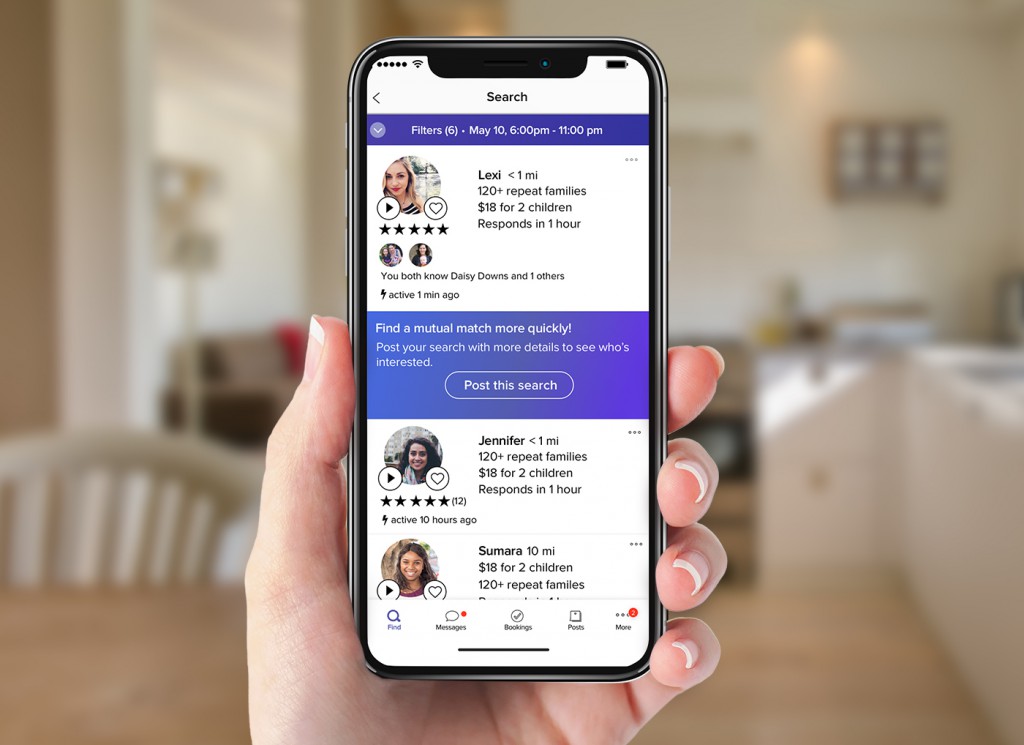
Finding a trustworthy, dependable and caring babysitter can be a true challenge. After all, your friends and neighbors may also be vying for the same individuals’ limited free time, and you may struggle to book the right babysitter for the day and time needed. When you learn how to book a babysitter through an app on your smartphone, you may never use another method again.

Find the Right App

If you are like most other parents, your smartphone is loaded with tons of apps that help you to manage various aspects of your busy life. However, you may not yet have a babysitting app. Hiring a babysitter understandably should be done with care, and the reality is that you may find a well-qualified babysitter more easily when you take advantage of modern technology. With a babysitter app, you can find detailed and strict vetting processes that exceed the efforts that you may take on your own. Before selecting a specific app to use, carefully research standards and requirements that each one uses. Read numerous reviews, and consider asking friends and neighbors for recommendations.

Following the Booking Instructions

Once you have located an app that you are interested in testing out, spend time learning about its features and capabilities. The best apps have babysitter bios and enable you to connect with the babysitters through the app conveniently. Spend ample time exploring the caregivers available to you through the app so that you can find a babysitter that may be most well-suited for your children. Your children’s ages, interests, and special needs should be taken into consideration as you locate a few preferred caregivers to reach out to.

Test the Service with a Short Outing

When using a new babysitter scheduling service and when leaving your children along with a new individual, it makes sense to ease into the experience. Book a short job with a babysitter, such as for an hour while you run to the grocery store and are close to home. Learn how the app works, and focus on how well the babysitter performed as well. You may progressively spend longer periods of time farther from home as your comfort level increases.
Multiple babysitter apps are available for you to explore, and their features and capabilities differ dramatically. Because of the quality of the apps as well as the steps that each one takes to vet its caregivers differ, special attention should be given to your upfront research before you walk through the remaining steps.

Choosing and Instructing a Babysitter: Tips For Parents

Mom with babysitter and child

Mom with babysitter and childWhether you are trying to find a new babysitter or you are in a situation where your previous babysitter is no longer available, you understandably need to find a trustworthy, caring individual to sit with your children while you are out of the house. Your children’s safety and happiness are paramount, so you cannot afford to make a hasty or ill-informed decision. These steps can guide you in making a thoughtful selection.

Review References

Parents commonly ask for recommendations when searching for a babysitter. UrbanSitter makes it easy for a parent to get these references from friends and neighbors because you’re immediately connected to all of the recommended sitters hired by your Facebook friends and neighborhood parents when you use UrbanSitter.

As you review the list of candidates in hand, consider the source of the referral. Does the person have children in a similar age range and with similar personality types? A babysitter who is great with one group of children may not be as wonderful with another group. You also should consider what qualities the reference source may have searched for in a babysitter. Some references may be laxer in their standards than others.

Ask Meaningful Questions

Reach out to a few babysitters who are on your shortlist of options. Inquire about typical availability and rates. Ask how many children he or she normally watches and their age ranges. Consider if the babysitter has a convenient and reliable way to get to and from your home. Specialized training may also be important, which can include basic first aid and CPR training. Here are some questions to ask your potential babysitter during an interview.

Observe the Babysitter

If you are comfortable with a babysitter’s responses to your questions, ask the individual to drop by your home for a short meeting. This is your opportunity to watch how well the babysitter gets along with your children. Does the babysitter actively play with your children? Do your children seem to like him or her? Does the babysitter effectively and compassionately maintain standards for behavior?

Schedule Short Outings

Plan to be away from the house for only an hour or two for the first few sessions. Choose times when the babysitter may need to prepare meals or put the children to bed. Provide the sitter with clear instructions. Understand that the babysitter may be challenged by behaviors that you are also a struggle for you to deal with. For example, some children are defiant at bedtime. These short outings provide you with the opportunity to test the babysitter’s skills in action and to determine how well he or she follows instructions that you have provided. It also allows your children and the babysitter to become more familiar with each other.

You may find a babysitter near you who you and your children adore by walking through these steps a single time. However, be prepared to compare the differences between several babysitters before you narrow down the options fully and settle on one individual.

7 Reasons to Book a Babysitter This Summer

20180228_URBANSITTER_SHOT_02_0784

Why is summer a great time to book a babysitter? Read on to find out:


 1. School’s Out For Summer!

frank-mckenna-127295-unsplashSummer break is here, which means a whole new schedule for the whole family. Make the transition easier for everyone with a summer sitter or nanny to help with the new routine. Part-time, full-time, anytime. We’ve got you covered!

2. Summer Camp, Soccer Games, Swim Lessons…Oh, My!

maarten-van-den-heuvel-105902-unsplashSchool may be out, but the kids’ schedules are busier than ever. Find and book a sitter who can help you manage all of the drop-offs, pickups, and everything in between! *Pro tip: Search for sitters that are willing to drive before you book!

3. “Me-Time”

rawpixel-369784-unsplashSummer break is filled with activities and family fun, but let’s be real, parents…sometimes we need a break. Book a sitter and take a time-out for some quality alone time.

4. Hosting A BBQ or Pool Party

matthieu-joannon-666745-unsplashThe summer is the perfect time to have friends over for a bbq or pool party, but we also know it can be overwhelming trying to entertain and watch the kids. Book a sitter to help keep an eye on the kids while they swim and play. *Pro tip: Search for CPR certified sitters before you book!

5. Summer Fun is Here and So Are Your Errands 

jeshoots-com-462287-unsplashTaking your kids to the grocery store or your hair appointment isn’t usually efficient or time-saving. Book a sitter and get through your to-do list faster this summer.

6. Date Night…or Day!

20180228_URBANSITTER_SHOT_09_0480Take advantage of summer weather and plan the perfect date. A day trip to a winery or dinner and a movie. The possibilities are endless when you unlock your sitter network.

7. It’s Wedding Season

chuttersnap-461238-unsplashHave an upcoming wedding? Kids not on the guest list? Don’t miss out! Your sitter network has wedding season covered.

Whatever your summer childcare needs, UrbanSitter lets you find and book sitters of people you trust. Unlock your personal network to book babysitters and nannies you’re connected to today!


The Ultimate Guide to Nanny Shares

What is a nanny share? Two families share one nanny to give personalized attention and offset the child care cost.

Let’s face it: child care is one of the most significant expenses in a family budget, and that’s why so many parents are keen to set up a nanny share, which promises personalized care with more affordable costs. In this guide, we’ll explain what a nanny share is and how it works, review the pros and cons, address frequently asked questions, and give you tips to set up your own nanny share.

What Is a Nanny Share?

A nanny share is a child care arrangement where two or more families split the cost of one nanny. The nanny, who is paid a premium over nannies who care for just one family, has her salary split between two families—typically caring for all of the children together.

How Does a Nanny Share Work?

The families typically coordinate their schedules, choose a suitable location for the care, and establish clear agreements regarding responsibilities, compensation, and logistics. The nanny’s attention is divided between the children from both families, fostering a shared learning environment.

Benefits of Nanny Shares

Affordability tops the list of unique advantages that a nanny share provides, making high-quality care accessible without breaking the bank. Personalized attention and tailored learning experiences are also highlights, allowing your child to thrive in a nurturing environment. Social interaction is crucial for development, and nanny shares provide built-in playmates, fostering essential social skills from an early age. Lastly, reduced exposure to daycare center germs means fewer sick days for kids and adults alike.

Cons of Nanny Shares

While nanny shares come with numerous benefits, it’s essential to consider potential drawbacks. Coordinating schedules among two families can be complex, collaborative decision-making might lead to conflicts, privacy boundaries could blur, and dividing a nanny’s attention between children could pose challenges. Additionally, logistical aspects like transportation and contingency plans need careful consideration. 

Finding a Compatible Family

The cornerstone of a successful nanny share lies in finding a compatible family. This involves more than matching schedules; it’s about shared values and parenting philosophies. Where do you begin? Local parenting groups, online platforms, and recommendations from friends are excellent starting points. Engage in open conversations, discuss expectations, and ensure both families are on the same page to build a strong foundation.

Tips for creating and managing a successful nanny share:

  1. Choose a Nanny Who Suits Both Families
    The first nanny share tip is it’s often best to choose a nanny together with another family—finding one that works equally well for both—rather than joining an existing nanny relationship. Interview potential nanny candidates to gauge rapport, and ensure that he or she meets both families’ needs and that all three parties share the same expectations. Check references and reviews from other families to confirm that the nanny is well qualified for the job. Caring for two families at once is not without challenges, and isn’t the right fit for all nannies.
  2. Find the Right Family
    Choosing a family for a nanny share arrangement is just as important as selecting the nanny. While no two families will share the exact same parenting style, you will want to find a family with similar views on diet, discipline, and screen time since the nanny will be caring for your children collectively. Many parents find that it works best when their children are the same ages and share similar schedules, needs and activities. Once you find the right family, decide where the nanny will care for the children, likely at your home or the other family’s home, or perhaps alternating homes by the day, week or month.Kids playing together in their nanny share
  3. Create a Thorough Contract
    An employment contract should be in place before the nanny begins work, and can be referred to throughout the relationship to keep the arrangement on track. It should include the nanny’s pay rate and pay schedule, hours each family agrees to pay, tax responsibilities (both families are considered by the IRS to be employers with tax responsibilities), and policies for late pick-ups, holidays, vacation time, and sick days (for both the nanny and the kids she cares for), as well as termination. The contract should also include a detailed description of the nanny’s child care and household duties.
  4. Stay Connected and Coordinated
    A successful nanny share requires consistent, open communication between families and their nanny. To keep up with changing needs, commit to frequent meetings or phone check-ins with the other family, and a regularly scheduled, three-way meeting with the nanny—perhaps at pick-up, weekly or biweekly. Discuss how things are going, make adjustments to logistics or schedules, and agree on changes or tweaks that will make the relationship smoother and stronger.
  5. Contribute Fairly to Shared Supplies and Equipment
    Our fifth nanny share tip is also quite important—decide upfront who will pay for and supply meals, baby supplies, and any equipment needs, such as a portable crib, baby swing or car seats. Typically, a family supplies whatever food and equipment their child needs, and contributes to shared items, such as a double stroller and snacks. Agree on how you will replenish shared supplies so no one feels taken advantage of for having to pick up baby wipes, for instance. Decide how you will communicate needs—via text, email or a quick chat at pick-up–to determine who will make the pick up. To create goodwill and fairness, be generous, bringing fruit or treats for the children to share or extra diapers when you know that your child will inevitably require a back-up from the host family’s supply.
  6. Expect Change
    Eventually—either because your needs change or because you are no longer happy with the relationship—you or the other family will want to exit the nanny share. It’s advisable to give a minimum notice, likely four weeks or longer, or to pay the nanny in lieu of the notice. “Advance notice of your intent to leave a nanny share ensures that the other family involved is not stuck footing the nanny’s full salary, and allows them to either find a replacement for the share or alternative childcare,” says Lynn Perkins, CEO of UrbanSitter. “It also gives your nanny time to look for other employment, if necessary.”

Nanny Share Costs

Nanny shares offer a cost-efficient childcare solution, but it’s essential to grasp the cost breakdown. Key considerations include the shared nanny’s salary (see average nanny salaries by US city here), additional compensation for tasks like transportation and housekeeping, taxes, benefits, administrative fees, shared expenses, backup care costs, legal documentation expenses, and long-term planning adjustments. Open communication about these costs ensures transparency and effective financial planning for both families involved. 

Frequently Asked Questions

  1. How do I find a compatible family for a nanny share? Seek out like-minded families through local groups, online platforms, and recommendations. Shared values and open communication foster compatibility.

  2. What’s the best way to interview a potential nanny? Beyond qualifications, inquire about child development, emergencies, and conflict resolution to gauge compatibility.

  3. How should we handle sick days and vacation time for the nanny? Incorporate sick days and vacations into your agreement, deciding on paid time off or backup care solutions.

  4. What’s the best way to divide responsibilities and communication? Establish a communication plan, decision-making methods, and clear responsibilities to ensure harmony.

  5. Are there legal requirements for a nanny share? Yes, cover legal aspects like contracts, taxes, and liability to comply with regulations and protect all parties.

Additional Considerations

Beyond logistics and costs, there are other nuanced factors to consider when setting up a nanny share including: 

  1. Cultural Alignment: How to ensure that both families’ cultural values and practices align within the nanny share. Addressing cultural differences early on and finding common ground can contribute to a smoother experience for everyone involved.

  2. Nanny Share Dynamics: Exploring the potential dynamics that could emerge between the children, the nanny, and the families. Understanding how to foster positive relationships and navigate any challenges that might arise is essential.

  3. Child’s Transition and Adjustment: Strategies for helping children adjust to the new environment and routine of a nanny share, particularly if they’re transitioning from another childcare arrangement or home care.

  4. Emergency Protocols: Developing a comprehensive emergency plan that outlines procedures for medical situations, accidents, and unexpected events. Ensuring that both families and the nanny are well-prepared for various scenarios can enhance safety and peace of mind.

  5. Conflict Resolution: Detailed insights into how to address conflicts that may arise between families or with the nanny. Strategies for open communication, compromise, and problem-solving are vital to maintain a healthy and functional arrangement.

  6. Sibling Dynamics: Tips for managing situations where one family has siblings and the other doesn’t, including how to address potential disparities in attention, activities, and sibling interaction.

  7. Transitioning to Preschool or School: Planning for the transition when one or both children are ready to attend preschool or school. Discussing how to manage the change in schedule, transportation, and the impact on the nanny’s responsibilities can be helpful.

  8. Additional Costs and Budgeting: Beyond the nanny’s salary, exploring potential additional costs such as activities, outings, and extra supplies. Creating a realistic budget can prevent financial surprises down the road.

  9. Communication During Nanny’s Absence: Strategies for maintaining communication and coordination when the nanny is on sick leave or vacation, ensuring minimal disruptions to both families’ routines.

  10. Long-Term Planning: Discussing the potential for a long-term nanny share and considering scenarios such as one family’s needs changing or children starting school. Preparing for the future helps create a stable foundation for the arrangement.

A nanny share can be an ideal child care solution for families who commit to open communication, flexibility, and mutual respect for each other and the nanny who cares for their kids. Services like UrbanSitter offer a convenient way to find qualified nanny candidates for your nanny share.

Looking for a nanny for your nanny share?

Join UrbanSitter to find the perfect match!

The Pros and Cons of Daycare Revealed by Studies

Pros and Cons of Daycare

Does Your Choice of Child Care Effect Your Child’s Development?

Nearly 11 million children under age 5 are in some type of child care each week, which isn’t surprising since nearly 70 percent of mothers with children age 17 or younger work full or part-time. Almost 30 percent of these kids are enrolled in center-based child care, such as a daycare center, nursery school, pre-kindergarten, Head Start, or other early childhood education program. Choosing child care—such a day care center or in-home daycare, nanny, babysitter, or an au pair that is right for your kids, your schedule, and your budget can be a tough, emotional decision, and one parents often second guess. In this article, we’ll explore the pros and cons of daycare.

Take comfort from the experts: The National Institute of Child Health and Human Development’s (NICHD) Study of Early Child Care and Youth Development, the largest and longest-running study on the effects of child care on development, shows that what happens at home—family and parent-child interaction—has a greater impact on how a child develops than does a parent’s choice of child care. (Hear the huge sigh of relief from parents everywhere!) However, it’s important to carefully evaluate childcare options for your family.

The Pros and Cons of Daycare

Pros:

  • Socialization—Daycare enables children to spend time with other children, helping them develop important social skills, such as sharing, taking turns, negotiating, and self-control. It helps them to function in groups, to understand social norms, and ultimately allows them to learn from each other.
  • Cognitive and Language Development— Many daycare centers provide some instruction or exposure to the arts and academic concepts. Studies show that kids who attend center-based daycare have somewhat better cognitive and language development, as well as stronger pre-academic skills involving letters and numbers. colette-play2
  • Dependable Care—Because centers have several childcare providers, parents can count on dependable childcare. There’s no worry or scramble to find alternative childcare if a provider calls in sick.
  • Strengthened Immunity— Really! Parents bemoan the constant stream of germs and sickness kids pick up and bring home from daycare, but a study published in the Archives of Pediatrics and Adolescent Medicine shows that daycare may enhance immunity. Babies who attend large-group child-care centers get more respiratory and ear infections than those cared for at home, but they are less likely to come down with these ailments once they start elementary school, signaling that some immunity building is at work.

Cons:

  • Inflexible Hours—While daycare offers dependable care, it doesn’t necessarily offer flexible care. Daycare centers have set hours that may not match parents’ work hours or accommodate a parent’s need to stay late at work. Centers that offer late pick-ups often charge a premium for the convenience.
  • High Cost of Quality Care—Studies show there is a big difference between low-quality and high-quality daycare. High-quality day care centers do not come cheap. They can often cost as much or even more than a year of college education at a four-year university.
  • Behavioral Problems—The NICHD study found that kids who attend daycare may have more behavior problems at age 4—such as disobedience and aggression—than kids who are cared for by a parent or other caregiver.
  • Inconvenience—Unlike childcare in your own home, daycare requires a drop-off and pick-up, which isn’t always convenient for time-stretched parents. Additionally, daycare centers have strict sick policies (germ control!), which mean parents need to find alternative childcare if their child isn’t feeling well.

Evaluating Your Own Pros and Cons

Every child responds to care and benefits differently due to his own unique nature and needs, so you’ll want to create your own list of pros and cons for daycare. If you decide daycare is the right choice for your family, talk with family and friends for referrals, and visit centers to evaluate facilities, programs, and instructors. Be sure look for the most recent state license and National Association for the Education of Young Children (NAEYC) accreditation.

To find a nanny or sitter to care for your child, services like UrbanSitter can connect you with local providers that accommodate your unique schedule, budget and childcare needs. Choose what works for you.

5 Tips from Working Moms on Managing Child Care

working mom
It’s the most wonderful time of the year! No, we’re not talking about the holiday season, but rather the back-to-school season! For many working moms who struggled to cover child care over the summer, sending the kids back to school can be a welcome sigh of relief. But even if you have kid care covered during school hours, you may still have to scramble to cover child care for after school hours or if your little ones are too small to be in school yet.
 

Here are five tips from working moms themselves on how to manage child care—and how to control the back-to-school chaos.

Determine your needs.
No two working mom’s child-care needs are alike. Some may need full-time coverage, while others just need someone to watch their child a few hours sprinkled throughout the week. So go over your schedule as well as your partner’s to decide exactly how much kid care coverage you actually need. By being very specific in determining your needs, you can potentially save yourself a lot of money—and frustration—in the long run.

Find child care that works for you.
Not all child care is created equal. Depending on your child’s age, you may discover that certain types of child care work better for you and your family than others. For example, if you have a baby, you may opt to have an in-home nanny stay with you while you work to avoid exposing your little one to icky germs. As your child gets older, socialization may be what you’re seeking, so you may want to enroll your child in a local day care. And if your kid is school-aged, a part-time sitter may do the trick to cover those extra hours until you’re done working for the day.

Score a flexible schedule.
If you thought working from home meant that you’d never, ever need child-care coverage again, well, think again. Having a flexible schedule does mean that you can creatively cover child care more easily than your in-office colleagues, though. You may find a telecommuting position that allows you to work around your children’s schedules (i.e., early in the morning or late at night) or right smack in the middle of the day—when kids are in school. Other work-at-home-moms (WAHMs) may find that doing a kid swap on certain days helps to take care of child-care coverage issues without costing a pretty penny.

Once you’ve got child-care coverage established, it’s time to start planning how you’ll prep for getting kids ready for back to school.

Do a run through.
If it’s possible, see if you can attend a tour of your child’s school. Point out the different rooms (such as Art or Language Arts) that your child will be going to. If your kid will be going on the bus, you can drive him along the bus route so he can get used to the ride. That way, the new school year won’t seem as scary.

Prepare ahead of time.
Nothing adds to the stress of a back-to-school morning like leaving everything for the morning! So try to get as much done as you can in the days prior and even the night before. Have outfits ironed and ready to wear, and pack lunches and store in the refrigerator. By having most of the prep work done prior, you’ll minimize the stressfulness of the morning and have both you and your kid calm and ready for a fun school year!


Jennifer Parris is a Career Writer for FlexJobs, an award-winning service that helps job-seekers find professional opportunities that offer work flexibility, such as telecommuting, freelance, part-time or alternative schedules. To learn more about Jennifer, visit FlexJobs.com or tweet @flexjobs.

Looking for a babysitter or nanny? Join UrbanSitter to browse profiles, sort by pay rate, and book jobs online.

Five Reasons You Need Childcare When You Work from Home

Work from Home still requires childcare

Brie ReynoldsContributed by guest blogger Brie Weiler Reynolds, Director of Online Content at FlexJobs, and a work-at-home mom to one-year-old Jack.

A common misconception about working from home is that you can finally give up that expensive child care, since you’ll be home all day. Don’t get me wrong–there are plenty of perks to working from home, many having to do with your kids.

You’ll probably get to spend more time with them because you’re no longer commuting. Attending school events and appointments becomes a bit easier as you have more control over your time. When your child is home sick, you can stay fairly productive while caring for them. That said, whether you’re working part-time or full-time from home, quality child care is still really important.

Five reasons you need childcare when you work from home

  1. Multitasking is a myth.
    No matter how skilled you think you might be in this particular area, studies consistently show that it is basically impossible to multitask. Instead, when we think we’re doing multiple things at once, we’re actually semi-tasking. Rather than focusing on one thing, we are partially focusing on a variety of things, and being less productive in the process. When it comes to your children and work, partial focus is simply not enough. Especially when you have younger children who aren’t yet skilled at keeping themselves busy, you need childcare so you don’t have to split your focus between your kids and your job, making working from home easier.
  2. Your kids will always act up at the worst moment: conference calls.
    If your job requires regular phone calls, video conferencing, or any combination of those, it’s really important to give yourself a quiet environment from which to conduct those. Your professional reputation can be harmed if your children are easily heard during conference calls on a regular basis. Of course, there are always exceptions to the rule, and when school is closed or a child is home sick, these sorts of interruptions might be overlooked. But it’s important to treat your home like your office when you telecommute, and that includes having your children well-occupied by a qualified sitter or nanny, or finding a great daycare nearby.
  3. You can’t predict what every workday will be like.
    While you might think that your job is fairly repetitive and easy to predict, there will be days when nothing goes as planned. It’s very hard to adjust and be productive when you also have to worry about what to do with your kids while you work from home. For all of those times when work throws you a curveball, you will be thankful you have childcare in place.
  4. You deserve to be taken seriously.
    If you truly want a career, it’s important to get your family’s support for your work-from-home job. This includes making it clear to your children that when you’re at work, you aren’t to be disturbed unless it’s an emergency. Setting firm boundaries between parent-at-work and parent-at-home is critical when you are a work-from-home parent. On the other side of the coin, you deserve to take yourself seriously. And by having a childcare plan in place, you are also letting yourself be free to be the best professional you can be, and demonstrating to your boss that you’re a serious telecommuting professional.
  5. Your kids will probably be happier.
    Imagine this scenario from your kids’ perspective. Would you rather spend all day trying to get your parents’ attention but only having success some of the time, or doing fun activities and playing with a sitter? When the workday is over, you can spend some serious quality time with you kids, and the old adage is true–absence makes the heart grow fonder. Those moments will be even more delightful if you’ve been able to focus completely on work during the day.

Instead of playing a constant game of attention-tug-of-war all day, every day, give yourself permission to focus on your career, let your child have fun with a caregiver, and look forward to those quality hours you’ll spend together at the end of the day.

Brie Weiler Reynolds is the Director of Online Content at FlexJobs and a work-at-home mom to one-year-old Jack. FlexJobs is the award-winning site for telecommuting and flexible jobs, listing thousands of pre-screened, legitimate, and professional-level work-from-home, flexible schedule, part-time, and freelance jobs. Brie provides career and job search advice through the FlexJobs Blog. Learn more at www.FlexJobs.com.

Looking for a babysitter or nanny? Join UrbanSitter to browse profiles, sort by pay rate, and book jobs online.

Five Reasons to Hire a New Babysitter

finding_a_babysitterAs we head into the final days of summer, why not shake up your routine by substituting your regular babysitter with someone new? You might not be so keen on rocking the boat, but it’s smart and proactive to meet and hire new babysitters. Here’s why:

Why Try a New Babysitter?

  1. You need to build your sitter repertoire. Think of a fortified bank of sitters as a critical piece of your parenting arsenal.  You don’t want to leave yourself vulnerable by depending solely on one or two sitters for your childcare needs, especially if it takes your child some time to warm up to someone new. Knowing you have a solid bevy of babysitters you know and trust at your ready is a nice insurance policy. It will ultimately save you from last minute scrambles when your babysitter cancels.
  2. Your kids will benefit from a change of pace.  Think of how excited your child will be to meet a new babysitter with a shared interest. With UrbanSitter, you can find someone with your must-haves–someone who is CPR-certified, is comfortable driving carpool, can cook your family dinner – and you can also check profiles to see who might be active in theater, coach a soccer team or lifeguard at a local pool.
  3. You are getting a trial run for future needs. It’s hard to imagine how your child’s needs will change in the not-so-distant future, but kids grow and mature quickly and their needs change right along with them. For instance, you might soon need a babysitter who can handle carpool, help with homework or if you are expecting a new addition to your family you will soon need someone who is comfortable with a newborn.  Meeting new babysitters now will help you prepare for the future.
  4. Easier transitions later. If you know you’ll be hiring a new babysitter for after-school care or someone to help with the baby a few mornings a week once older siblings are back to school, it’s nice to ease into the change and let your child get to know them little by little.  Even if you only plan to book a new sitter for occasional needs, it’ll help your child and the sitter begin to build a relationship, which ultimately means fewer tearful hand-offs down the road.
  5. Your babysitter’s needs and schedule are likely to change, too.  No one can predict the future. Your sitter’s availability could change if she decides to take, for example, a class or a second job, or she could move out of town.  You won’t want to be left in a lurch if her availability no longer matches your needs.  It’s never easy to lose a babysitter your family depends on, but the process of finding a replacement is a lot easier if you have a few back-up sitters at the ready.

Sold on the importance of trying a new sitter but not sure how to find her? The next time your regular sitter is unavailable ask her to recommend a friend with babysitting experience.  She’ll be helping out a friend and a loyal employer.  You can also ask neighbors and friends for recommendations, post an ad on local college job boards, and of course, check UrbanSitter to review scores of sitter profiles and see who’s available when you need the help.

Find and book trusted babysitters with UrbanSitter.