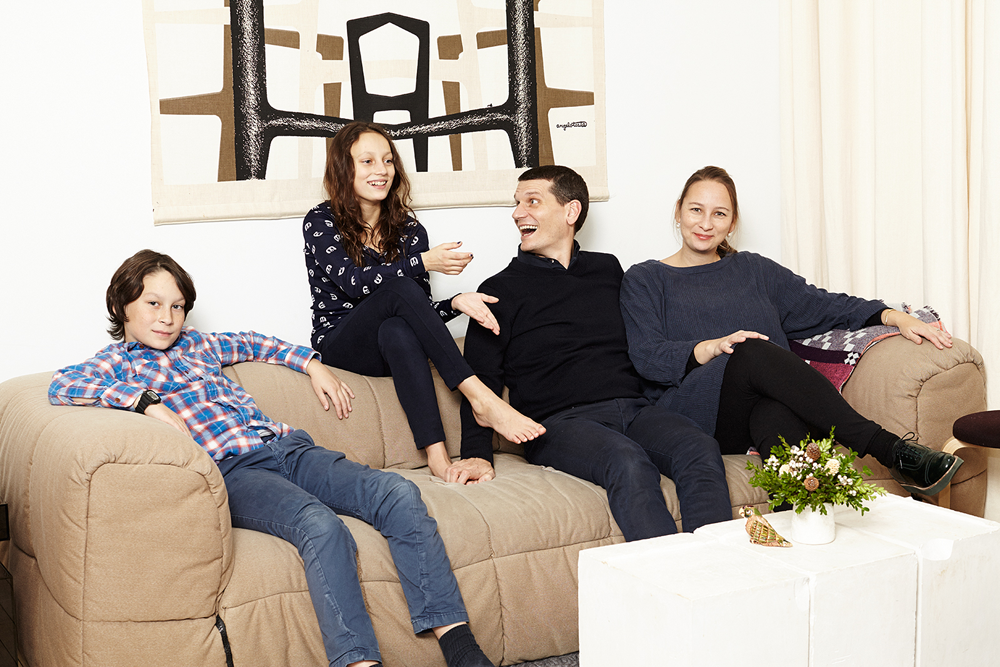
Homework is an integral part of the journey to be educated for students everywhere. But it can cause tremendous arguments when three misunderstandings and misconceptions are prevalent between parents and their children. To clear them up, here are suggestions for making homework more productive and peaceful in your home!
Myth #1: I can’t make my child focus on homework time without making it an endless endeavor.
Truth: The ability of parents to keep kids focused during homework time starts with creating a daily schedule. Look over homework assignments together and decide how long each assignment should take to complete. Write this lightly in pencil at the top of the assignment. You can then determine appropriate breaks—which help improve focus—after one-half of each assignment is completed at an average or above-average level. Each small break can be given in 2-5-minute segments until the homework is completed.
Myth #2: Homework is totally my child’s responsibility and I shouldn’t intervene.
Truth: Generally, the purpose of homework is to help kids master skills on their own at each grade level. In order for it to be effective, though, it needs to be done correctly so learning gaps don’t result. If it isn’t, you may need to give assistance, going over lessons with your kid to make sure he understands what he’s meant to actually learn.
Myth #3: My son’s teacher says he is not consistently turning in his homework, but there’s no way for me to constructively help him to do this.
Truth: Turning in homework is an organizational and executive management skill with which numerous students struggle each year. One easy remedy is to have your kid file all of his completed homework in an accordion-style file folder that has marked spaces for each class. Back this up by placing a sticky note on his agenda book with a reminder to turn in his homework for each class. At the end of each school day, check to see if the homework folder has been emptied.
Parental guilt can be a powerful motivator. In 2013, Courtney Brockmeyer, like many working moms, felt enslaved by the long, stressful hours that often come with working for a big company in a big city. When her youngest daughter—then 7 years old—asked her why she worked so much, she couldn’t find an answer to justify the time she spent away from her family.
“I knew something had to change,” she says from the home her family now shares in Moraga, CA, a quaint residential town east of San Francisco and the headquarters of Sydney Paige, a “social good company” Brockmeyer started in 2014 and named after her and husband Dale’s daughters, Sydney and Paige. “If I was going to work that hard, my work needed to have an impact. I needed to make a difference,” she says. Brockmeyer can now tell her kids that’s she’s working to help supply the more than 16 million kids who live below our country’s poverty level with the materials and tools they need to stay in school, and to make their own mark on the world.
She started Sydney Paige from her previous home in Los Angeles with little more than a sense of responsibility to her family and the families of others, a desire to do good, and a few other moms willing to lend a hand. It operates on a buy/give business model, similar to the way shoe company Toms and optical outlet Warby Parker work. Through the company’s website, Amazon.com, or local events, buyers purchase high-quality backpacks; accessories like lunch boxes, nap blankets, and bag tags emblazoned with inspiring messages, such as Give Back, Respect and Creativity; and children’s books that Brockmeyer has written to illustrate the importance of education. For every purchase, the company fills a matching product with school supplies, hygiene items, food, clothing, and monetary donations secured through partnerships. It then distributes it to a child in need through a non-profit organization of the buyer’s choice—everything from local schools to national and global organizations like Baby2Baby, Volunteers of America’s Operation Backpack, and the Salvation Army.
Why backpacks? Searching for a way to have a positive impact on education, a cause that spoke to her, Brockmeyer found that kids most frequently drop out of school because of lack of confidence and lack of supplies. “If you don’t have a backpack to take to school, everybody knows it. It makes you stand out and shouts to the world that you’re poor, “ she says. No kid deserves that stigma, she says, and every kid deserves the chance to proudly go to school, graduate, and eventually break the vicious cycle of poverty that entraps so many disadvantaged kids.
Sydney Paige’s mission originated from more than just anonymous research. A decade-long employee of food giant, Nestle USA, she conducted market research in her role as business manager by meeting with lower income consumers in their homes. She also took them food shopping to observe their buying habits and budgets. She saw first-hand what need looks and feels like. “We all know poverty exists, but we have no idea how others live or how little they have,” she says. During focus groups and home visits, she saw not only empty refrigerators, but also a lack of books, crayons, and art supplies. “You can’t buy these things when the choice is between that or food,” she says. And, yet, how can a kid be a kid without them ?
All this helped Brockmeyer to channel a sense of personal responsibility she’d carried since college. She’d won a scholarship to attend Pepperdine University, a highly regarded private institution with a price-tag to match its reputation and Malibu, California zip code. When the scholarship wasn’t renewed her second year of college, a second award—the Raleigh Runnels Memorial Scholarship from the chancellor of her university—allowed her to continue her education. “Winning that scholarship gave me a huge responsibility to prove to myself and to others that I was worthy of such a gift,” she says. “I knew I had to someday make a huge impact.”
Sydney and Paige Brockmeyer
Paying it forward through Sydney Paige—like starting any new business—has been a bumpy, and at times serendipitous journey. Just after starting the company in 2014, Dale, also a Nestle employee, took a job as chief financial officer of Dreyer’s, a promotion that moved the family hundreds of miles north of their hometown LA to the San Francisco Bay Area. Amidst the move—getting kids settled in a new school and setting up a home while getting her business off the ground—half of her first product line, a shipment of backpacks designed by a talented designer friend in Austin, Texas and manufactured overseas, was destroyed at the port of entry into the U.S. A second shipment from another manufacturer came back with inferior stitching. They wouldn’t do. “I want shiny, awesome backpacks that kids can be proud of,” says Brockmeyer. “They need to last through school and even beyond.” Already saddled with hundreds of thousands of dollars in personal debt, she trekked on.
As luck, or fate, would have it, she found a “mompreneur,” a seamstress in a neighboring town, who agreed to reinforce thousands of bags for a fee that wouldn’t break an already tapped-out budget. “We took bags to her, load by load, until they were sturdy and ready to go,” says Brockmeyer. Coincidentally, the seamstress is married to a small business loan officer who agreed to coordinate an additional loan, one that ultimately kept the business afloat. “I just kept going, and I just keep going,” says Brockmeyer.
Today, she works at her home, surrounded by loads of inventory—some 10,000 backpacks in a nearby storage unit. Her new best friend is the PTA president at her kids’ school, who is now also the company’s director of sales. She says her view is far better than it was in LA—rolling hills and pine trees. Her workforce is a collection of dedicated do-gooders, many working without compensation. Together, they have given nearly $1 million worth of backpacks and school supplies to children in need.
“Believe it or not, backpacks can really make it or break it for a kid who is struggling to stay in school because his family is too poor to provide the supplies he needs to attend,” says Brockmeyer. Dedicated to her business of keeping kids in school, Brockmeyer hopes to expand her product lines, partnerships, and retail outlets; and eventually offer scholarships like the one that ultimately inspired her to make all the difference to kids in need.
Screentime for kids doesn’t get a whole lot of love in the parenting media. But there’s no denying that we live in an increasingly digital world in which we grownups use technology to our benefit, for everything from navigating local kid-friendly restaurants to figuring out where to gas up the car when the “empty” light flashes on. Can’t children enjoy similar benefits?
“The basic misconception about screen time stems from the notion that the screen itself is more important than the action being performed,” says Björn Jeffery, co-founder of the kids game development studio Toca Boca. “But tablets can be used for language learning, playing games, watching educational videos, or video chatting with family. We like to think of a tablet as a tool with endless possibilities to tap into different emotions, skills, and parts of the brain.”
With this in mind, we’ve rounded up 14 truly terrific educational, gender-neutral apps for kids of all ages, to be used alone or with their parents. Because, as Jeffrey maintains, “All kids should have the opportunity to learn about subjects they are interested in and play with toys they find fun.”
Smithsonian’s National Zoo. Even on a day when you can’t make it to a zoo near you to get up close and personal with all the animals, children can visit them virtually with this app’s giant panda cam, as well as five others that zone in on gorillas, tigers, flamingos, lions, and golden lion tamarins. The app also includes an animal index that lets kids test their species knowledge, and a whole host of information about animals noises and ecosystems (iPad, iPhone & Android, ages 2+, $2).
Avokiddo Emotions. Kids will come down with a serious case of the giggles when they’re introduced to a zany zebra, shy sheep, jolly giraffe, and modest moose. These characters are meant to introduce children to the vast and confusing landscape of their own emotions as they dress up, feed, and interact with little essential pieces of themselves (iPhone, iPad, & Android, ages 2-5, $3).
Sesame Street Family Play. This is an app that’s actually an anti-app, offering parents stuck with their kids in the waiting room or on the train with over 150 fun games they can play together on the spot. Because sometimes, you’ve all had more than enough screentime for the day (iPhone & iPad ages 2-5, $1).
National Geographic’s Look & Learn: Animals Vol. 1. This bundle of three apps—Animal Bounce, Animal Match, and Animal Words—encourages awareness of the natural world through photographs, animal sounds, and game play. Really, this is a theme that never seems to get old among the under-5 set (iPad & iPhone, ages 3-5, $3).
Gro Garden. Kids become virtual gardeners as they plant and care for crops, feed hungry animals, and make compost from food scraps. It’s the next best thing to getting your kids to plant their own gardens on your windowsill—and infinitely more tidy (iPhone, iPad, Android, ages 5+, $3).
NASA’s Rocket Science 101. You don’t have to be a rocket scientist to launch a NASA rocket! Select a mission and build your own rocket that you can then send into orbit. Kids will learn the details of particular NASA missions as well as all about the various components of the launch vehicles and what it takes to get one of these amazing pieces of machinery to break free of gravity (iPhone, iPad & Android, ages 5-10, free).
It’s Tyrannosaurus Rex. Join this fierce predator as she shatters the stillness of the prehistoric forest! Kids can explore pictures, learn new vocabulary, and personalize the app’s story with their own narration. Because seriously, have you ever met a toddler who wasn’t into dinosaurs? (iPhone, iPad & Android, ages 3-5 $3)
Thinkrolls. This is a logic puzzler for elementary kids that’s meant to enhance problem solving, memory, and spatial cognition skills. Every time children sit down to use it, they learn a little something about force, acceleration, buoyancy, heat, elasticity, and gravity while helping 22 Thinkrolls characters navigate through a maze (iPhone, iPad & Android, ages 3-8, $3).
Toca Lab. This colorful STEM-savvy app lets children discover all 118 of the elements from the periodic table (which is more than their parents are likely to know, unless they’re chemists) by experimenting with the various tools provided. Bonus: they won’t be able to blow anything up! (iPhone, iPad & Android, ages 6-8, $3)
The Robot Factory: Build Robots. Children can create any robot they can imagine from 100 parts including exoskeletons, telescopic arms, and spider legs. They can test them by running them through a fantastical world full of obstacles. Then, they can take them out to play (virtually, of course) with whenever they choose (iPhone & iPad, ages 6-8, $4).
Sky Map. This clever app turns your device answers (almost) all your questions about the night sky. Just point your smartphone upwards and Sky Map will tell you exactly what stars, planets, moon phases, constellations, messier objects and meteor showers you see (iPhone, iPad & Android, all ages, free).
Leafsnap. This electronic field guides uses visual recognition software to help kids (and their parents) identify tree species found in the Northeastern US and Canada from photographs you take of their leaves. Great for budding (har) botanists and arborists, and a super way for kids and parents to learn together (iPad & iPhone, all ages, free).
Audubon Birds Pro. This mobile field guide will help you and your kids identify 821 bird species, let you explore an advanced gallery for easy comparison, and contribute to NatureShare, a social community of birders who observe, identify, and share their observations online. Once you get started, you’ll be amazed at how many birds that aren’t pigeons you’ll find hanging out at the local park (iPhone, iPad & Android, all ages, $10).
Project Noah. This super tool lets you explore and document insects, animals, plants and trees on a platform designed to harness the power of citizen scientists everywhere. Just upload your own photo of a species and within hours, other users will weigh in with their expertise to identify it. A great way to learn about your environment as a family, and to discover that there are many other like-minded, nature-loving urbanites among you (iPhone, iPad & Android, all ages, free).
Pretty much every family takes a road trip by car with their kids during the holidays. And whether those kids are toddlers or teens, the actual trip itself can be a wonderful bonding and learning experience for the entire family. With a little forethought and preparation, you can sidestep the dreaded travel fiascos and keep everyone content through through those stretches of highway!
1. Make it a Fun History Lesson. Build some excitement around your trip by getting together as a family a couple of weeks beforehand to plan your road trip path with an old-school paper map. Talk to kids about the different cities and states you’ll be driving through. Then jump online together and do a little research on a few that look interesting. Learn about their history and pick some prime sightseeing destinations. This opens your trip into a journey of exploration—all the more inspiring if you give kids a disposable camera they can later use to make a trip scrapbook.
2. Expect the Unexpected. Keeping a first-aid kit and tools for a flat tire in your car is a no-brainer, but also be sure to bring along items like a flashlight, garbage bags, paper towels, big pack of wet wipes, and cell phone car charger. If you have young children that are new to potty training, it’s a smart idea to also pack a portable plastic potty in case your little one can’t wait for the next rest stop. Kids also tend to rest better with a few items from home, like a stuffed animal and blanket. You can also pick up an inexpensive travel pillow to make car-sleeping more comfortable.
3. Pack Healthy Snacks & Drinks. Truck stops, gas stations and fast food joints are okay in a pinch, but if you bring a cooler filled with your own healthy foods, you will save time and money on the road. Think granola bars, sandwiches, fruit and nuts, yogurt tubes, pretzels, cheese and crackers, baby carrots, packs of sliced apples, cereal bars, and any of the (non-sticky) foods your family usually likes to nosh on.
4. Create a Road Trip Adventure. Instead of just looking at the trip in terms of its end destination, make the whole trip an adventure. This will give the kids something to look forward to and break up the travel time. Take a family selfie in each city or state in front of a sign with its name or something it’s famous for. Also look for rest stops with playgrounds where kids that can burn off some pent-up energy.
5. Make Each Child a Travel Activity Kit. To help pass the time, buy inexpensive totes and pack them with things like new crayons, coloring books, story books, white boards, magnetic travel and card games, and other small games or toys, like Matchbox Cars and small dolls. Anything that’s inexpensive and new to your kids is sure to please—both of you.
6. Check Out At Your Local Library. Before you embark, head to your local library and check out DVDs, books on CD, and chapter book collections for your older reader. They’re free! You’ll have new movies to watch that your kids haven’t seen yet, and when quiet time becomes mandatory for saving your sanity, put in a book on CD for the entire family to enjoy.
7. Don’t Forget the Electronics. If ever there was a perfect time to bust out the electronics, the car trip is it. Load up iPads and Kindles with new apps, books, and movies, making sure you put different apps on each child’s device so they can swap with for more options. And whatever you do, don’t forget the headphones! A few of my family-favorite apps: Waze (the superhero of navigation apps for parents), RoadsideAmerica (find the weird and wonderful across the U.S.), Tales2Go.com (the Netflix of audio books), MadLibs (old school road trip fun meets the digital age), and VisitedStates (kids can mark the states they’ve been to and upload photos they’ve taken).
8. Pack Classic Travel Games. Electronic games are fun, but don’t forget about the old school travel games to help fight boredom on the road: I Spy, 20 Questions, The Alphabet Game (work together as a family to find things along the road that start with each letter of the alphabet), Who Am I? (take turns trying to guess the famous person in history or pop culture), and the good old License Plate Game.
9. Pick Mile Marker Treats. If you’re okay with a little bribery, plot a few places on the map for the kids to get special surprise treats. Among other things, this will encourage them to learn to read a map. The treat can be something small, like sweets or a little something they can play with in the car. The only requirement to earning them is that kids be kind, get along with each other, and be patient for the trip. You might be handing out fewer of these than you’d feared!
10. Consider an Overnight Stay. If the trip is long enough, consider an overnight stay halfway through at an affordable hotel with a pool. If you book the stay right before you leave or on the way, you’ll find the best deals.
A team of French scientists has reported in the journal Cognition and Emotion that laughter doesn’t just make us feel good. It also helps us learn.
The researchers, led by Rana Esseily, who studies emotion, developmental psychology, and cognitive psychology at Paris West University Nanterre La Défense, studied a group of 18-month-olds—roughly the age when humans develop a sense of humor—to determine whether toddlers’ cognitive abilities improve when laughter is involved. They designed an experiment where each tot observed an adult using a tool to grab an out-of-reach toy. In one group, the adult simply played with the toy after retrieving it. In a second group, the adult threw the toy immediately on the floor, which made half the kids in that group laugh.
The researchers found that 94 percent of the tots who laughed at the antics of the adults were able to repeat the action themselves more successfully than those who didn’t laugh, as well as those in the “humorless” control group.
Why laughter seems to be linked to learning isn’t entirely clear, but Esseily and her team cite two possible explanations. The first relates to temperament. “In this case, it is not humor per se that may have facilitated learning, but [that] temperamentally ‘smiley’ babies were more likely to engage with the environment, and therefore to attempt and succeed at the task,” says Esseily. She suggests that “laughing babies” may have higher social skills or cognitive capacities, allowing them to interact more easily with others and making them more amenable to mimickery.
Esseily’s second explanation relates to brain chemistry. It is well known that positive emotions, such as laughter, can increase dopamine levels in the brain, which in turn has a positive effect on learning.
Though more research is needed to determine the extent of the relationship between laughter and learning, there’s ample reason to keep your kids giggling: it’s fun for all of you! Plus, they just might learn something from it.
There’s a lot of contradictory and downright erroneous parenting info floating around out there. We’re not afraid to tackle it head-on!
It’s been drilled into our heads that allowing our kids to watch too much television or play apps and games will rot their growing brains. Over and over we’ve heard from various experts that screen-time overload keeps kids from necessary active or outdoor play, limits human interactions that are critical to proper development, and exposes kids to violence and content that is too mature for them to properly process.
While there’s truth in all of this—families are wise to heed the American Academy of Pediatrics’ recommendation to limit kids’ screen time to no more than two hours per day— it’s also important to recognize the educational and developmental benefits that kids can glean from technology, including better hand-eye coordination, school readiness, and boosts to cognitive development.
To help us dispel common myths around our kids’ use of tech (and ease a little of our guilt about handing over our iPhone), we spoke to Jordan Lloyd Bookey, a mom of two and co-founder of Zoobean, a service that helps families locate children’s books and apps that are worth their time. A former Google employee, Bookey is passionate about tech innovations, and an expert at making smart media choices on behalf of kids. Here she shares her advice on how to create a healthy media diet, and use it to enrich childrens’ ever-curious minds.
Myth #1: Kids should be doing something active or imaginative rather than relying on technology for entertainment.
Truth: Active play and socializing with family and friends should be an integral part of your child’s life, but there’s an important role for technology to play, too. “We just need to remember that all screen time is not created equal,” says Bookey. “It’s about the content and how your child is engaging with it.” You can plop your kids in front a television or a tablet to watch a cartoon or play a game while you’re getting ready for the day—essentially, using the device as a babysitter, which every parent does on occasion. Conversely, you can use technology as a powerful way to engage with your kids. According to Bookey, “It can give us opportunities to co-play together—to ask questions and help kids develop and process a deeper meaning from what they are seeing.” Build a healthy media repertoire that consists of quality, parent-approved content, to balance the occasional just-for-fun cartoons and games with interactive experiences for both of you.
Myth #2: Kids have to choose between inside screen time and outside play.
Truth: “Technology can be an excellent complement to outdoor play,” says Bookey. It can enhance outdoor exploration, spark kids’ curiosity, and get them excited about learning about their surroundings. Using technology outside can be as simple as taking a minute to look up questions about the world around them—for instance, Why do ants build hills? Or why are there so many worms out after it rains? You can use a smart phone to document finds or visit websites like National Geographic to dive deeper into the topic, exploring where insects live, how big they get and what they eat. Apps like the National Park Field Guide act as guide books; others, like Munzee, can be used to initiate a scavenger hunt; and Leafsnap is fun for identifying trees. For kids living in urban environments, technology can provide a window into a bigger world, allowing them to explore and experience nature beyond just a park or green space.
Myth #3: Playing on the computer, iPad, or Mom’s phone is a mindless activity to pass the time, and it’s addictive!
Truth: Every parent should have their own rules about the use of technology at home—setting boundaries on content, restricting devices from the dinner table, and forbidding it before bedtime, for instance—in order to ensure that kids get plenty of human interaction. “If you let kids overload on technology, they are going to miss out on developing good communication skills and building their emotional IQ. But, if you find a balance and allow its use in moderation, you can help your kids embrace new skills that are hugely beneficial,” says Bookey. For instance, kids are often more willing to take risks and make mistakes when playing apps that help them practice math, reading, and writing skills. “Apps are non-judgmental,” says Bookey. “No one knows if a a kid messed up an answer, so they’ll keep trying.” Games like the eternally popular Minecraft can help kids build analytical thinking and drive creativity. “Think of technology like food,” says Bookey. “You want your child to know what’s good for him—to know the difference between a chocolate chip cookie that’s okay in moderation, and healthier alternatives that he should choose more often; and you want him to be able to make smart decisions when choosing between the two.” As with any diet, it’s all about creating a balanced mix.
There’s a lot of contradictory and downright erroneous parenting info floating around out there. We’re not afraid to tackle it head-on!
You may be past the days of coaxing your newborn to sleep through the night, or convincing your toddler to get in bed while his older siblings are still awake. But sleep challenges don’t always disappear when your little one graduates to the big kid bed! This month, we
turned to psychologist and family sleep coach Sasha Carr, Ph.D. to help us bust three myths about sleep challenges related to growing children.
Myth #1: We have so much to do after school—activities, homework, dinner, spending time together as a family. It’s okay to push bedtime back to a later hour, since my child will be extra tired and is sure to sleep better.
Truth: It may seem reasonable to keep kids up later so we can squeeze more into our busy evenings, but the latest sleep research tells us that this isn’t a wise or productive solution. Although most young children naturally wake between 6:00 and 7:00 am, they are more likely to wake even earlier if they’ve gone to bed later, since overtired kids don’t sleep as well. They often have a hard time staying asleep through the night, or wake super early and aren’t able to go back to sleep, explains Carr. It’s important to stick to a reasonable bedtime so kids can load up on what Carr calls the “power hours” of sleep, that early, non-REM sleep time when we all sleep more soundly; this way, kids will easily be able to fall back to sleep after those normal, brief awakenings in the second half of the night.
You can make getting a good night’s sleep a priority in your house by holding tight to a reasonable bedtime. To get there, carefully consider which after-school activities are best for your child and your family and, when possible, scale back or move some of them to the weekends.
Myth #2: My child isn’t a baby anymore so he doesn’t need a bedtime ritual. Plus, now that he stays up later, I’m too tired to keep the routine going.
Truth: Bedtime routines can become like death marches for parents, especially if they’re too long and complex, or if they drag on too late into the evening. “While it’s tempting to cut your exhausted self some slack and skip the ritual, keep at it,” says Carr. Routines are reassuring even to older children, giving them consistency and calm and as a result, helping them fall asleep. If you already have a routine, work on shortening or simplifying it, so it’s easier for you to stick with it.
Thirty minutes is the ideal amount of time to be fully engaged with your child at the end of their day. So if bedtime stretches too far into the night, consider starting your bedtime routine a half hour earlier. If you always read three books, cut back to two. If you have more than one child to put to bed, save your sanity by adjusting your routine so that it includes everyone and accommodates age differences; alternate reading a chapter and picture books aloud, or have an older child read to his younger sibling, for example.
Myth #3: My child finally sleeps through the night and it’s going to stay that way forever!
Truth: Bravo to you for reaching this amazing sleep milestone! But be aware that sleep habits can change as kids grow and also change. It’s not unusual for preschoolers to have difficulty falling asleep at night, especially during a period of change, such as starting school; and some children experience night terrors—similar to nightmares although much more disruptive to the rest of the family than to the child having them—typically between the ages of 3 and 12.
Also, interestingly, Carr points out that many children progress to an 8:00 pm bedtime as they get older, but our bodies’ circadian rhythms give us a
boost of a hormone called cortisol right around this time, which makes us more alert and therefore, less able to fall asleep. Outsmart it when the time comes, either by putting kids in bed before 8:00 pm (if they’ll stand for it), or establishing an 8:00 pm quiet time in which they can read or lie around before lights out, with the aim of having them drift off to sleep by 8:30 pm.
From their whirlwind business beginnings nearly five years ago, Tony and Amy Yanow took inspiration from an unlikely but apt quote from George Orwell: “The Puritanical nonsense of excluding children and therefore to some extent women from pubs has turned these places into mere boozing shops instead of the family gathering places that they ought to be.”
Parents to three-year-old twins Chloe and Hudson and Tony’s 12-year-old daughter, Marley, the Yanows own and operate a now-burgeoning craft brewing mini-empire. Quite possibly, they hold exclusive rights on being the only pub owners in the country who’ve found a way to integrate family, wholesome food, and craft beer so that it all functions as one great, organic whole. “Business and family, together, have become a way of life for us,” says Tony.
The Yanows at Mohawk Bend in Echo Park
“Love brought me to the eastside of LA, which felt like a different country— and with the traffic, was nearly as far as one,” recalls Amy of her move six years ago from LA’s westside to be with Marley and Tony, who hails from Canada. She’s constantly surprised by the gems she’s still finding in the cluster of small neighborhoods that make up the family’s laid back, hilly community of Los Feliz and nearby areas—including a kid-friendly bowling alley, X-Lanes, right next door to one of their family’s favorite vegan lunch spots, Shojin, in Little Tokyo. “It’s a much more urban area, here, and so well-suited for family life,” she says of Los Feliz’s proximity to downtown LA and its many dining and entertainment options.
The Yanow’s home is an urban oasis, tucked away from the grit of city streets. It’s outfitted with a yurt, which houses the family’s home gym. And it’s just a short jog from the area’s greenway, Griffith Park—which, conveniently, links their house and all three of their three businesses. “It’s a jewel of LA; everyone with kids knows it,” Amy says of the park. “There are trails to hike, a huge lawn for kids to play on, the observatory, haystacks and pumpkins in the fall. It even has a view of trains—Travel Town—for my train-obsessed son.” She says the park is a fantastic way to entertain her kids without spending a dime, right in her very own backyard.
Amy Yanow and her three-year-old twins, Chloe and Hudson
Another source of local, family entertainment: roller derby! The Yanows are die-hard fans, supporting Marley’s LA Junior Derby Dolls team, both bodily from the stands on game days, and more practically through their businesses, as the women’s team’s corporate sponsor.
When it’s time to go to work, Amy says, “The kids love to go to the restaurants with us.” Although their eateries are famous for their expertly compiled local beer lists and menus aimed at the late-night crowd, they’re also super kid-friendly and reflect the values the Yanows find meaningful in their personal lives. Tony’s Darts Away is beloved for its board games, and has also earned accolades for thoughtfully sourced menu items the Yanows have added since they took ownership in 2010. Namely, an impressive selection of sausages—at least a half dozen of them vegan.
Mohawk Bend, an old Echo Park movie theater the Yanows have transformed into a sleek, industrial-modern gastro pub, has generated buzz on sites like Yelp and UrbanSpoon for its vegan Buffalo Cauliflower as well as for nowhere-near-vegan options like chorizo-stuffed Medjool dates wrapped in bacon. “It’s packed with night owls who come in the late morning hours but before they wake up, it’s absolutely perfect for families, with no wait for a table,” says Amy.
The busy Yanow family heads to 12-year-old Marley’s roller derby practice
The Yanow’s most recent establishment, Golden Road Brewing in LA proper, which Tony co-owns with Meg Gill, is also designed to draw families, luring Mom and Dad in for a Point the Way IPA, and kids with lawn games, like corn-hole, set up in the side yard. All three eateries (at least possibly responsible for GQ Magazine naming LA one of the top five beer cities in American in 2012) have well-rounded kids’ menus that go beyond fried chicken fingers, including fresh fruit and simple pasta options.
In case you haven’t guessed it by now, the Yanows keep a vegan household (and at least a partially-vegan business), “for ecological reasons and because we like the way we feel eating plant-based foods,” Amy explains. She was raised vegetarian, and returned to the lifestyle after a brief burger rebellion. Their younger kids don’t know the word vegan, though, and aren’t strictly held to the diet. “We downplay it,” Amy says. “If they go to a birthday party and everyone is eating cheese pizza and cake, they can have at it, if they choose. I don’t want them to resent us.”
But Amy says the kids enjoy the meals she serves so much that she doesn’t share the pain some other parents feel about cooking healthy food their kids ultimately reject. One of the first things she does each morning is turn on the rice cooker. “It just tastes better when it’s fresh,” she says, explaining that she adds beans or lentils from big batches she keeps on hand for burritos, to pack in the kids’ bento lunchboxes. They are also big fans of raw cashews, whirled in their VitaMix to become cheese-like bases for rich, creamy sauces at dinnertime.
“Just like at our restaurants, no one feels like they are missing out,” says Amy of family life. “We’re well rounded, something for everyone.”
Ross and daughter Callaway enjoying the sunshine out on the Books and Cookies turf.
By Lela Nargi
On a low-slung strip of street halfway between the skate shops of Venice’s Muscle Beach and the boutiques of downtown Santa Monica, Chudney Ross has opened her kid-centric outpost, Books and Cookies. Twice.
Aiming to provide what she calls a “literacy-based experience” for the area’s burgeoning young family population, in 2011 Ross fell in love with a storefront that was wedged in among the area’s myriad coffee shops and palm trees, even though she knew the space was much too big for what she had in mind. “I had positive aspirations!” she laughs.
Books are arranged at toddler height, so kids can easily select their faves.
Those aspirations began even before Ross was a mom herself—to daughter Callaway, now age two. Back then, she lived in Venice (as she still does, with Callaway and fiancé Joshua Faulkner), rode her bike “everywhere,” and was writing her first children’s book at a nearby branch of the Coffee Bean. Wherever she looked, she says, “I noticed there was nothing at all for children. There’d be moms in the Coffee Bean but it was just a place for them to meet up with each other and chat before going for a walk somewhere else with the kids.”
That vision of a klatsch of moms-without-a-base stuck with Ross. And so it was that when this former teacher and youngest daughter to legendary Motown singer Diana Ross opened Books and Cookies in its first incarnation, she already knew that she wanted to create an environment that was welcoming and nurturing, not just for children, but for their parents as well. It’s an environment she likens to the ’80s TV show Cheers, “Where everybody knows your name,” Ross says.
Art time at Books and Cookies!
The old place, like the new, significantly more manageable place—which Ross opened across the street from the original locale just this past September—was conceived as part bookstore, part event space. Parents could shuffle in for Books and Cookies’ ever-popular storytime, order up cups of strong hot coffee for their own bleary selves and some home-baked cookies for their kids. Then casually spend the morning hanging out with like-minded moms and dads who were elated to have a safe, fun place to park their strollers and veg out for a while. If they were feeling slightly more ambitious, they could drop in for a Mommy & Me yoga class or a craft-making event. Above all, says Ross, it was a place where “parents could bond.”
It’s been a work in progress since its inception. Says Ross, “Originally I thought of it as three separate businesses: a bookstore, a café, and an enrichment center.” Re-conceiving it as an all-in-one destination not only streamlined her original concept; it helped her create a place that is not quite like any other. “There are a lot of baby classes in LA that teach parents how to do all kinds of things. I’m not trying to teach parents anything—I’m learning everyday myself. What I know how to do is make reading fun.”
The fun starts when you walk in the door of the new narrow but bright space. Right up front is Ross’s continuously revolving and highly curated selection of books for kids of all ages, within easy reach of even the smallest of mobile tots. “We may not always have exactly the book you’re looking for, but we’ve got unique bestsellers and classics from when I was young,” says Ross. Certain titles are always on tap, like James Dean and Eric Litwin’s Pete the Cat. “It’s got singing, and fun colors—basically, it’s a good read for all the age ranges we see in here,” says Ross. Infants and toddlers dominate the morning; toddlers on up to kids around age 6 show up after nap time and stay well into the afternoon.
Whether or not to keep such tender merchandise within grabbing and gnawing distance was a matter of some debate. “People cautioned me from letting families pull down books,” says Ross. “But for me it was more important for them to spend time reading. And our families are pretty good about buying a book that has a bite mark in it, or a cover that’s a little mangled.” Ross also set up a bargain bin near the cash register—one of many unique solutions Books and Cookies adopted right from the get-go.
Another is found in the small details that turn up all throughout the shop, which welcome children to stay. And stay. And stay. Says Ross, “I found a picture of an amazing bookstore in Hong Kong, where kids could climb into holes in the walls and sit in there with pillows and books to read. I didn’t have the resources to recreate that, but Mimi Shin, who helped me design the space, made shelving structures you could climb under, and a hammock up front the little ones can sit in.” Also inviting intimacy with reading material is the teepee in the shop’s turf-topped, 600-square-foot outdoor playspace.
Sneaking a peek.
Since babies and toddlers often prove to be such fickle and short-attentioned visitors, that playspace, which was tiny and indoors in the old location, was an unexpected boon to the business. “People love it—they walk in and say, ‘This is awesome!’” says Ross. Kids can run amok and burn off energy in the almost-always-balmy So-Cal weather—including Callaway, who Ross says used to be content to sit in the shop, propped up by books, but who now “tears the store up.” And parents don’t have to worry about losing a toddler, since the area is enclosed. It doubles as a party space for the myriad birthdays the shop hosts.
Although literacy always remains a focus. Says Ross, “A lot of times when they come in to book a party, people will say, ‘Oh we don’t need to do storytime—our four-year-old won’t like that.’ And I say, ‘Please give it a shot.’ Their kids always wind up loving it. They see us read with enthusiasm.” More often than not, they’re excited to bring that positive energy home with them.
Ross says it was simple enough to reinstate all the old favorite classes from Books and Cookies’ old outpost to the new. Although storytime remains the shop’s most popular recurring event—it happens four mornings a week at 9:30AM, led by one of Ross’s personally-trained staff members—there is also toddler yoga, and sensory playtime, and various music classes, run by a cadre of local kid specialists. But even these activities contain a subtle literacy bias. After all, says Ross, “We can also story-tell thorough our bodies, and through music.”
One thing that didn’t quite make the full transition: the cookies that comprise half the shop’s name. In the old space they were hand-baked daily on site. But in planning for the new space, Ross says, “I met with some of our regulars and asked what was the most important part of Books and Cookies for them, what would they be sad to find missing? Mostly they said they liked the sense of community, the classes, the varying array of books for kids in a broad age range. No one said food.” Which was lucky, because the new space had no room for a full kitchen. So, the cookies and a whole array of healthy snacks were taken off the menu. And Ross discovered that even without a health permit she could have 100 square feet of pre-packaged food available for purchase: cookies and muffins, mostly. But she says customers noticed a difference between store-bought and homemade, which are “baked with love.”
Coffee for the parents had to go, too. And although Ross admits that’s something of a problem, despite the profusion of coffee shops in the neighborhood—“People like to stop once”—bringing it back is beyond her capabilities. But she is working on resurrecting the homemade cookies. The week she spoke with UrbanFamily, she was trying out deliveries from Jojo’s Dozen in Inglewood. “We’re experimenting with having multiple kinds of homemade yumminess,” she says. “The cookies will be small, so you can mix and match: maybe one oatmeal raisin and one red velvet. We’ll get new deliveries of different kinds of cookies every two days. Our books rotate; why shouldn’t our cookies rotate, too?”
The Hanlin-Coopers in their newly renovated Cobble Hill living room.
By Lela Nargi
What do two architects want in a NYC apartment? “We were looking for a big loft in downtown Manhattan,” recalls Jennifer Hanlin of the move she and husband Chris Cooper made in the late ‘90s after graduating from Harvard’s Graduate School of Design. “It turned out, that’s only for people on Friends.”
What she and Cooper got was a “teeny-tiny” apartment on Tompkins Square, followed up by a larger space near Gramercy Park that was still too small for the two cribs Hanlin tried to wedge in when she was pregnant with the couple’s now-11-year-old twins, Mia and Felix. So, they plotted a course for Brooklyn. At the time, it offered more room for less money, along with a distinctly family-centric vibe. Nevertheless, “We went kicking and screaming the whole way,” says Cooper.
But how their anti-borough sentiments changed. Having found a unique, high-ceilinged apartment in a 1920s school building in brownstone-lined Cobble Hill, Cooper, an architect at Skidmore, Owings & Merrill, and Hanlin, who runs her own interior design studio, Hanlin Design, have more than settled in. “We’ve become so committed to this neighborhood,” says Cooper. “There’s a real community here, centered around a school and restaurants and markets. It has a suburban aspect in an urban setting.”
Mia rocks out in the bedroom her parents designed for her. The stairs begind her lead to her “floating nest” of a bed.
For Mia and Felix, that adds up to a lot of recreational possibilities, all within walking distance. “My friends’ houses are close-by, like within five blocks,” says Mia. “And I love Farmacy—that’s an old-fashioned soda shop that has milkshakes and root beer floats, and if you wear one of their T-shirts when you go in, you get a free egg cream.” The shop has become a favorite of many locals since it opened in an abandoned apothecary in 2010, after its renovation was undertaken—for all the world to see—on the Discovery Channel show Construction Intervention.
Felix is a regular at game shop Brooklyn Strategist, a popular weekend and afterschool haunt for neighborhood boys, especially. To hear Felix describe it, every Friday night features a cut-throat draft for a “Magic: The Gathering” tournament. “It fills up pretty fast,” he says, eyes wide. But the effort is worth it: “You can win Magic cards that you get to keep.” Felix also cites the rare-for-the-neighborhood parking lot that fronts their building as a fortuitous feature, especially in winter: “We can go down there and make snow forts and have snowball fights,” he says.
Hanlin quickly discovered that the neighborhoods surrounding Cobble Hill have everything a design studio could want, resource-wise. “What’s available locally is amazing,” she says. “There are four workshops in Red Hook and the Navy Yard that I use for upholstery, furniture restoration, fabrication of mill-working and built-ins. Right now I’m working with a guy in Greenpoint on a caning project. No one offers that kind of customized craftsmanship in Manhattan anymore; it’s all been pushed to Brooklyn.”
Felix with just some of his collections—and a view out the window of lower Manhattan.
Recently, she and Cooper had cause to use some of these resources on a personal project. This was the renovation of their apartment, which Cooper says is further proof of how dedicated they’ve become to this neighborhood he once feared was “too compact” to feel like home but which he now regards as just right. With the kids growing, he says, “It was important for everyone to have their own space, with its own identity.” For Felix, that meant walls of storage to accommodate his collections of Lego and minerals and old keys. For Mia, a “floating nest” of a loft bed and proximity to the art closet were paramount among her needs. For themselves, Cooper and Hanlin were looking to create a soothing environment that harnessed the copious natural light pouring in from high windows, as well as lots and lots of storage.
They collaborated heavily on the project, which took seven months and shows a style influenced by Japanese aesthetics—everything tidy and tucked-away. Says Cooper, “I came up with the spatial infrastructure and developed the compact organization of the rooms. Jen itemized everything we had and accounted for where it would go.” Hanlin also focused on developing a neutral color palate throughout the space, which twists and turns up and up and eventually, in Felix’s room—a sort of tower that tops the whole space—leads out on to the roof. Cooper continues, “We got rid of almost all our furniture and focused on built-ins and a few carefully placed pieces to set the tone. That allows us to live in a small space and not have it feel small.”
It’s not the first time the two have teamed up on a project. Cooper was senior designer for the new 7 World Trade Center building. Hanlin recommended the artist for the lobby piece: Jenny Holzer, who works largely with LED displays. “A lot of artists were being considered,” says Hanlin. “But some of them had a less New York voice.” Holzer’s scrolling 65′-by-14′ wall of text in the building lobby is all New York. It features a continuous scrawl of poems and prose about the city, by writers as diverse as Walt Whitman and Allen Ginsburg. “It’s just a great piece of public art,” says Cooper.
At the end of a fast-paced day of designing sleek, modern buildings in ever-cacophonous Manhattan, Cooper says it’s a relief to return home to mellow Brooklyn. “I walk a mile from the subway to the house and I find myself thinking, We are so lucky,” he says. “There’s a different pace here, and I like the smell of the nearby harbor, and seeing the seagulls.” He pauses to take a phone call: His downstairs neighbor needs help moving an enormous fish tank. With a genial smile, Cooper pulls on his shoes and leaves to offer his assistance.