How to Help Kids Deal With Rejection

Girl being left out

By Denise Daniels

If your child has ever been left out on the playground, left un-picked for a sports team, or overlooked for the school play, you understand the heartbreak and humiliation of rejection. Being snubbed is painful, especially for younger children, who lack experience with and perspective on peer relationships and haven’t yet developed the socialization skills necessary to navigate the complex world of emotions.

When kids feel rejected or are left out, they don’t feel important or valued, accepted or wanted.  They may try to avoid certain situations that could cause them pain, missing out on enriching opportunities that would make them happy and fulfilled. Studies show that kids who experience consistent rejection can have lower self-esteem and anxiety, which can lead to depression and other emotional problems. Which means, early intervention is key! Learning new social and emotional skills can help children feel more competent and confident trying to fit in with peers.

So how can we teach kids to cope with rejection?  First of all, by teaching them to understand and manage their emotions.  Emotional awareness gives us important information about what we are experiencing and helps us know how to react.  It also helps us build stronger relationships.  When I work with kids, I tell them that there are no right or wrong feelings, that all feelings are okay!  Some feelings are big and some are small.  Your child can even rate on a scale of I to 10 how she is feeling.  It’s always good to think about how we feel about ourselves and our situation.

Here are some tips for accomplishing all this:

1. If your child has been rejected, try not to minimize or be dismissive of her feelings. Listen with empathy and validate her feelings, so she knows that you understand.  You can even share a time when you felt left out, and reassure her that even grow-ups feel rejection from time to time.

2. If your child is feeling left out, acknowledge it! Instead of denying that anything is wrong, encourage her to think about how normal it is to feel that way given what she has experienced.

3. Help her voice what she is feeling.  Sometimes younger kids need help finding words to express themselves because they lack a vocabulary for feelings.  It’s okay for your child to say, “I felt really bad when I wasn’t picked for the team because all my friends got picked and I didn’t.” You can also encourage her to talk to a friend or someone who cares about her and who is a good listener.

4. Don’t let her dwell on her rejection. Instead, help her think positively and use “self-talk” to help get her over it and move on. Helping her thing about what she does well and what’s good about her can help ease the pain and start to rebuild her confidence. Then she can keep it in perspective by seeing that there will be other opportunities for her.  Yes, being rejected can hurt but it isn’t the end of the world!

Why Creativity Matters for Kids

By Clark Burbidge

The importance of creativity in our lives has been supported by study after study, but in our current public school system, the curriculum rarely supports creative thinking in our children. Too often, we find standards that are driven by tests, or by the desire to deliver curriculum in the most economical way. Such efforts do not train our children to think; rather, they teach memorization without meaning and regurgitation on demand, without understanding.

Measuring students’ skills by using a grading scale, while critical in schools, does not take into account the full spectrum of learning development necessary for our children to achieve success in many aspects of their lives. By taking our children away from art, music, performance, and other creative offerings that historically round out primary education, we are sliding ever more toward teaching what the answer is, rather than why the answer is important and how to get there. And as a result, our children are losing touch with the actual beauty of life on this planet.

Fostering creativity in children builds confidence, self-esteem, understanding, empathy, and emotional health. And if they aren’t getting it in the classroom, we parents must provide it ourselves. Below are a few great ways to help foster your child’s creativity outside the classroom environment—beyond art and craft projects.

Start a family book club. Reading with our kids is a great way to develop imagination. Take it a step further by spending time talking about the book afterwards. To avoid this feeling like just another homework assignment, start with an informal dinner conversation, asking questions like, what was the motive of the main character? Did he make a morally right decision? What would you have done in that situation? Help your kids look at the story from different angles and think of new possible outcomes.

Start a family blog. Creative writing can help improve a child’s vocabulary, as well as his creative muscles. A blog can be a great medium for a fiction series (like, what if we lived in space?) or to explore a topic your child is interested in, like cooking or science.

Take advantage of YouTube. There are a great many educational shows on YouTube and some of them are terrific—like TED’s Education channel. So many subjects are left out of traditional education these days. Discussing them will expand your child’s view of the world, and may even lead to a new passion! Ask your child what her favorite building is and why (maybe you have a budding architect on your hands), or her favorite scene in a TV show (maybe she’d like screenwriting), or favorite magazine (journalism). If you have middle- or high schoolers, discussions about social interactions and problem solving will develop creative and critical thinking skills and help them work out social interaction strategies.

You don’t need to be an expert in any of these things. Just get started—from wherever you and your child happen to be. Don’t overlook simple opportunities like museum exhibits, city festivals, and other cultural events. Then, make these creative interactions a regular part of your family life. That’s when the miracles will begin!

Photograph by Lotus Carroll via Creative Commons.

What Kids Really Gain from Arts Education: One Mom’s Personal Reflection

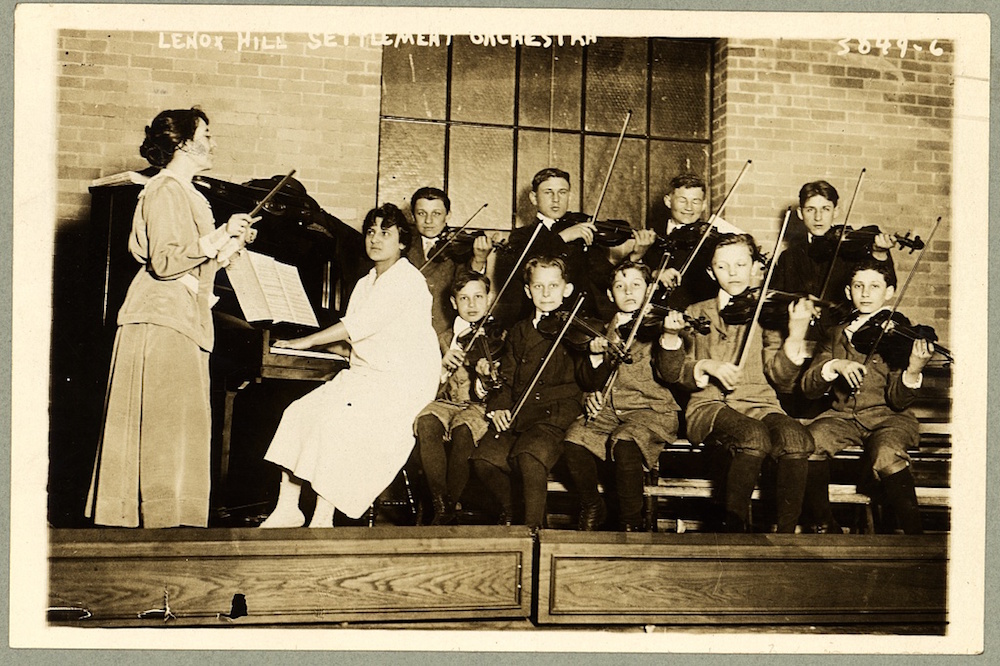
orchestra
By Lela Nargi

It’s a late evening in early December and I’m sitting with my tween daughter in a stiflingly heated, baldly lit, packed-to-the gills auditorium near Coney Island, waiting for Mark Twain middle school’s winter concert to begin.  We’ve come out to see a friend of my daughter’s sing with her 7th grade choral class. It promises to be a long night, with three grades’ worth of choral performances, three of band, three of orchestra, and a few extras thrown in for good measure. But I’m used to these sorts of engagements. As the parent of a kid who’s been lucky enough to attend public schools that vigorously buck the current trend of defunding arts programs, I’ve been sitting in on biannual music, dance, drama, photography, and broader “talent” shows since my daughter was in Pre-K. I hardly give the enterprise any thought.

Arts education has been a big educational talking point for years, but possibly never more than since the advent of the test-driven Common Core curriculum. As across the country the arts have been cast aside in favor of reading comprehension and STEM subjects—as well as the high-stakes exams that supposedly determine a child’s competency in them—the findings of multiple studies have been invoked to champion the ability of painting, drumming, ballroom dancing, playwriting, to enhance creativity, fine motor skills, and language development in our kids—with even more significant and lasting boons for low-income children.  Many parents with kids who are painting, drumming, dancing, and playwriting through school, both where I live in Brooklyn and elsewhere, accept these benefits as a given. But they’re not what are on my mind as the lights in the auditorium dim and the first orchestral group streams onto the Mark Twain stage.

The students are wearing the customary on-stage uniform of white shirts and black bottoms. They march purposefully out from the wings in a steady and orderly manner, delicately carrying their instruments. They quietly find their seats, set their music on their stands, and follow along with their section leaders in tuning their instruments. When Jamie Baumgardt, Mark Twain’s strings teacher, appears on stage they stand, then await her cue to sit again. As anyone who’s ever watched an orchestra knows, this is business as usual. But if you’ve ever spent any time with a large group of rabid tweens and teens, you know how exceptional this sort of behavior is.

And if you’re an educator, you know it even more acutely. I’ve listened to my sister-in-law, a 20-year veteran of elementary school classrooms, bemoan the mounting inability of her students to sit still and focus. She chalks it up to the use of smartphones and tablets, devices that encourage them to eschew human interaction and reward them for making fast, unconsidered decisions. For years, my husband taught literature to community college students and every night came home with frustrated stories of kids who didn’t know how to behave in his classroom: truly didn’t know they shouldn’t text and take phone calls, didn’t know they shouldn’t gobble sandwiches and bags of candy, didn’t know they shouldn’t listen to music through one headphone as he led them (or attempted to lead them) in discussions of Kafka and Chinua Achebe. Children are losing their understanding of basic courtesy and in the process, are becoming ever more removed from their peers and larger society. With this loss, life becomes less pleasant and more challenging for all of us. Because the loss is palpable everywhere we go. Think of the people texting through movies. Refusing to let you pass as you haul heavy grocery bags down the sidewalk. Shoving you aside to get onto the subway car first.

And this is what I’m thinking about as the strings students finish their performance, again await Ms. Baumgardt’s cue to rise, and quickly, silently take their bows and leave the stage. An orchestra has many governing rules. To survive and thrive in this setting, an orchestra member not only has to know them, she has to tacitly agree to follow them. As these rules govern how members of an orchestra treat their leaders, their equals, and the audience that has come out to see them—in addition to expectations for their own personal responsibility to practice—an orchestra, quite simply, offers a blueprint for how to behave in a society.

“My music students learn professionalism and that, regardless of the context of the setting, there are times and places to be professional,” Ms. Baumgardt tells me. “Running around in the park you can be kids and throw Frisbees. But in a professional setting there are expectations. What values should musicians have that translate to the rest of their lives?” Plenty. Do we want our children to be able to make eye contact with friends and strangers as they politely converse with them? Do we want them to be able to show empathy for others, both locally and globally? Do we want them to understand the positive influence of their hard work, not only on their own development, but on the achievements of an affiliated group? Thanks to the efforts of Ms. Baumgardt and other teachers of music, dance, drama, and plastic arts such as sculpture and drawing, they’re getting an excellent footing. “I show them that being committed leads to success, and that can make you feel great about yourself,” says Ms. Baumgardt. “But it’s also about the bigger picture. The efforts they contribute, in the long run, are going to make everyone successful.”

In some cases, that even includes their own parents. As my daughter’s friend takes the stage with her fellow singers, a dad sitting in front of me becomes animated. After snapping photos with his stage-obscuring iPad, he begins to wave his arms over his head, trying to get his kid’s attention. She ignores him. He tries again. And again. She finally acknowledges him with the meager-est of nods. By behaving professionally, as she’s been taught, she’s given her own father a subtle clue about how to behave with professionalism and courtesy. Hopefully, that tiny trend will radiate.

The very fact that my daughter and I are here tonight is proof that the lesson transcends beyond the classroom and the stage for kids, too. My daughter has come out to show support for a friend, just as this friend came out to support her a week earlier, when my daughter danced in a performance of The Nutcracker. The older they get, and the more serious about their various artistic pursuits, the more supportive they become for each other. Empathy (in the plastic arts, critiques would be miserable without empathy) is built right into the framework.

And empathy—along with discipline, listening skills, manners, the ability to articulate and to work as a team—will serve these kids whether or not they eventually choose careers in any arts-driven field. Sarah, a violinist in Ms. Baumgardt’s 8th grade ensemble, wants to be a doctor—and feels the emotional connection she’s developed to music will help her have an emotional connection to her future patients. Tricia, an 8th grade violist, thinks teamwork and intuition are the two lessons she’s learned from music that will be most valuable to her possible future career as a children’s dentist. Ultimately, the goal of arts education is not to churn out professional artists. As Mark Twain’s principal, Karen Ditolla, puts it so succinctly, “By helping children learn these crafts, we’re helping them grow as people.” There isn’t any goal finer.

Photograph from the George Grantham Bain Collection, Library of Congress Prints and Photographs Division Washington, D.C. 20540 USA, #LC-B2-3849-6

5 Ways to Teach Kids the Value of Volunteering

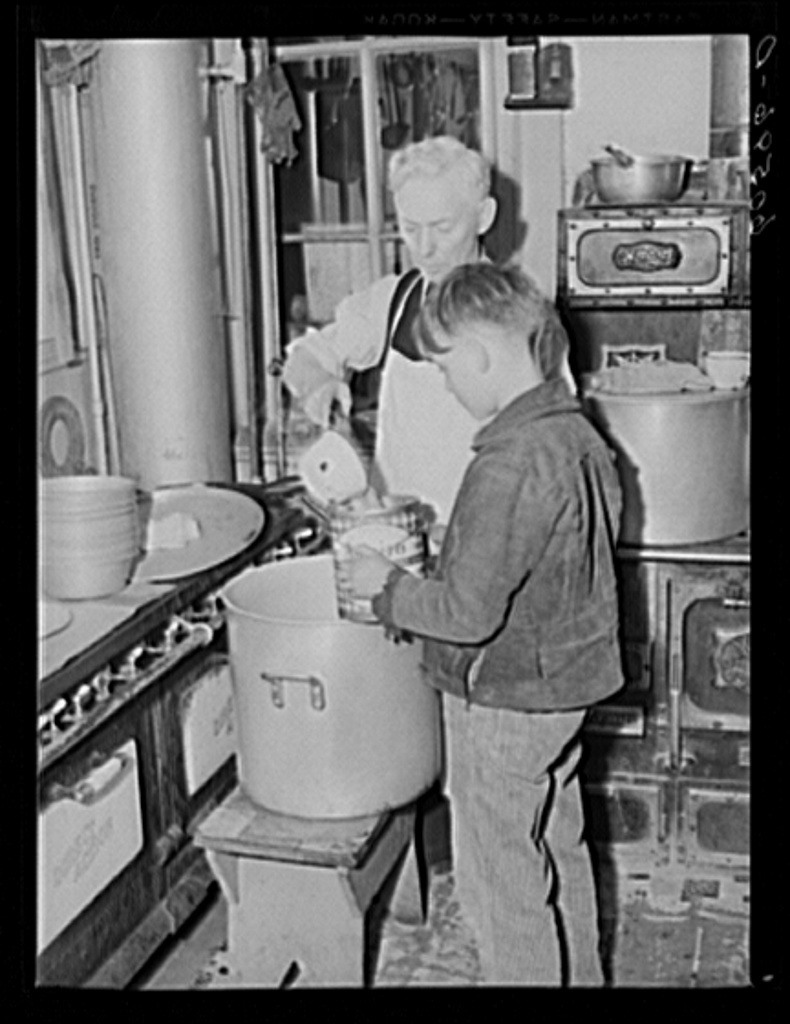
Cooking in kitchen

By Mark Palm

Parents today face an uphill battle when it comes to getting their kids interested in doing anything besides burying their faces in the screen of a phone or tablet. They might put their devices down to eat, play sports, and sleep, but otherwise engaging them in the physical world around them can be a serious challenge. Especially when it comes to generating interest in volunteering and humanitarian work.

Most parents don’t have the opportunity to do what I did; 10 years ago, my wife and I moved with our three young children to Papua, New Guinea, so I could establish a local service organization, Samaritan Aviation, through which I fly emergency rescue missions into remote jungle villages, picking up injured and sick people who would otherwise never receive professional medical care, and transporting them to the only hospital in the region. My wife and children have worked by my side over the years, helping to care for strangers in desperate times of need.

But to inspire yourself and your kids to help others, you don’t have to look any further than your own neighborhood. Here are some tips for getting the whole family involved in volunteering—a great way to start off the New Year!

1. Set an example. It’s hard to expect your children to want to give up their free time to help others if you are not doing the same. Talk about previous experiences you’ve had in helping others, even if it was a long time ago, then take steps to get yourself involved, even if it’s just volunteering to collect cans for a food drive at your office.

2. Incorporate their interests. An easy way to spark a child’s interest in volunteering is to find a charity that involves a sport or hobby they already enjoy. For example, if your child is artistic you could suggest ways for them to earn money to purchase art supplies for less fortunate children. Or, if your child loves animals, get her involved with a local rescue organization that needs volunteers to feed the cats, for example. The possibilities are endless.

3. Get friends involved. Talk to the parents of your children’s friends and find out if they would be okay with you bringing their children along on a volunteer experience as well. Kids can bond with their friends while helping others and having a friend along can help them to be bolder when trying new things—and to have a lot more fun while they are at it.

4. Provide a variety of experiences. Volunteer as a family at a local food bank, help out building a house with Habitat for Humanity, walk dogs at a local animal shelter, or help clean up at the local zoo. By introducing your kids to a variety of volunteer experiences, they can learn which appeals to them the most and find one they will be willing to contribute to long-term.

5. Let your kids take the lead. Help your kids organize a lemonade stand, bake sale, or car wash in your neighborhood to raise money for a charity of their choice. Around the holidays, give them supplies to decorate a wagon and have them go door-to-door, while you supervise, to collect coats and toys that can be donated to clothing and gift drives. Take them with you to drop of the donations, so they can experience the gratitude of the organization first hand.

Photograph by John Vachon, via Library of Congress Prints & Photographs Division FSA/OWI Collection, LC-USF34- 060596-D

Good News About Fighting Sibs

Kids on beach

By Dr. Laura Markham

I wasn’t prepared for my son’s reaction when his little sister was born. At four, he’s had only a few tantrums in his entire life. But when the baby appeared, he seemed to panic. He was clingy, he was angry, he was scared. I was trained as a psychologist, but I was out of my league.

Like me, most parents look forward to the awe on our older child’s face as he or she gazes for the first time at our newborn. We imagine the baby laughing as her big brother entertains her with funny faces. When one child gets hurt, the other will repay the care he’s received from us, offering his sibling a hug and a blankie. Over time, romping through the sprinkler will give way to bike rides and camping out, which will give way to arguing over who gets the car on Saturday night and consoling each other over lost games and broken hearts They might head their separate ways after high school, but that bond will continue through all the ups and downs of adulthood. We want to believe we’re giving our children a priceless gift: a friend for life.

But sometime in the first year—maybe even before the baby arrives—most parents begin to realize things may be quite so simple, as I hear from the families I coach:

“She loves her brother…In fact, she hugs him so hard that it scares us…Her hands always seem to end up around his neck.”

“I can’t even drive the car safely because they can’t keep their hands off each other.”

“He really pushed me to my limit when I came out of the shower and he had peed on his nine-month-old brother!”

There’s no way around it. Sibling rivalry is universal. After all, every human is genetically programmed to protect resources that will help him survive, and your children depend on and compete for what are, in fact, precious resources—your time and attention. Even when there’s plenty of love to go around, young humans haven’t developed much impulse control, so they’re bound to get into conflicts. Finally, temperament colors every relationship. Children who tend to be challenging will be even more challenging when you introduce a brother or a sister, and some siblings simply clash.

Unfortunately, many parents don’t know how to help their children with these strong emotions, so hurt feelings can lead to aggressive acts, which can spiral into negative patterns of interacting with each other. Those feelings can set the tone in a sibling relationship right through the teen years, and even have a way of popping up at family stress points across a lifetime.

But there’s good news, too. The sibling relationship is where the rough edges of our early self-centeredness are smoothed off, and where we learn to manage our most difficult emotions. Siblings often become good friends, and because they know each other so well, they can provide each other a deep sense of comfort. Even siblings who fight a lot usually do gain respect for each other and eventually get along. When they’re grown, may siblings feel a deep connection to the only other people who understand what it was like to grow up in their home.

And here’s the best news of all. Parents can make a tremendous difference in shaping the sibling relationship. Sibling jealousy is unavoidable, but it’s almost always possible to help children develop a strong, positive bond that trumps the natural jealousy. It’s not always easy to raise siblings who appreciate each other, who become friends for life—but a committed parent can make all the difference.

Excerpted from Peaceful Parent, Happy Siblings by Dr. Laura Markham. (c) 2015 Dr. Laura Markham. Perigee, Penguin Group USA, Penguin Random House.

Photograph by Daria Nepreikhin via Unsplash.com

To Push or Not to Push: Finding the Balance in Kids Sports

Kids playing baseball

By Dawn Van Osdell

Fourth-grader Michael Shaw* tried out and earned a spot on a local U10 boys soccer team, giving him a chance to improve his game and compete in a sport he’s enjoyed since age 4. He attended the team’s pre-season training camp; now joins team practice twice a week from early August through late May; competes in as many as two or three games each weekend during the season; and travels to a handful of tournaments around the state. He sounds like a kid committed to his sport, right?

Not compared to several of his teammates, many of whom spent their summers at (expensive!) sleep-away soccer training camps, frequently turn up for myriad optional practice sessions, and attend training workshops and drills in the off-season.

Who’s got it right? Is it the kid who’s playing—albeit at a high level—for the camaraderie and the fun of the game? Or is it the kid who is in it to win it above all, and will sacrifice many other aspects of his home- and school life to do so?

For many parents it’s tough to say. How do we know when to push our kid to excel—at a level not unlike that expected of a professional athlete—so that one day, he or she may be able to reach for, say, a college scholarship to play ball? Or when to let him try his hand at other activities he might find enriching, or simply enjoy a sport without pressure to advance and excel, perhaps ensuring that he will be forever mediocre as a soccer player? How can we possibly know how to strike just the right balance?

“It’s critical that parents see the big picture and realize that sports are just one window in a child’s life,” advises Aubrey Fine, a professor at California State Polytechnic University, a licensed psychologist, and the author of The Parent Child Dance. We often open that window when our children are preschoolers, signing them up for tumbling, or Little League, or AYSO soccer. We let them dabble in hockey and basketball and karate. We have reason on our side: As many studies have made clear over the years, there are great benefits to our children’s cognitive, physical, and emotional development when they participate in activities such as these. Through them, our kids get to explore and discover their passions, inclinations, and abilities.

Come elementary school, many kids start to shed multiple activities in order to focus on just one. Parents who encourage their kids to dedicate their efforts often to do it for practical reasons—it’s easier than juggling multiple sport schedules, and makes more time for increasing homework loads—or because they want their children to experience being really good at something. Some parents see it as preparation for a spot on the middle- or high school team. Others are hoping to recoup the cash they’ve shelled out on camps and private lessons with a college scholarship somewhere down the line.

In his parenting book, Positive Pushing, Jim Taylor, Ph.D., an expert in performance psychology, says that parents often struggle with these decisions, knowing that if they push kids too hard, they may rebel and achieve neither success nor happiness. If they don’t push hard enough, their kids may be self-satisfied and unmotivated.  “Popular sports- development culture tells us that if our kids aren’t specializing early, they will be left behind,” he says. “(But) if they are under 12, they are still figuring out whether they really like a sport and want to commit to it. They need to own the sport and find their own reasons to want to work hard,” he says. Sounds simple enough. But putting it into practice can be anything but for parents uncertain what the ultimate result of pushing—or not—will be on our children.

John O’Sullivan, founder of the Changing the Game Project, says we need to take the pressure off our kids and ourselves. This is because kids need three essential ingredients to excel at, and stick with, any given sport or activity: enjoyment, ownership, and intrinsic motivation. All of these come from within each one of us, not from parental pushing or prodding. Yet the stereotypical Tiger Mom—a term for parents known for their hyper-vigilant, tough-love style and laser focus on achievement and performance—has evolved in response to a mounting societal pressure to propel kids toward success (or even just help them keep up with the pack).

Most of us would probably hope that our parenting style would fall somewhere in between the Tiger Mom and her polar opposite, the Elephant Mom, as she was dubbed in a recent article in The Atlantic about parents who encourage their children without focusing on winning or success. But few of us feel confident we know how to define that middle ground, let alone commit to it.

While there are plenty of examples of superstar athletes who zoned in on their sport and have hammered away at it since childhood—Tiger Woods or the Williams sisters, for example—most experts agree that even if you hope your kid will one day achieve starting lineup status, it’s better for him to play multiple sports, because it makes him a better all-around athlete. A University of California, Los Angeles study surveying nearly 300 college athletes found that 88 percent of NCAA Division 1 athletes played two or three sports as children, and 70 percent did not specialize in one sport until after age 12. Studies also show that early specialization often leads to injuries, such as concussions, sprains, and torn ligaments. And, it can also lead to a hasty burnout for kids just getting their footing in life.

A practical argument against pushing your kid toward one pursuit is the sacrifice it entails. Because of the time demands—for lessons or practice, private training, and travel—plenty falls to the wayside, like homework, friendships, family dinners, a weekend in the mountains, even a night to just chill out on the couch. Not to mention the sacrifice required by parents and siblings of the rising star, who give up time, and often financial support, for their own interests. “Forget about letting my youngest join a team, trying to squeeze in a Saturday workout for myself, or planning a family getaway—soccer for Michael nearly consumes our schedule, nearly year-round,” says Shaw. So much for simplifying the family schedule by reducing your child to one sport; specialization blows that dream right out of the water!

Regardless of the science that supports a parent dissuading a kid from fully committing to a sport in his early years, there are still so many examples of kids who dedicate themselves to a sport while still in elementary school, and who see the benefit that comes from the time and hard work they put into it. Patricia Moore, mom of 9- and 11-year tennis devotees who have been playing since they were 5, was recently asked by the mom of a tween girl if she thought her fifth-grader could take up the game and advance quickly enough to make the middle school team come seventh grade.  “Of course it’s not too late to learn to play tennis at age 11, but you simply have to play a lot of tennis to get good at it, and because it’s such a mental game, it helps if you have played competitively and are used to having all eyes on you,” says Moore. Her kids attend tennis lessons and clinics several days a week and routinely compete in tournaments, year-round. It will be tough for a tween tennis newbie to earn a spot on the team, competing against kids like Moore’s who have been on the courts since they were in kindergarten.

The experts see no reason to quell true passion for a sport, like that of the Moore kids. But they say it’s important to strike some sort of balance for the good of your child and your family life. “Parents worry that their kids will lose out if they don’t give them appropriate training, but their focus should be on making positive experiences and raising well-balanced individuals,” says Fine. “There’s so much beyond being a super athlete.”

Moore knows this, and encourages her kids to participate in other activities—a running club and basketball, for instance—to develop overall athleticism and prevent injuries. This kind of diversity is mirrored even at top training clubs around the world, where young players in any given sport take tumbling, gymnastics, yoga, and martial arts to build other strengths and avoid injury.

For kids who like their chosen sport but seem to waiver when going gets tough, Taylor says it’s worth giving a little push. “If parents don’t encourage kids to stick with it when it gets tough, the child may never find out what he is capable of and will miss out on the satisfaction of moving out of his comfort zone and pushing his limits,” he says. “If you push him to try harder and persist longer, he is more likely to face his discomfort and attain a higher level of achievement and satisfaction.”

Of course, you still have to figure out when to say when, because nothing kills a kid’s enjoyment faster, or more permanently, than an overly-pushy parent. Studies show that 70% of kids drop out of organized athletics by age 13—some due to financial or time constraints, but most because playing just isn’t fun anymore.  “As we become actively involved in our children’s activities, we must realize that our role is that as spectators and supporters,” says Fine. The events themselves belong to our kids.

“At the end of the day, the real purpose of sports is to let kids feel like champs, enjoy themselves, and benefit from a healthy body and mind,” says Fine. How far they go, ultimately, should be up to them.

Photographs via Compfight/Boys by SeeBee; Soccer Girl by Clappstar.

News You Can Use: Singing to Soothe a Crying Baby

Crying baby

By Dawn Van Osdell

Every parent has tip-toed away from a nearly sleeping baby after using all the tricks in our arsenal to sooth him. Turns out, these shenanigans might not be necessary.  A new study from the University of Montreal found that the best way to console a crying baby is to sing him a nursery rhyme. Babies in the study, which was recently published in Infancy, remained calm twice as long when they listened to a song—even one they didn’t know—as they did when they listened to parental speech.

We’ve known for years—generations, even—that music has a calming effect on humans, but until now it wasn’t known whether infants had the mental ability to be enraptured by it as well. “Many studies have looked at how singing and speech affect infants’ attention, but we wanted to know how they affect a baby’s emotional self-control,” says Isabelle Peretz, professor at the University of Montreal’s Center for Research on Brain, Music and Language. “Emotional self-control is obviously not developed in infants, and we believe singing helps babies and children develop this capacity.”

Her research studied 30 infants aged 6 to 9 months. In order to eliminate the possibility of influence by other factors—sensitivity to a mother’s voice, facial expressions, and connection between performer and baby, for instance—all speech and music were uttered in Turkish, a language that was unfamiliar to the babies; and parents were present, but out of sight. The music used was recorded rather than live, so no points were awarded for an especially talented singer or for social interaction between the singer and child.

When listening to the nursery rhymes, which tend to have a specific range of tones and rhythms, babies remained calm an average of nine minutes. They were calm for roughly half as long when speech—using baby-talk or not—was attempted as a means to sooth them.

“Our findings leave little doubt about the efficacy of singing nursery rhymes for maintaining infants’ composure for extended periods,” Peretz said. “Even in the relatively sterile environment of the testing room—blank walls, dim illumination, no toys, and no human visual or tactile stimulation—the sound of a woman singing prolonged infants’ positive or neutral states and inhibited distress.”

The findings are important because mothers, and Western mothers especially, speak much more often than they sing to their children. Switching to song as a comforting response could mean the difference between a crying baby and a content one.  No worries if you don’t know the words or can’t carry a tune—infants haven’t yet developed the capacity to judge you!

Photograph by Angelica Lasala via Compfight

3 Misconceptions About Post-Partum Fitness, Busted!

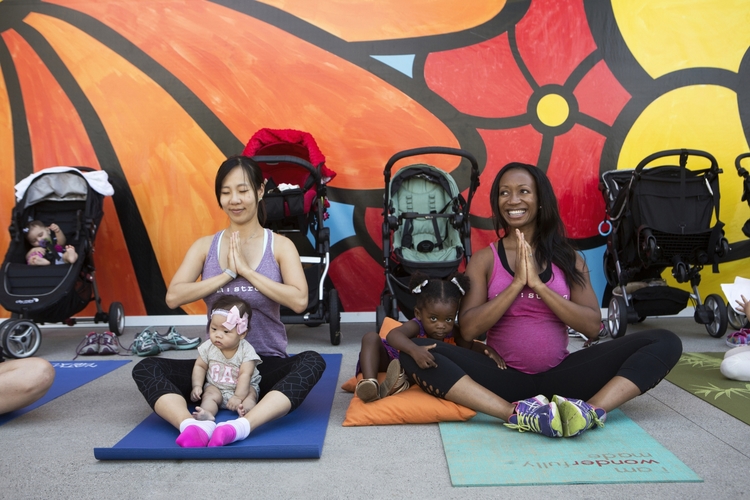
Yoga moms

By Dawn Van Osdell

There’s a lot of contradictory and downright erroneous parenting info floating around out there. We’re not afraid to tackle it head-on! 

You’re never the same after becoming a parent. And while it’s all for the better, most moms wish for a speedy return to the body and the energy level they had before bringing home a baby.  Starting or resuming a regular fitness routine is the surest way to look and feel as good—if not better—than your old self. Finding the time, motivation, and energy to squeeze it in is another story.

We talked to super fit (and super prego!) mom, Linda Okwor, the founder of one of Los Angeles’s most popular Baby Boot Camps, to set us straight on post-partum exercise. This fitness trainer and former NBA cheerleader and fitness competitor knows a thing or two about getting in shape. As the mom of a toddler with a second baby on the way, she also knows what it takes to care for yourself when you’re being pulled in so many directions. Read on!

Myth: Now is the time to focus on my newborn, not myself.

Truth: Congratulations on your new little one! While it may be emotionally tough to take yourself from away from your new addition, it’s important to take care of yourself by getting back into a regular fitness routine. “You will be healthier, happier, and more balanced if you exercise,” says Okwor. Regular exercise helps to shed excess weight, restore muscle strength and tone, boost energy, and relieve stress. And what new mom doesn’t need all that? Consider, too, that research shows that moms who make the time to work out have a more enjoyable experience with their newborns and are less likely to struggle with postpartum depression, which means regular sweat sessions are good for you and your baby. “Taking care of yourself takes a little time and effort, but the reward is well worth it,” says Okwor.

Myth: I want to bounce back quick! A strenuous, challenging workout is the way to go for results.

“Taking care of yourself takes a little time and effort, but the reward is well worth it.”

— Linda Okwor

Truth: Barring any unusual circumstances or complications, doctors give most new moms the green light to exercise six weeks after their baby’s birth (slightly longer for moms who deliver via C-section). But, says Okwor, “Some moms need more time to heal and it is perfectly okay to postpone activities until you feel well enough to return.” She advises moms to cut themselves some slack by easing back into an exercise routine. “Even though you are cleared to work out, you are still healing and your body is going through a lot of physical and hormonal changes,” she says.

Okwor recommends that new moms start with a post-partum exercise program or hire a professional trainer who specializes in working with women who have recently given birth. “They know the challenges and restrictions for new moms, and can guide you and help you build your stamina and strength,” she says. Start slowly and gradually increase pace and intensity to avoid injury or petering out before you’ve found your groove. To get a workout that gives you some pep, hold off on taking an intense spin class or tackling an uphill run, and instead choose moderate intensity exercise: a walk, yoga class or strength training. Also be sure drink plenty of fluids—this is especially important for nursing moms. And of course, stop what you’re doing if you feel any pain.

Myth: I’m already exhausted. Working out would zap my energy and put me over the edge.

Truth: “I am a mom, too, and I am expecting my second so I completely feel you when you talk about exhaustion!” says Okwor. But contrary to popular belief, exercising doesn’t make you tired. It gives you energy, kick starts your metabolism, and helps fight fatigue. The key to working out when you’re sleep-deprived is to find the motivation you need to get moving and choose the right exercise. For some, the social interaction of exercising with other moms—babies along in a stroller or a carrier—can be motivating. “Remember the nutrition part of the equation, too— a well-balanced diet rich in nutrients will fuel and support healing and a new level of activity,“ says Okwor. “The right diet is really important and really motivating.“

Photograph by Kyle Monk

Did You Actually Lick the Tire?

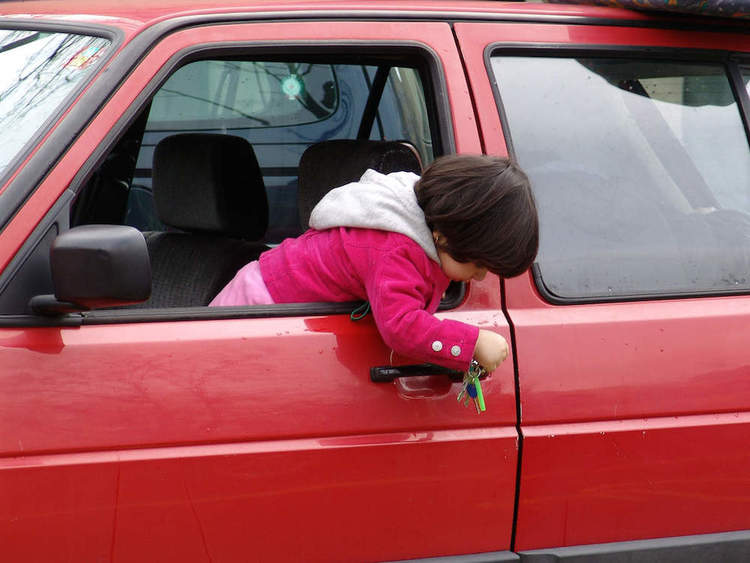
Girl in car

By Leanne Shirtliffe

I wiped my hands on my pants, climbed back into the rental car, and took attendance.

“Will?” I asked. I craned my neck in the direction of the vomit smell and saw an empty booster seat. “Where’s Will?”

Chris looked in the backseat, questioning my ability to conduct a search and rescue operation in a sedan.

“He’s not in here,” Chris said.

I comforted Vivy, who was not upset about her MIA brother as much as she was her soggy stuffed dog. Holding her hand did little to console her.

Chris exited the vehicle to expand his search field.

Through the car window, I heard him address Will in loud muffled tones. I made out the words “disgusting” and “germs,” two terms that cover 95 percent of childrearing topics.

I let go of Vivy’s hand.

“What happened?” I asked as testosterone reentered the vomit sphere.

“Will was licking the tire,” Chris said, reaching for the collection of antibacterial products he’d already unpacked in the glove compartment.

I twisted my neck to look at Will, who was struggling with the seatbelt.

“Did you actually lick the tire?”

“Yes,” he said. He had not yet learned the art of lying, blaming his sister, or farting to draw attention away from the real issue at hand.

“Why?” It was my favorite question to ask rhetorically, in a half-prayer, half-swear manner.

“I don’t know.”

“Did you pee on it, too?” Chris asked.

“No.”

I heard the seatbelt click.

“Let’s go before we have to deal with another bodily fluid,” I said.

Chris put the car in gear and merged back onto the interstate.

We arrived at the RV park none too soon. Vivy’s stomach was churning, Will was bored with my count-the-cacti game, and Chris was tired of driving with his head stuck out the window to avoid the smell of puke.

We stopped at the security gate. A septuagenarian with a clipboard limped to Chris’s window. I was pretty sure we’d just arrived at Springfield’s Nuclear Plant and were being greeted by Mr. Burns himself. Homer was nowhere to be seen.

“Where are ye headed?” he asked.

We handled this question like we handled every customs line up and security checkpoint since we’d started dating a decade ago. Chris stayed silent; I talked.

“We’re visiting my parents,” I said.

Mr. Burns raised his eyebrows. I volunteered more infor­mation, too much as was my habit. I told him the names of my parents, where they were from, how we were not staying with them but my mom’s cousin who’d gone back to Canada for Christmas. I offered to sketch our family tree on his clip­board, but retches from the back seat distracted me. It was Will, who was either imitating his sister or coughing up a fur ball from licking the upholstered seats. Vivy slept.

Mr. Burns unleashed his weapon from a holster. He was packing a walkie-talkie.

He peppered us with more questions than we had at pass­port control.

Finally, he let us through with instructions to return to the office the next morning and fill out some IRS-looking forms in triplicate.

Mom and Dad’s pre-lit palm tree leaned against their RV. We had arrived. We unloaded and I asked for the three things college students request after a night out: a bathroom, a bucket, and a beer.

Mom grabbed a pail and then cradled a gray-looking Vivy in a lawn chair.

Dad handed me a beer.

“I’m hungry,” Will whined.

“I bought cheese sticks and yogurt,” said Mom. “They’re in the fridge.”

I walked into their movie star RV, used some of my bur­glary skills to open the locked fridge, and brought Will a snack he’d eventually vomit up.

I sat down next to my dad, tossed Chris a Coke, and took the first sip of the beer I’d been cradling for the past five minutes.

We recounted the vomit fest and the negotiations that took place at the front gate. Vivy stirred, groaned, bolted upright. While still talking, I grabbed the pail and caught her puke.

I was on my way to dump the pail when I saw Will once again exploring his environment with his senses, something encouraged by his kindergarten class.

“Will you stop licking yogurt off your glasses?” I asked.

Somehow, we survived the Arizona puke-a-thon. We were all healthy for the flight home, but as good guests do, we left a gift for our hosts. My enduring memory of saying goodbye to my parents in their RV was of my mom hugging me as my dad speed-walked to the bathroom, leaned over the mini-toilet, and hurled his breakfast into the sewer. We shared everything.

Hours later, after enjoying a puke-free flight, we arrived home. The week progressed, and the few cardboard dinners I prepared reminded my family that it was a blessing that Chris cooked most of the time. It wasn’t long, though, until we had another food escapade.

When healthy, Vivy—a.k.a. Princess Squirm-a-Lot—was incapable of remaining still for anything as mundane as a meal. She didn’t sit on her dining room chair as much as use it as a pommel horse, a move she’d perfected in utero. On the chair, she squatted, stood, pivoted in a series of practiced moves, plopping down onto her chair for a rest.

“Tie yourself to the chair, Princess Squirm-a-Lot,” I said, as Chris doled out our favorite meal: mystery-meat-on-a-stick fresh from the barbecue. Chris is one of those men who enjoy barbecuing in all weather. The snowier, the better.

Vivian ignored my request. Soon, she wriggled from side to side and front to back over the surface of the chair like she was a gymnast whose score depended upon covering all four corners of the mat. And like the best gymnasts, she sometimes stumbled out of bounds. She was in the midst of informing us which of her kindergarten classmates had been naughty. Dishing out the dirt on other five year olds was a practice we encouraged as it reminded us that other people’s children misbehaved too.

“If Toby pushes one more student,” she said, “the teacher’s going—”

And poof, she was gone. She’d fallen out of bounds, off the chair. Picture the scene from Looney Tunes where Wile E. Coyote sends an anvil hurtling off the cliff heading for the Road Runner, and you have a sense of the speed at which she fell. The sound of skull meeting ceramic tile gave way to a pregnant moment of silence; then a scream was born.

On cue, Will was off, a sprinter out of the blocks. Before she could crawl back onto the chair and reach for another cube of meat, he presented a stuffed animal. “Don’t worry, Vivy,” he said. “I fall off chairs all the time.” It was a lie, the kind I liked. Maybe there was hope, at least for the children.

Excerpted with permission from Don’t Lick the Minivan: And Other Things I Never Thought I’d Say to My Kids by Leanne Shirtliffe. Copyright 2015, Skyhorse Publishing, Inc.

Photograph via tOrange.us & Creative Commons

 

Making the Pump Work at Work: 6 Tips for Returning To Work After Maternity Leave

Vintage breast pump

By Gina Ciagne

Congratulations! You’re a mom who’s heading back to work, breast pump packed, after a few weeks or months spent at home with your newborn. Here are some tips to make it a win-win-win situation for you, your baby and your employer.

1. Make a connection. Every breastfeeding mother has a story about what worked for her when she returned to work. If you know other women who have pumped at work, talk to them about their experiences and solutions to any challenges they may have had. You can also connect with other mothers on breastfeeding message boards.

2. Find time to pump. Plan your pumping schedule to replicate your baby’s nursing times, so that your body gets the necessary signals to continue producing milk. Avoid skipping sessions, as this signals your body to produce less milk.

3. Be flexible, but don’t neglect your breasts. Consider your employer’s needs, as well as your own. Even if you only have a few minutes, still pump and don’t skip a session, if at all possible.
It will be uncomfortable as your breasts fill with milk, and regular stimulation is more important for your body’s response than pumping time. However, a drained breast will replenish more milk, so ideally pump until your breasts are noticeably less full. Set aside time if your schedule is unpredictable, or be creative about when you pump. For instance, it’s possible to read or eat lunch while pumping especially when using a hands-free pumping bra.

4. Find a private place to pump. It’s important to pump without disruption, so that the necessary hormones are released for let-down. Having a lactation room at work is ideal, but other options are a private office or storage room that can lock. Avoid using the bathroom, as it’s not a sanitary place to pump.

5. Discuss the situation with your employer. It’s important to explain your need to have regularly scheduled pumping sessions to your employer. And remember, The Affordable Care Act is on your side! This healthcare law stipulates that an employer must provide the time and space for pumping moms.  And, by the way, it specifically points out that the “space” should not be a bathroom. For more details, you can visit The Department of Labor’s website.

6. Know your facts. Hopefully, you won’t run into any obstacles with your employer.  But if you do, the following facts can help you make a convincing argument to gain support. A study published by the United States Breastfeeding Committee states:

  • Lactation programs are cost-effective, showing a $3:1 return on investment.
  • Breastfeeding lowers insurance claims for businesses. One study showed that for every 1,000 babies not breastfed, there were over 2,000 extra physician visits, 212 extra hospitalization days, and 609 extra prescriptions to treat just three common childhood illnesses.
  • Overall, by supporting lactation at work, employers can reduce turnover, lower recruitment and training costs, cut rates of absenteeism, boost morale and productivity, and decrease health care costs.

We know that pumping takes extra effort, especially at work. But it can be worth it for your baby, for you and even for your employer!

Gina Ciagne, Lansinoh’s Global Vice President, Healthcare Relations is a nationally recognized expert on breastfeeding.

18th c. image of breast-pump and nipple-shields, Pierre Dionis, via Creative Commons