5 Simple New Year’s Resolutions for Busy Parents

Now is your chance to freshen up those good intentions and commit to making positive changes for yourself and your family. These simple, yet effective New Year’s resolutions will help to make 2019 a healthier, happier, better balanced year. We promise these are all totally doable – no Herculean efforts required.

5 Simple New Year’s Resolutions

1. Revive the commitment to providing your family with a healthy diet by starting with what you put in your own mouth.
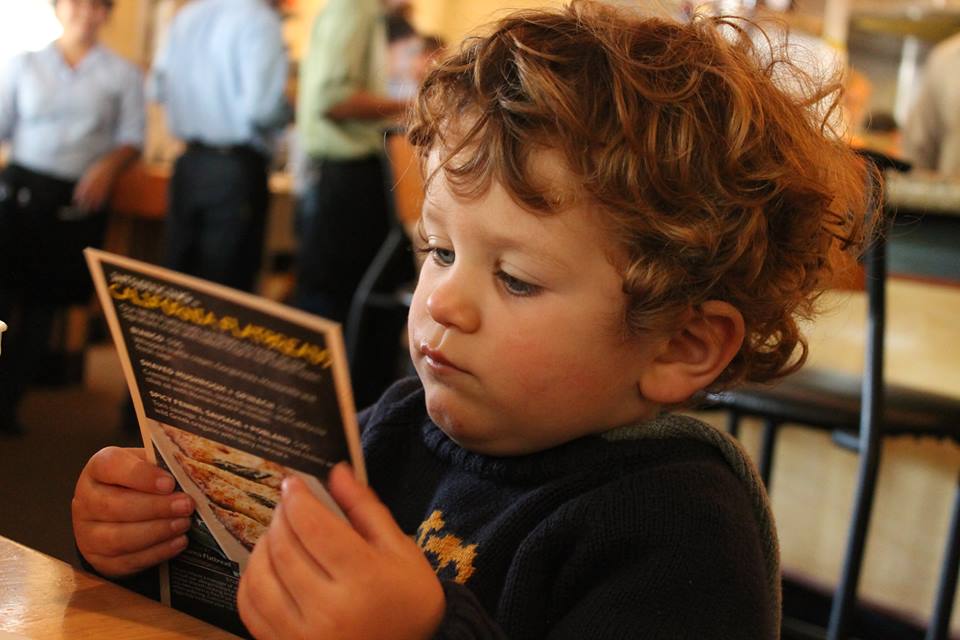
Considering the way you take care of yourself and your health is likely to be the way your child lives, your commitment to health should start with your own diet. We often put our needs behind those of our kids: skipping breakfast to get everyone fed and to school on time, grabbing a lousy packaged sandwich for lunch, and sometimes simply eating what’s left on our kids’ plates for dinner. We need to become better nutritional role models for our children who are soaking up everything we do. Rather than trying to kickstart a major change, make small changes that will have a big impact on the entire family’s diet:

  • Breakfast should be mandatory. Build a staple of quick, healthy foods that require little time or effort to prepare. Check out our Pinterest board – Don’t Forget Breakfast – for ideas.
  • Add a vegetable or fruit to every meal. Experts say even a few bites makes a big difference in children, but aim for more – an average adult needs four servings of veggies and three servings of fruit every day.
  • Find easy, homemade recipes to replace packaged products. There are far better alternatives to boxed macaroni and cheese and frozen chicken nuggets or pizzas, and they can be just as quick and easy to get on the table.
  • Start making bigger batches of good food so you can pack leftovers for lunch or freeze for another night.
  • Make a weekly meal plan. Being prepared is half the battle – shop for what you need, give yourself a head start by prepping pieces of multiple dishes at once, and you’ll far less likely to resort to takeout or a packaged meal.
  • Get kids involved in meal planning, shopping and prep. They’ll be more likely to try new things if they feel they have a say in the matter.
  • Replace juice boxes with water or low-fat milk and consider kicking your own 3PM Diet Coke habit or five-cups-of-coffee mornings.

2. Become more vigilant about screen time limits.
isabel-computerbaby copy

There’s no taking back the Internet or denying that even young kids can derive some education and entertainment from the iPad, but we really should be more thoughtful about the kinds of media our children interact with and how much time they spend with them.

While it’s really, really nice to be able to plop kids in front of an episode of Paw Patrol while you make dinner, screen time can really start to add up. According to the American Academy of Pediatrics, excessive media use can lead to attention problems, school difficulties, sleep and eating disorders, and obesity. They advise parents to create “screen-free” zones at home, turn off the TV during meals, and to limit screen time to no more than two hours per day.

If we pull our kids away from computers and television, they will spend more time playing outdoors, reading, and using their imaginations in free play. It also bears reminding, be sure to spend the time getting to know the technology your kids are using, making sure parental controls are in place and know exactly what they are seeing and doing.

3. Find time to take care of yourself.

Regardless of employment status, we are all working parents. Few would argue that parenting is anything but a full-time, incredibly rewarding yet demanding job. We all deserve not one break, but a steady dose of them. Find a way to build personal time into your daily life and keep at it.

Make a deal with another parent to take turns caring for the kids while you workout or simply take care of responsibilities without the company of a child. Check your favorite sitter’s availability posted on UrbanSitter to find a time that works with your schedule and book her weekly or bi-weekly. If you and your spouse have some flexibility with your work schedules, make a deal that allows you each to come home early one night a week and take over kid duty while the other enjoys some personal time. If you’re not taking care of yourself, it’s pretty dang hard to take care of anyone else.

4. If you really want to make it happen, schedule—and commit to—family time.
colette-dad

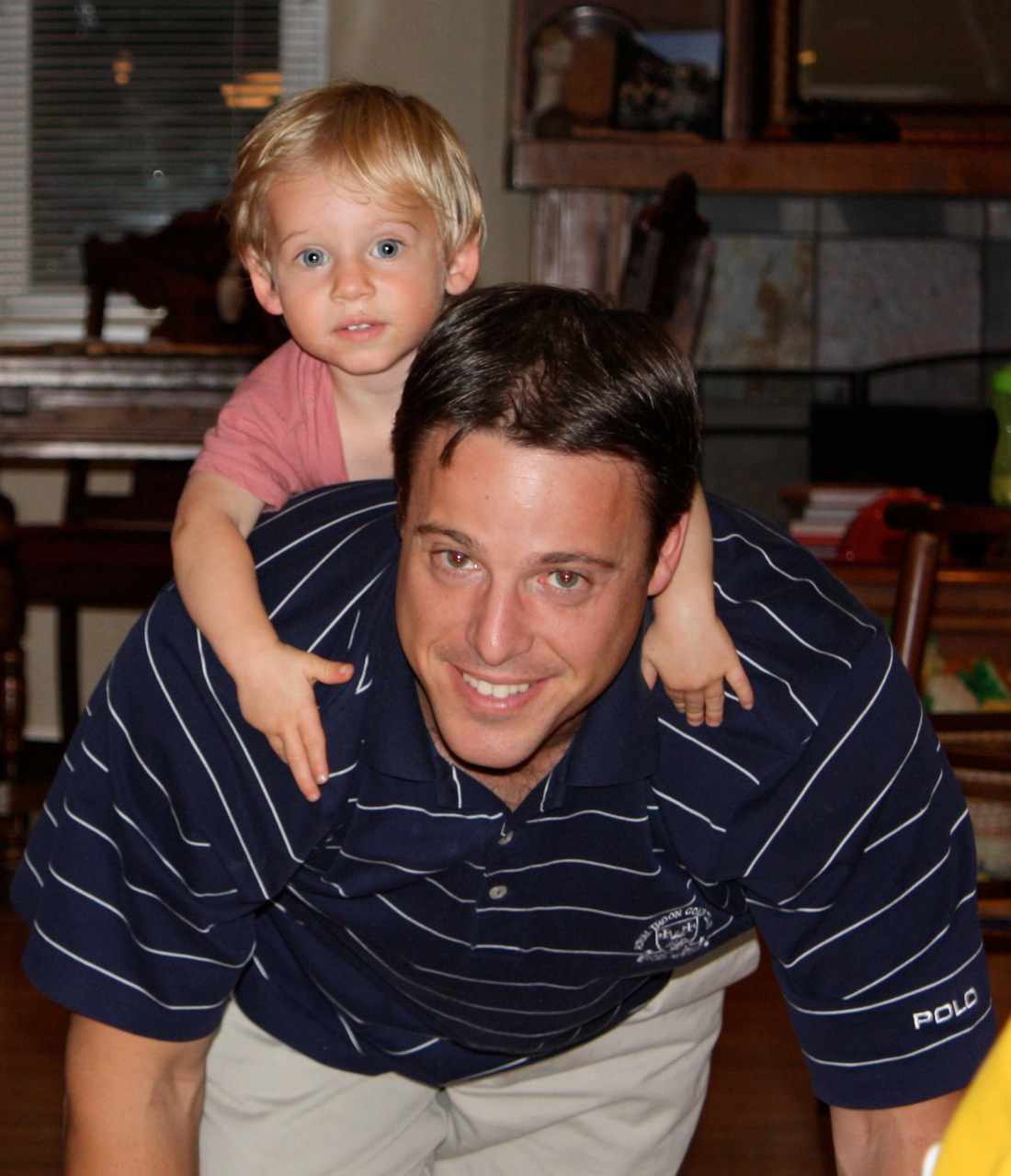
Most of us would agree we’d like to spend more quality time with our families, yet it’s often an elusive wish. Despite our best intentions, we get caught up in day-to-day commitments and demands – free time to simply spend together just doesn’t exist, at least not as often as we may like it to. The solution is to become better planners.

Sit down with your family and make a list of places you’d like to visit or activities you’d like to do as a family in the New Year. Keep reality and your budget in mind, but let loose with the creativity. Once you have a good list of ideas – exploring a just-outside-of-town zoo or aquarium, sticking the baby in a backpack carrier for a family hike, spending a weekend afternoon at an indoor pool, or having family game night – get them on the calendar. If they are scheduled activities, you are far less likely to whittle your precious weekend away taking care of chores or splitting up to do your own thing.

5. Make your home a warmer, more nurturing environment that promotes creativity, literacy and fun.

This year, make it a priority to tweak your house to make it serve you and your family the best it can. A playful home will help your kids learn to play independently, foster creativity and learning, and help children become more self-sufficient, organized and even focused. While you might not be able to bust out the back wall to build a library or an indoor climbing wall, chances are you can make some small changes to make it easier for kids to play, entertain themselves, cuddle with you and a good book, or let loose with finger paints. See our post on super cool playrooms, reading nooks, art spaces and cozy spots to give you some inspiration. You’ll see it’s really pretty doable to create inviting spaces that entice kids to settle in with a book, dabble in a new hobby or maybe even take a little nap.

Whatever you commit to in the New Year, we hope your year is filled with an endless stream of happy, memorable moments with those you love and cherish. Happy New Year from your friends at UrbanSitter!

Top 10 Last Minute Halloween Costumes For Kids

Did Halloween sneak up on you? Are you now realizing that it is less than a week away and your kids still don’t have a costume? We totally get it. Sometimes life happens and things fall through the cracks. Have no fear. We have pulled together our favorite kid’s costumes and the best part is, they are all available on Amazon Prime.

[maxbutton id=”1″]

1. Wonder Woman

Screen Shot 2018-10-22 at 1.07.26 PM

2. Paw Patrol

Screen Shot 2018-10-22 at 1.09.38 PM

3. A Spooktacular Dragon

Screen Shot 2018-10-22 at 1.10.26 PM

[maxbutton id=”1″]

4. A Magical Mermaid

Screen Shot 2018-10-22 at 1.12.22 PM

5. Harry Potter 

Screen Shot 2018-10-22 at 3.11.37 PM

6. Jedi Knight

Screen Shot 2018-10-22 at 3.12.32 PM

7. Baby Jack


Screen Shot 2018-10-23 at 8.12.42 AM


[maxbutton id=”1″]

8. Baby Yoda

Screen Shot 2018-10-23 at 8.17.05 AM

9. Baby Hootie the Owl

Screen Shot 2018-10-23 at 8.18.47 AM

10. Super Baby

Screen Shot 2018-10-23 at 8.19.40 AM

*All photos via Amazon.com

[maxbutton id=”1″]

Got 1 Minute? 3 Art Games to Boost your Kid’s Strategic Thinking, Problem Solving and Visual Recall

By Ruthie Briggs-Greenberg

It’s Monday. You have to get your kids to school, and you’re only on your first cup of coffee. What can you do that will help them think better and not annoy you? An art activity! What, you ask, is an “art activity”? It’s something that exposes kids to art. Why should you do it? According to the National Endowment for the Arts, kids with more art experiences had higher GPAs than kids who lacked those experiences. How do you start? Pour that second cup of coffee, set the timer for 1 minute and do one of the following:

GAME 1: (The timer is set, right? Did you pour that second cup of coffee?) Ask Junior “How many things can be done with spoons?” Now wait. If Junior hasn’t had breakfast, they might say, “I don’t know.” But, if Junior just had a bowl of sugary goodness, the answer may be, “You can eat with spoons, dig with spoons… Uhhhhhh…..” Then Junior may fall silent. This is where you say, “Keep going…”  Junior may come up with one more answer, something involving “you can fling a spoon.” The minute will pass.

What’s the answer? An unknown number of things can be done with spoons. Think outside of the box, or in this case, the silverware drawer.  This idea of thinking beyond what is obvious frees your child’s mind to use their imagination.  Imagination leads to solutions. Let’s get back to the spoons.  If you weld spoons together, you could build skies, or a wall, and then you could make a house of spoons, (no, it’s not cheating, I never said, “a spoon,” or that the spoons had to remain in their original form). The question leads your child, and you, to think strategically to solve a puzzle. This method of thinking creatively frees up your mind to design, imagine and build ideas that don’t exist. That’s how art starts. You’ve spent a minute and engaged in strategic thinking.

GAME 2: Grab a pencil and a piece of paper. Ask Junior to draw a bicycle with circles, and lines. Did you set the timer for one minute? If your coffee has kicked in, you can try it too. What does this game do for Junior? It makes them think about design principles of how shapes fit together for practical use. If you want a hint, a very basic bike can be drawn using 5 circles and 11 lines. Wait a minute, how is this art, you ask? It is art because it involves organizing shapes and lines and creating a design. So you’ve just covered design, which fits under problem solving.

GAME 3: Open the cupboard and let Junior look at it for 8 seconds. This is not the time to obsess over the fact that there is high fructose corn syrup in half of the breakfast cereals. Close the cupboard. Ask Junior, “How many colors can be made from the colors on the boxes inside the cupboard?” You’ll probably get this, “I don’t know”. Who thinks about cereal boxes and art? Ask Junior to open the cupboard and see if there is red, yellow and blue inside, if so, you have the three primary colors. All colors can be made from the three primary colors. Play a color addition game (go on, the first part wasn’t even 20 seconds). What is red plus yellow? Orange. Was there a yellow box on your shelf? A blue one? Sure there was, everyone has that blue box of pasta on the second shelf, so now you have yellow plus blue. You get the picture. Now you’ve covered visual recall.

Wow, look at you, covering strategic thinking, problem solving and visual recall all before your 3rd cup of coffee! Junior used art, or thinking about art, to fire up those synapses before class. Thinking about art will carry over into other areas of study, such as math, language, and science. Ultimately art allows individuals to create something from nothing by strategically analyzing a problem and solving them. If you have five minutes, tour the world’s greatest museums online. This may lead to conversations about the historical context that art was created in, or the purpose of art. If you ask Junior what they think about a painting they are looking at they may say, “I don’t know”. That’s ok, school doesn’t train our kids to think of possibilities, it teaches kids to have answers. Get Junior thinking and they will come up solutions to all kinds of life situations. 1 minute art games lead Junior to strategic thinking, problem solving and visual recall, and you did it all without a 4th cup of coffee.

Photograph by D Sharon Pruitt via Flickr/Creative Commons

Meet Andrew Alford, Jeffrey Norberg, & Kate, Wicker Park, Chicago

by Lela Nargi

When hotel designer Andrew Alford got an offer to pack up shop in hometown San Francisco and become chief creative officer for boutique chain Graduate Hotels, based in Chicago, he knew it would be a big transition (not least of all because of the weather). “It was definitely a change for our family,” says Alford’s husband, Jeffrey Norberg, an intellectual property lawyer. “But Chicago is a great city to raise a kid in!”

Married in 2008 just two weeks before Prop 8 passed in California, the two have spent the last year settling in to the funky Wicker Park neighborhood on Chicago’s West Side with 3-year-old daughter, Kate, a sandwich maven. While Kate munched on peanut butter and jelly and the family’s Boston terrier, Squeaker, waited patiently underfoot for crumbs to drop, they talked to us about their new life in the Windy City.

“We try hard to maintain the interesting aspects of ourselves, so Kate can grow up knowing about those.”


What’s it like to be a Chicago family, now?

Andrew Alford: Lifestyle-wise, Chicago is more focused than some other cities on families—families with kids of all ages, not just in the 0 to 4 range. There are kids everywhere, in all parts of the city, and we take Kate out with us all the time.

Jeffrey Norberg: When we first moved, I started my own law practice and worked remotely for a bit, out of the back bedroom. I’m really busy now; it’s so easy to get to know people in Chicago. And it’s truly a city of invention: the avant garde, molecular gastronomy. People are willing to take a lot more risks in business endeavors, because the cost of entry into any given market is a lot lower than elsewhere. There’s a real pioneering spirit here.

Was there something about Wicker Park in particular that appealed to you?
Andrew: There are a lot of families in our neighborhood, but there’s still graffiti, a hip-hop scene, underground art. Even though we’re parents, we didn’t stop being interesting people. A couple of weeks ago, a local bar was having drag queen night in the basement, dedicated to John Waters. Kate would have loved it; she’s so social and music-focused. But they won’t let her in till she’s 21.

Jeff: We could get her a fake ID. That’s quality parenting advice! There’s a cool mix in our neighborhood. We’ve got all these galleries, bars, vintage and designer shops. But in the warmer months we can go to the amazing playground in Wicker Park, and to the farmers market on the weekends.

Andrew: We both work intensely so we don’t always want to have to load Kate into the car and put the effort into driving somewhere. Living here, we haven’t had to sacrifice our adult lives. We try hard to maintain the interesting aspects of ourselves, so she can grow up knowing about those.

Andrew & Kate in her art filled bedroom

How old was Kate when you adopted her?
Jeffrey: We had her a few hours after she was born, adopted from Colorado. It actually happened very quickly. Just over three years ago we had gone through the process of getting our household approved to adopt. The agency suggested that we send out letters talking about why we wanted to have a child to clinics and pregnancy crisis centers, and they said we had to hand-address every envelope. We had three big parties for friends who helped us address 3,000 letters. A few days later, we were contacted by Kate’s mother, then three weeks later, we were flying out to meet her.

Andrew: She’s one of the most open-minded, kind-hearted people we’ve ever met. We stay in touch with her, and she keeps track of us on social media. She visited us twice in San Francisco, and she’s due to visit again. We have no secrets from Kate about her—we’ve been reading her books on all kinds of families since before she could even understand.

What’s your family routine like?
Jeffrey: Every weekday Kate goes to daycare from 8:30 a.m. to 5:00 or 6:00 p.m. and we have dinner together, as long as Andy’s not traveling. In which case, Kate and I will have dinner—steak, because Andy’s not a huge fan. On weekends, we spend both entire days together. December through March can be difficult in Chicago. But there’s the Shedd Aquarium, which has Beluga whales and a submarine with buttons and knobs for Kate to turn. Or we go out to eat. Dove’s Luncheonette has a potato hash that’s on the spicy side, which Kate loves.

Andrew: Kate also loves Vietnamese pho—actually, any incarnation of soup. We have to drive to Argyle Street on the North Side to get it, but then there are eight places to choose from, including Tank Noodle.

Jeffrey: In San Francisco, Kate would be the only child eating out in a restaurant. Here, she never is. I think that’s a good influence on her.

Photographs by Thomas Kubik, TK Photography

Are You Afraid? A Message to Daughters, From a Daughter

By Eliza Reynolds

Are you afraid? I know that I am sometimes. There are moments when I have been so afraid of life beginning —like becoming-a-grown-up beginning—because then I might discover that I’m a failure, or a total disappointment, or maybe (whispers an especially dark part of my brain) never truly, fully lovable, except by my parents (and they have to love me).

When I was about thirteen or fourteen, something began to creep up on me—like an itch on my back that I couldn’t quite scratch—and my parents started to drive me crazy (plain bonkers, red in the face with frustration, irrationally ticked off, justifiably loony, and the like). Frankly, most of the time it was for dumb reasons (“MOM, did you have to move the pans so loudly??”) or for reasons I couldn’t understand (“DAD, I don’t want you to ask me about my day. No, I just don’t feel like talking about it!”). My reactions to them, and the way I began to judge them through every millisecond of every day, were new. And I found that after the first flush of anger or frustration passed (and I huffed out of the room or screamed in the confines of my bedroom closet), it scared me. These new changes made me feel, well, lonely.

It began to dawn on me that my parents weren’t the perfect people I had imagined them to be. I wondered: if they weren’t always consistent and on top of it, then what is consistent—always steady and reliable—in life? And if my life is beginning, like I-am-not-a-little-kid-anymore beginning, like in-a-few-years-I-will-be-leaving-home beginning, then what and who can I depend on? What won’t change? What is safe?…

Now, if you met me, walked up to me, and shook my hand for the first time (or even hugged me for the hundredth time), you couldn’t tell on the outside that I was afraid. No, you’d still see a tall, cheery nineteen-year-old, with hair twice the size of her head and feet that defy semi coordinated brain commands. But I’m telling you now what’s on the inside: the fears that line the innermost layers of my thoughts, my heart, and maybe even, if you believe in such things, my soul. These are the fears that aren’t cute enough to whisper under the blankets at a sleepover. I’m not always afraid but sometimes—often first thing in the morning, before I’ve seen anyone’s face, and the alarm is buzzing me into a new day—I feel empty, alone, like the bed is a bit too big, and yes, I feel somewhat overwhelmed by it all. Nah, I’m not an emotional train wreck or a “basket case” either, I’m just being brutally honest. I know you’ll get it, because here’s the secret I think we all know: I think, deep down, we are all afraid.

I don’t mean we are afraid all the time—not every moment. But sometimes in bed at night alone, or staring dismally at another English test, or looking around the dinner table, or scanning Facebook late at night, you and I are afraid. And I don’t think it’s a light passing fear, like that anxiety you get when you pass by that certain dodgy street in town. No, it is a deep question that seems to echo in our very soul, in the very heart of our bodies. And I know I don’t have the answers to the questions that keep bubbling up inside and you may not either (most people don’t). Questions like:

  • Who am I?
  • What am I going to make of my life?
  • What happens when I die?
  • What is the meaning of life? Why am I here, literally, on this earth? Do I matter any more than the ant on the hot pavement?
  • What is love? Does marriage mean you love each other forever? Do I have a soul mate?
  • Why is my mom the way she is?
  • Does God exist? Or “goddess”? Or any other kinds of higher power?
  • What do others think of me? Is this important? Why?
  • What will make me happy? Is happiness the most important thing in life? What is the most important thing in life?…

We will, all of us, have many “dark nights” in our lives—those moments, weeks, or months when we feel utterly lost and afraid in the change, chaos, or darkness that seems to be all around…[They] help me see my lonely or scared or overwhelmed feelings as meaningful. They are there for a reason: these questions, fears, obsessions, frustrations, and the oh-so-human pain all help me grow.

Excerpted from Mothering and Daughtering: Keeping Your Bond Strong Through the Teen Years by Eliza Reynolds & Sil Reynolds, RN. Copyright © 2013 by Eliza Reynolds & Sil Reynolds. Reprinted with permission of Sounds True.

Photograph via Creative Commons

Meet the Music-Loving Solares Family, Bucktown, Chicago

By Lela Nargi

Jessica Solares and her husband, Luis, don’t just teach music in Chicago’s creative epicenter; they live music, too. Parents to 3-1/2-year-old Lucia, who attends preschool at Bucktown Academy, near the Solares’ Bucktown Music studio, the two met at Elmhurst College, where they both studied Music Business —a major Jessica describes as “odd” and also uninspiring when put to real-life practice—before they decided instilling a love of all things musical in tots, teens, and even adults was their ultimate calling.

Although they and their staff teach voice and pretty much every instrument imaginable to school kids as well as the occasional grownup, they describe Kindermusik, an early-childhood-development curriculum for infants as young as, well, 0, as the real lynchpin of their operation— and their first love. Read on to find out why! And how important music is for them, their daughter, and families throughout Chicago.

Why is the Bucktown neighborhood such a great location for a music studio that caters mainly to kids—and that your own kid spends so much time in?
Jessica Solares: There are a lot of other cool businesses here: an art school called Easel Art Studio, a dance place where they teach ballroom—Dance SPA Chicago— a playspace around the corner called Purple Monkey Playroom. We were one of the first businesses on this corner, and just a few blocks down from us there’s a hub with fancy shops, restaurants, and bars: we love Irazu Costa Rican restaurant and Red & White Wines. There’s also a doggie day care, and an auto repair shop, so it’s kind of strange. But there’s always plenty of parking on the block!

What is it that you guys love so much about Kindermusik?
Jessica: When I began teaching at other places, I had students who were excelling above and beyond in their lessons. I wondered, Why are they so smart? It turned out they had all taken Kindermusik classes. I looked into and I liked the concept. It’s not just singing and dancing; it helps with brain and language development, prepares kids for school, teaches them patterning, how to use their bodies. It also gives kids way to express things when they don’t otherwise have the language, because kids can start singing even if don’t know words. It helps their soul. And when we listen to music they can notice instruments: “I hear a piccolo!”

Jessica leading a Kindermusik class“Music helps reading, language, math, abstract concepts, spatial awareness, and teaches kids to work in groups.”


In my own experience as a parent, Lucia and I have a song for every activity, from mealtime and brushing teeth, to bathing and going to the grocery store, to the doctor, to the park, plus feelings and sounds. The songs have saved me countless times while waiting in line or at a restaurant with a restless child!  They are a great, easy, positive distraction that doesn’t need anything but your voice.

Luis Solares: Jessica brought Lucia to a Kindermusik class when she was 1 week old. We were running the business and had to be here, and Jessica was tired of being home. Lucia loves music. She’ll say, “Papa, lets play ‘No Woman No Cry,’ or ‘The Lion Sleeps Tonight.’ That’s one of her favorites. She sings perfectly in tune and gets joy out of it. I don’t know if she’s going to be musician; she might be an accountant or a fitness instructor. But we’ve had this time together and music is part of her life.

Jessica: I don’t expect her to pursue a music career.  Our goal at Bucktown Music is the same for all children: that they can be musical children, not child musicians. I want her to understand how music can express feelings and give her a pleasurable activity to release stress. Music also helps reading, language, math, abstract concepts, spatial awareness, and teaches kids to work in groups if they are in an ensemble. So far, Lucia loves singing and playing all of the percussion instruments.

Does she like hanging out at the studio?
Jessica: Yes! She likes to chat with customers, color, play instruments, read books, and participate in whatever class she can!

Is Lucia also learning how to play an instrument?
Luis: Not yet, but we know she’s going to do piano for sure. It’s the most fundamental instrument, the instrument kids can be most successful at a young age. But if at 8 or 9 she wants to play guitar or violin, that’s fine, too.

Jessica: We’ll start her on piano when she is 5 or 6 years old, and it will be important to make it a positive experience for her so that she will want to continue.

What were your backgrounds in music growing up?
Luis: I was involved with the choir, a little band that did performances in church. That was my only association with music as a kid. I moved here for college 17 years ago; I’m originally from Guatemala. It was supposed to be temporary but I decided I loved music and wanted to continue being involved. I used to have bands that performed in local bars and restaurants a couple of times a week. It was a gratifying experience; and it also shows my students you don’t have to be famous to get rewards from music. In fact, I have a lot of adult students—doctors, lawyers, accountants, nurses. They play music to relax, it’s their hobby.

Jessica: My family has a musical background. I have three younger brothers and two of them are professional musicians; one works here now. My dad and brothers are also luthiers, so I grew up my whole life with music. It’s strange to me that not everybody does that. It was so great for me to always play music with my dad, violin, and he played guitar. And we had a family band, Wild Rice. We played hot rock/jazz type of stuff because my dad was big into the bluesy thing. And yes, we have been compared to the von Trapps.

What instruments do you each play and teach?
Luis: Jessica was the lead singer for a band, and when she went to college she played violin in the orchestra but was a voice major, and she’s also good piano player. I teach guitar.

Jessica: A good music teacher should have a variety of things they can do. Mostly, we want everyone to learn a love of music and get inspired.

Visit to learn more about Bucktown Music.

Photographs by Thomas Kubik, TK Photography.


Downtime for Dad?

By Julia Cameron

Today, as a father with two sons ages six and eight, Todd laments no longer having time to read as he pleases. “I haven’t opened a classic since I had kids,” he says. “I’m ashamed to admit it, but I resent that. I’m careful not to take my feelings out on my kids, but every time I look at the untouched book on my bedside table, it’s another little reminder that there’s no time for my interests anymore.”

Deciding that there’s “no time” for something we love is a though that is well worth examining. If we decide that there is no time to read for pleasure—because it isn’t important, because it would “only” make us happy—we are deciding that there is no time for ourselves, for our own spiritual balance, and we are making a dangerous decision indeed. Not only are we putting ourselves at being at risk of becoming resentful, we are modeling this behavior for our children.

“I come home from work and want to spend time with my kids,” says Todd. Of course he does. But all kids take naps when they are young, take movie breaks when they are older, become consumed in a project they are focusing on. The trick is to conserve our energy, grab the moments we can, and allow ourselves to spend them as we please.

The act of spending time doing something we want to do as opposed to something we have to do takes courage. Baby steps may be necessary here. Be gentle with yourself, and be willing to try something small.

Giving ourselves fifteen minutes a day that is our own can turn anxiety into optimism. Our children lie down for a nap, and we rush toward the dirty dishes, the unopened mail, the business calls that we haven’t returned. We push our desires away as we push ourselves toward the imaginary finish line of being “done” with our ongoing list of “things to do.” It has been said that the average person has two to three hundred hours of “things to do” to be “caught up.” We will never be caught up. But we can adjust our course in small, daily ways to bring more balance into our lives. When we allow space for our own desires, we discover the unexpected paradox: by taking a selfish moment, we actually become more productive—and more available to our children.

“What book do you crave to read right now? For pleasure?” I ask Todd. He looks away, guilty that he craves this luxury, wishing he hadn’t admitted it to me in the first place.

“Moby Dick,” he says quietly. “But I’ve read it before. I don’t really need to read it again. I’m so behind on everything else—it’s ridiculous for me to waste time re-reading a book for no reason. My kids need me to be available to them.”

“What do you love about Moby Dick?” I prod. I myself have many favorite books that I have read over and over.

“Each time I read it, I see something new. The larger themes inspire me with their constant relevance. I feel connected somehow.” Todd’s eyes light up as he speaks.

“Great,” I say. “You have to find fifteen minutes a day to read Moby Dick. Giving yourself that gift is as important as anything else on your list. Just try it for a week and see what happens.”

When Todd phones me a week later, his optimism is palpable… “My younger son, Sam, was fascinated,” Todd [says]. “He wanted to know what I was reading, what the story was about. I told him I had read the book many times before, and that it gave me pleasure to read it again. I found myself being more patient and efficient at home and at work. I was excited to talk to Sam about the story, and it made me realize that when I was constantly running from one job to another, even when the job was something for my sons, I wasn’t really able to talk to them anyway. To my surprise, no one seemed to mind that I was taking a moment for myself every day. I almost thought no one even really noticed, until I discovered Sam last night, sitting in my leather chair, feet up on my ottoman, with a book in his lap. When I asked him what he was reading, he replied, ‘I’m reading a great book, Dad. It’s about a whale.’ He held up the book, showing me its cover: Pinocchio.”

9780399168819_large_The_Artist's_Way_for_Parents.jpg

Excerpted from The Artist’s Way for Parents by Julia Cameron,  Tarcher/Penguin, Penguin Group USA, Penguin Random House. © 2014.

Photograph via Creative Commons.

Child, Please: Memoir of a Daughter

By Ylonda Gault Caviness

I, for one, wanted mama’s approval. And it was clearly a prize not easily won. Mama loved us. Of that my siblings and I had no doubt. But we also knew she wasn’t necessarily in love with us—at least not just because.

There was no cheering our descent down the slide. She didn’t hang with clusters of moms at the playground like infatuated groupie spectators squealing from the stands. Nor did she gush over our every stick figure drawing and plaster them all over the house. Like everyone else’s mother, my mom was happy and sufficiently enthused when we won a spelling bee or some such achievement, but she wasn’t hanging on our words or asking, “You okay?” all the time. I’m pretty sure we took up no more of her energy than was necessary. Without saying so, she let us know we kids could sometimes rock her world, but we couldn’t be her world.

That’s why mama observes my generation of mothers with befuddled amusement. She concedes, of course, that times have changed: We mothers have more complicated lives and our kids face far more dangers. Still, the self-flagellating, all-consuming obsession to raise a child in a fashion akin to a recipe-perfect soufflé is mind-blowing to her. And it’s no wonder. Mothering as an extreme sport is a world far removed from her own sensibilities. When I stop to think about how my friends and I live, here are just some of the ways we differ from old-school motherhood:

  • Mama didn’t run out of the house—as I often do—wearing ill-fitting clothes and no lipstick.
  • She didn’t fret about how well I did in school, how easily I made friends or how good I was in music lessons. (Wait… Oh, that’s right. I didn’t have music lessons.)
  • Mama never hired a babysitter.
  • She didn’t know of, consider, or care about child-friendly explanations for life’s difficulties. “Well. Your Uncle Dave decided to blow his brains out” sufficed.
  • She never let our displeasure get in the way of her good time, dancing the Funky Chicken till her legs tired, oblivious to our tears from embarrassment.
  • Mama didn’t pencil in “girlfriend time”: she relished hours-long, impromptu chat fests whenever Aunt San or Sugar decided to drop by the house.
  • She threw parties at the drop of a hat and took full advantage of our free labor, putting us to work making the deviled eggs and cream cheese celery sticks. (We loved every minute—especially those times Jimmy Mo’ got drunk.)
  • She seldom took our side in a misunderstanding or report of misconduct. If a neighbor, teacher or any other grown-up accused us of wrongdoing, we were presumed guilty until proven innocent.
  • Mama never played shrink. Her lips never formed words like: “Tell me about it” or “How did that make you feel?”
  • Mama wasn’t studying us.

As kids we accepted this reality. It was neither harsh nor troubling; rather, it seemed the natural order of things. As a child you knew you didn’t matter all that much in the grown-up world. If you lay bleeding, someone would probably attend to you. And if you acted out, you definitely commanded notice.  But, by and large, grown-ups were not studying kids. I don’t mean the academic studying that leads to a weird analysis, like “Sponge Bob linked to attention deficits” or “Day care increases aggression in kids.” In southern black parlance, studying means “paying attention to.” And lest my siblings and I get any fleeting misapprehension that we figured into the larger scheme of things, mama was quick to remind us: “Child, I am not studying you!”…

People say I’m a lot like mama. Family and friends have always said I got her smile, her high forehead and cheekbones. Growing up, I was never able to see what they saw. I figured we looked like we were related, but I never grasped the “your-mama-spit-you-out!” so obvious to the outside world. But now, in my 40s, I finally get it. In fact, there are days when a mirror catches me by surprise and I see her staring back at me. Her mouth. Her stance.

But beyond the physical markers, there are glimpses of her mama-ness slowly creeping up on me. It is most palpable—for some reason—now than ever before. Lord knows, my kids have spent the better part of their short lives trying to work my last good nerve. It’s their job, I tell myself. No need to find the just-right response to: Is this a teachable moment? Do I take away a privilege? Do I try to empathize?

No. I just take a good, long breath…Child, please.

Adapted from Child, Please: How Mama’s Old-School Lessons Helped Me Check Myself Before I Wrecked Myself by Ylonda Gault Caviness. © 2015 by Ylonda Gault Caviness. Jeremy P. Tarcher Books, Penguin Group USA, Penguin Random House.

Photograph via Creative Commons.

3 Misconceptions About Twins, Busted!

photo by goonsquadsarah
Photo by goonsquadsarah

By Dawn Van Osdell

There’s a lot of contradictory and downright erroneous parenting info floating around out there. We’re not afraid to tackle it head-on!

Societally, we have a fascination for twins, likely because they used to be a pretty rare thing—only about 2 percent of births resulted in twins just a couple of decades ago. But today, due to women having children at an older age and to the continued rise in infertility treatments that often cause multiple births, we’re seeing more twins than ever before. And the likelihood of having twins continues to rise. Even as twins become more common, the mystique around them prevails and feeds misconceptions about what it’s like to be a twin—and about how to parent babies who are seen by the world as part of a pair.

To shed some light on the topic and the misunderstandings around it, we spoke with Joan A. Friedman, Ph.D., a psychotherapist and prominent twin expert. As an identical twin herself and the mother of five children, including two sets of fraternal twin sons, she is uniquely suited to the task. Here she sets the record straight about three common myths related to twin-dom.

Myth #1: Twins are always best friends and soul mates. If mine are not, I’m doing something wrong.

Truth: “There’s an idealized sense of what twins are supposed to be, including best friends,” says Friedman. While many twins are each other’s closest allies, it’s often because they are together so much—sharing a bedroom, classrooms, friends, and family. They are viewed by others—and even by themselves—as a two halves of a whole. If they don’t live up to the stereotypic expectation of being a perfect match, their parents can feel like they have somehow failed.

Rather than try to force an exclusive friendship between them, Friedman says families should recognize that twin siblings are often torn between their strong connection to one another and their frustration over wanting their own friendships. “Break through the stereotype that twins should be inseparable and help them develop individual identities and friendships,” says Friedman. Helping twins individualize will ultimately help them adjust to separate lives when they leave home and go their own ways.

Myth #2: Twins can read each other’s thoughts and feel each other’s pain.

Truth: Friedman, who has talked with countless parents of twins, says she’s heard the claim that twins share ESP too often not to consider it with some amount of seriousness, although she doesn’t buy it. She and her twin do not share telepathy between them and there is, in fact, no scientific proof to confirm that that power exists. How then do you explain it when one twin knows what the other is thinking, picks the same shirt to wear to school, or chooses the same present for a friend?

“They grow up in each other’s face all the time,” says Friedman. There is a familiarity with each other’s personality, reactions, habits, and routines, and there’s a deep emotional attachment that produces a powerful empathy for one another. The phenomenon is similar to the connection an old married couple may have, and their ability to finish each other’s sentences and predict each other’s next step. Like twins, they share a strong tie—though it’s unlikely a psychic one.

Myth #3: Competition between twins is no different than rivalry between singleton siblings.

Photo by pauldevoto 

Truth: More so than singleton siblings, twins are under constant comparison from the world and positioned to fight each other for top dog status. “They are in competition with each other before they are even born, fighting for their fair share of nutrients in the womb,” says Friedman. Even twins who get along well grow up competing for their parents’ time and attention, for dominance, and for independence.

The competition is tough on twins and also on their parents, who often attempt to put an end to the bickering and whining the competition causes by struggling to treat each child fairly and equally. But, “When you’re invested in treating them both the same, it’s a death sentence for all,” Friedman says. She advises parents to avoid seeing twins as a unit and instead, focus on treating them as individuals with unique needs and abilities. “Champion personality traits, abilities, and inclinations and avoid labels and comparisons,” she says. Spending one-on-one time with each twin is also a helpful way to curb the competition.

Although, the rivalry isn’t all bad. “It’s very motivating to have someone to compete with,” says Friedman. “And if someone has to lose, it’s a little easier to lose when you’re losing to your twin.”

Photos via Compfight

Go Climb a Tree–It’s Good for your Brain!

Photo by  JimJarmo, via Creative Commons

By Lela Nargi

“Go climb a tree!”

Sound like something you’d say to get your kids out of the house and out of your hair as the summer lingers on and on? According to a new study by researchers at the University of North Florida, climbing a tree—as well as balancing on a beam, running barefoot, and navigating obstacles—is actually a great way to improve working memory. This is defined as the “active processing of information,” which we need in order to perform well on everything from grades to sports. The best part? The benefits can be seen in a short period of time: the researchers found that two hours of the above-mentioned physical activities increased working memory by 50 percent.

All this works, according to the study, because activities such as tree climbing and obstacle navigating, while physical, also have a cognitive component—namely, to accomplish them, we have to use our working memory to adapt to changing conditions and environments. Says one of the study’s lead researchers, Dr. Ross Alloway, a member of UNF’s Department of Psychology, “The research suggests that by doing things that make us think, we can exercise our brains as well as our bodies.”

So by all means, banish your children to the trees—and take yourself along with them! Your memories will thank you.