Social Media Guidelines to Share with Your Sitter or Nanny

Sharing house rules and policies with your sitter or nanny is key to communicating and understanding each other’s expectations. Social media policies – essentially what you think is and isn’t ok for your sitter to post or share about your family on social media outlets, such as Facebook, Twitter or Instagram – should be an important component of the discussion about what’s expected of her time with your family.

via futurestreet
via futurestreet

Posting updates and sharing photos via social media has become a common, acceptable way of communicating. It’s likely your sitter or nanny uses at least one form of social media, and may be unaware that posting photos or mentions of her time with your kids may not be something your are comfortable with her sharing with the world. A candid discussion regarding the following guidelines, which you can tailor to suit what works for you and your preferences, should also include what you are ok with her sharing.

Social Media Guidelines for Your Babysitter or Nanny

  1. Review privacy settings together. Settings on social media outlets can be changed so that location is not posted when your sitter updates or communicates. You should also ask her to change privacy options so that only her friends and followers can view content, rather than the world at large.
  1. Know Our Photo Policy. Advise your sitter of your preference regarding posting photos of your children. Would you rather her not post any photos of them, or are you comfortable with her posting appropriate photos without using tags?
  1. Respect Our Family’s Privacy. Ask your sitter not to use your family’s full names or give details that could identify you. This includes using location information, such as your street name, the name of your child’s school or the Little Gym branch she attends with your child.
  1. Be Mindful of Focusing on the Kids. Gently remind your sitter that while it’s very tempting to send updates and often necessary for her to communicate with friends and family, it’s important that she be selective about the time she spends on her phone. Time on the phone takes her focus away from the kids. Suggest boundaries that work for you, whether it be that she only use her phone in an emergency or that she limits the use to your child’s nap time or quiet time. Explain that you’d like your kids to view the time they spend with her as special and something they look forward to enjoying.

Sharing these important social media guidelines with your sitter or nanny is part of providing her with the tools she needs to succeed and best care for your kids. If you feel that she’s spending more time than she should be on her phone or engaging with social media while she should be watching your kids, be sure to voice your concerns and reinforce how important the rules are to you. Most sitters would never intentionally put your family in danger, and are more than understanding of the importance of protecting your family and its privacy.

How to be an Awesome Room Parent

image via flickr
image via flickr

You’ve signed on as room parent for your child’s class. Huge props to you! Your willingness to take on added responsibility is admirable and your mad organizational skills appreciated. As a classroom parent, you’re charged with serving as the main source of communication between your child’s teacher and all of the parents in the class.

Your duties likely include keeping everyone informed and up to date on class news and events, coordinating class parties, collecting money for teacher gifts, and recruiting volunteers to help meet the teacher’s needs. It’s a big responsibility, but you can do a stellar job and keep it manageable by following these helpful tips.

Don’t go it alone. Rather than handle it all, recruit another parent as a co-room parent and split the duties. One of you can handle email communication and calendar updates, and the other coordinate parties, field trips and events. Having a partner will keep you from becoming overwhelmed with ongoing tasks.

Have a sit down meeting with the teacher to synch expectations. This is your chance to understand the needs and responsibilities of the job, get a list of events for the calendar, obtain a class contact sheet and agree on how you and the teacher will communicate. Ask about any allergies or special needs in the class that you need to be aware of. Also get a sense of her style and ask about her favorites and preferences so you’ll be ready to choose the class gift.

Go digital. Keep an updated class calendar, whether it be on the classroom blog, school website or a site such as Shutterfly. Also make use of volunteering services like Volunteer Spot for communication. The sites will keep everything up to date and allow you to recruit volunteers, request things like extra supplies or snacks, and collect money for field trips and group gifts without sending countless emails. Using these services also helps to eliminate the dreaded Reply-All communication strings.

Help families get to know each other. One of the nicest things you can do for your child’s class is to help their families build relationships with each other. Sometime at the beginning of the year, long before holiday chaos consumes us all, send a welcome letter and schedule an informal meet and greet. There’s no party planning involved. Simply invite whoever is interested and available to meet somewhere local for coffee after school drop-off or for drinks one evening. It’s a wonderful opportunity to get to know your child’s friends’ parents, put faces to names, and compare notes on how the year is shaping up. You may end up finding a new carpool buddy, and you’ll certainly improve your chances of recruiting volunteers later in the year.

Make it a family affair. Involve the kids and your spouse by sharing duties. Your child will get an up close view of what you are doing for his classroom, and come to appreciate the work that goes into having a well organized and fun filled school year. It’ll also help take a lot of work off your to-do list.

With a little planning and upfront work, you can take the stress out of your duty as room parent and turn the experience into a rewarding opportunity for you to contribute to your child’s education and build lasting relationships with other families in the school. Congrats to you for stepping up to the job!

10 Ways to Tackle Reading Homework

Most school-aged children are required to read as part of their daily homework. It’s typically not much, 15-40 minutes of reading, but busy families with limited after-school time can have a tough time squeezing it in. It’s difficult to find time in their busy schedules and convince tired kids, especially early readers, to hit the books each night.

Rather than fighting with your little one to get the work done, why not help by making reading a family affair? After all, there’s no disputing how important it is for new readers to get consistent reading practice. Here’s how to help your child clock the time by doing it together as a family and by expanding his reading materials beyond the books he brings home from class. You’ll be surprised at how much your child enjoys the time and how quickly the reading minutes add up.

image via mytudut at compfight

Tips for Logging Reading Time:

  • Read a recipe and cook something together. Check out the UrbanSitter Cooking with Kids Pinterest board for delicious recipes that are just right for cooking with kids.
  • Make sure the books you have at home are the appropriate reading level. Experts suggest using the five-finger rule. Open a book to a random page and ask your child to read it to you. Put one finger up every time your child does not know a word on the page. If you have to put up more than five fingers before turning the page, the book is too hard for your child.
  • Play a board game together. Start by having your child read the instructions aloud. Fun, educational options include Scramble Junior and Boggle Junior, but any board game with cards to read will work.
  • Take a family trip to the library and have your child choose books that appeal to his or her interests. A reluctant reader may change her tune when she dives into a story she can relate to or that piques her interest.
  • Create a comfortable spot in your home for lounging and reading, and hang out there together as a family. No electronics allowed.
  • Have your child help you make the grocery list and read it aloud to you if you are shopping together.
  • Task your child with reading the menu at a restaurant.
  • Keep plenty of reading materials in your home, including books, magazines, newspapers and comic books. Make it a habit of having your child grab something to read while in the car or while waiting at an appointment or at his sibling’s soccer practice.
  • Commit to making bedtime stories a regular part of your nightly bedtime routine. Even older grade schoolers enjoy being read to and appreciate hearing a story they may not be able to tackle on their own. You might take turns reading, switching every page or every chapter.
  • Try interactive literacy websites, such as Starfall, Speakaboos and Spelling City for fun games that promote literacy.

The next time you have a sitter, be sure to share your reading tips and requirements and encourage her to read with your children and to supervise independent reading time. How do you encourage your kids to read each and every day? We’d love to hear your tips!

Have Twins? Give Them Quality Time Separately

Most parents struggle with not getting enough time one-on-one with their children, but if you are a parent of twins or multiples you’re likely battling the guilt and logistics of making it happen a bit more than other parents. No one disputes the importance of getting to know children as unique individuals, but how do you create time to enjoy your twins one-on-one when they are so often parented as a pair? Here are 7 ideas for spending quality alone time with your twins, even if it’s just a few precious minutes.

julia - happy girl on carousel


1. Divide and conquer with your spouse
Family time is precious and it’s often hard to split up when you finally have time to be together. However, it’s often the most feasible opportunity to create some alone time. Don’t feel you have to do something special to make the time together feel meaningful. Letting one child stay home for time with Dad while you take the other to run errands can be just as worthy. Even babies can benefit from the time on their own with you, and older kids will appreciate that they’ve been given a chance to win over your complete attention.

2. Make bath time a solo occasion
Babies and toddlers likely don’t need a full bath every night. Give your children baths on alternating nights, spending time with one in the bath – singing, talking, and splashing – while Dad plays or reads to his sibling. As babies get older, more active and need to be bathed daily, try to stick to solo baths by having Dad or an older sibling play with one twin while the other has his turn in the bath with your undivided attention.

3. Take advantage of alone time with an early riser or a night owl
While it’s easier to keep the same bedtime for both, your children may have internal clocks that keep one up later or rising earlier than the other. The time when one is asleep can become precious, quiet minutes for two of you to talk, cuddle or read.

4. Hire a mother’s helper
Having multiples is expensive and not everyone can afford to add extra childcare to the budget, but you may be able to find a young girl or boy in the neighborhood who would love to help you out for a lower fee. Mother’s helpers, typically kids around the age of 9-12, are anxious to acquire babysitting experience and are often willing to earn it by playing with a child while you are in the house. Take the opportunity to take your child on a walk or play in another room while your helper entertains the other.

5. Book a sitter (or trade childcare duty with a friend) for some one-on-one
Sitters aren’t just for date night or for getting your work done. While as much as you’d love (and deserve!) a night out with your spouse or a girlfriend, why not take your child on a daytime date, instead? Little kids will love going just about anywhere you take them. As they get older, let them choose where they’d like to go and how they’d like to spend their time alone with you. Find an activity or place that can become something just the two of you share, and make it a regular occurrence.

6. Stagger nap times
Their nap time is likely your only time for a little peace and quiet! Rather than sacrifice it entirely, why not wake one child up slightly earlier than the other so you have some time to play together. If one goes down for his nap more easily than the other, another option is to wait 15 minutes before putting his twin down.

7. Assign chore helpers
Kids love to help, especially when they think they’ve been carefully selected for a big kid job. Assign one child laundry helper and another table setter or duster. The two of you can tackle the job together, and at the same time get some consistent, solo time together.

Taking advantage of opportunities for one-on-one time with each of your children, no matter how brief the moments sometimes are, allows you to bond with them as individuals and to create your own unique memories together. According to Dr. Joana Friedman, an expert on twins, creating a strong bond with one’s parents is important to a twin’s emotional growth and is also an important avenue toward developing a harmonious twin relationship… meaning time you spend alone with your twins is beneficial to both of you. 

Beach Trip? What Every Parent Needs to Know

By the time your kids are grown, you’ll have it all figured out. You’ll know exactly what to pack and not to pack for a family vacation, know how much to plan ahead and what to just let spontaneously happen – and will have finally mastered deflecting vacation meltdowns. No need to wait that long. Here is helpful advice, weaned from mistakes we as parents have learned along the way. From our collective family experiences, we bring you helpful tips to make this summer’s family trip to the beach the easy going, hassle-free family time you dream for.

courtney-sandcastle

Bring a meal for the night you arrive.
If you’re staying in a house or condo or have a hotel room with a kitchenette, plan to bring dinner to feed your family the first night of your stay. After traveling, especially if you are traveling with small children, the last thing you’ll want to do is fret over what to make for dinner. It may sound nice to celebrate the first night of your vacation at a local restaurant, but it’s not the night to expect children to sit quietly in another confined space. Stay in and enjoy a meal you’ve already prepared and transported with you in a small cooler, such as lasagna or a cold pasta salad. If you don’t have access to a kitchen, call for take-out and enjoy a picnic on the beach.

Plan for some time alone and book childcare ahead of time.
Although you’re undoubtedly looking forward to cherishing your time together as a family, it’ll be really nice to also have time to yourself or with your spouse, friend or other adults joining you on your vacation. If your family trip includes a nanny, grandparents or other family willing to help out with childcare, you’re golden. If you don’t have family along to help, check to see if your hotel has a kid’s program or find a sitter. UrbanSitter makes it easy to find a trusted sitter, even when you’re away from home. Book in advance so you have a night out to look forward to as part of your much deserved vacation. Sitters are also great for freeing up time to enjoy a round of golf, game of tennis, a spa appointment or even just quiet time poolside.

Bring quiet time activities.
Everyone is excited to be outside building sandcastles, playing in the waves, hanging at the pool or taking a family bike ride. Trust us – everyone will need a break from the sun. Bring activities for older kids to do while younger siblings nap, or for the whole family to do indoors or under a beach umbrella. Board games, a puzzle, printable word searches or coloring pages, a deck of cards, art supplies and plenty of good books will come in handy.

Don’t skimp on packing the toiletry and medicine bag.
In your effort to pack lightly – it is, after all, the beach – don’t go without items that make everyday life easier or more comforting. For instance, it’s far easier to comb a toddler’s windblown, pool-drenched hair if you have a detangling spray and shampoo designed to remove chlorine. It’s also nice to have a cooling aloe lotion for sunburn relief, your eye gel that makes you at least feel human after sleepless nights with an infant, and any other little luxuries you’ve come to rely upon. You also don’t want to be without a smartly packed first aid kit for any bumps, bruises, splinters, stings or fevers.

Make a stop en route to pick up healthy snacks and perishables.
Take full advantage of any refrigerator you have at your disposal by stocking it with healthy snacks, such as cheese sticks, milk and juice, fruit, yogurt and veggie sticks. You’ll appreciate having good food readily available to feed hungry kids, and won’t get caught relying on the mini bar selection of snacks or pricey restaurant choices. It’s also helpful to have quick breakfasts on hand, such as mini boxes of cereal or instant oatmeal packets, granola bars, bananas, and yogurt.

What are your beach trip must-haves? Share them with us in the comments!

How to Have Difficult Conversations with your Babysitter

What do you do if your babysitter repeatedly ignores your instructions or worse, contradicts your disciplinary style? Which rules is it okay for her to bend a little, and which ones should you dig your heels in about? Tackling tough topics with your children’s caregiver doesn’t need to leave you feeling uneasy or apprehensive.

You are the parent, and you know what’s best for your child and your household. If she’s a babysitter worth her salt, she’ll be more than happy to work out any issues with you in a mature, respectful manner — but it takes two to tango! We’ve collected some tips and tricks for resolving disparities between families and their caregivers that might get you out of (or help you stay out of) any sticky situations.

IMG_7318

Clear communication
The best way to avoid conflict is to keep conflict from ever happening. Before she ever babysits for your family, clearly communicate preferences, routines, and house rules to your babysitter. While it would be a dream come true, your babysitter won’t intuitively know how you like things done. Remember, she may babysit for a number of families who all do things differently, and it’s a lot to keep track of! Consider which practices you consider most important and lead with those. If you absolutely won’t budge on an 8 p.m. bedtime or the one-hour limit on TV, tell her. She’s human after all, and probably won’t remember more than a few verbal instructions.

If you quickly speak your instructions with one foot out of the door, stick to the most important essentials, and only hold her to those standards. If you feel more confident writing things down, she’ll likely be thankful for the black-and-white instructions that can’t be forgotten or misinterpreted, and you’ll feel better knowing she has a list to refer to.

Expectation management
Your babysitter isn’t you — she can’t be you — so keep your expectations realistic. If you want her to pack lunches, give baths, fold the laundry, and come up with an afternoon’s worth of stimulating crafts (oh, and would you mind walking Fido down the block and dropping him off at the neighbor’s for his doggy play date?), you may be setting yourself up for disappointment, and your sitter up for failure. Your babysitter’s primary role is to supervise your children and maintain a safe environment for them in your absence, in as friendly, fun, energetic, and loving a manner as possible. Sure, you could handle all of this with one hand tied behind your back and simultaneously bake a birthday cake while scheduling a well-check with the pediatrician…but you have many more years of experience being you than she does! Give your sitter enough freedom to play and improvise on the job, and you’ll ensure everyone has a good time while you’re gone!

On the other hand, some expectations shouldn’t be compromised — you can expect your babysitter to be punctual, to respect general guidelines for safety, and to be present (both physically and mentally) with your children at all times. You are within your rights to let go of a caregiver who does not uphold these most basic of job responsibilities.

Specific situations
As with any relationship, disagreements and miscommunications happen, and just-plain-awkward topics surface. Sometimes tensions will mount when a caregiver isn’t respecting your wishes. But most of these incidents can be overcome with a little sensitivity and open lines of communication. Here are a few examples of difficult spots you may find yourself in, and how to approach the situation with your child’s caregiver:

She broke (or let your child break) a house rule. Perhaps your sitter thought that bringing the kids giant cupcakes would be a nice treat, even though you’ve repeatedly stressed to her that your family shuns refined sugar. Maybe she lets the dog lie on the sofa when you’re gone, when you’ve made it clear that Scruffy is to remain on the floor at all times. Whatever the cause of strife, it’s clearly bothering you, and you’ve decided it’s time to say something.

  • First, make sure you approach your babysitter after the job is complete. If you bring up the topic right before you walk out the door, you may be leaving your child with someone who is hurt or distracted, and not in the best emotional condition to be at the top of their childcare game.
  • Always discuss the matter when your children are not around. You don’t want to undermine their respect for the babysitter, or embarrass the babysitter needlessly.
  • Be willing to share the responsibility, even if you feel blameless. Mention during the conversation that it may have been a miscommunication on your part. “I’m sorry, I probably didn’t stress just how important it is to us as parents that Sophie not eat any sweets. We really feel like there is enough sugar in her normal diet, and don’t want to add any more unnecessarily.”
  • Put a positive spin on the conversation, and offer an alternative. “I think it’s so kind of you to want to spoil Sophie, and I want her to love it when you come over. Maybe instead of food treats, we could keep something special here at the house — like bubbles or sidewalk chalk — that she only gets to play with when you’re here! Or maybe you could bring over your hamster sometime? She would love that.”

                  You don’t want or need her to babysit for you anymore. Either Grandma relocated closer to you, or you’ve decided you and your babysitter simply aren’t a good match. It’s time to let her go, but how do you tell her? Technically, you’re under no obligation to tell her at all. You can simply stop booking her for jobs and chances are, she’ll get the hint. But perhaps you want to go the less ambiguous, arguably kinder route:

  • If your decision to let your babysitter go has nothing to do with her performance, find a good time to have a quiet conversation and simply explain the circumstances. Let her know that, for example, money is tight lately and you simply won’t be going out for a while, and therefore won’t be needing a babysitter. Or explain that the eldest has now reached an age/maturity level where you feel he’s capable of watching his younger sibling. If it’s a situation that obviously has nothing to do with her skills or work history with you, she’s sure to understand. Consider giving her a tip or small token of appreciation for all she’s done for your family, and offer to write her a letter of recommendation to give to future families/employers.
  • If your decision is based on the babysitter’s poor performance, you can keep the conversation short and simple. Again, wait until after a job is complete and the children are out of earshot. Tell the sitter that you appreciate the kindness she’s shown to your family, but you feel there are some  incompatibilities between you that you don’t feel can be overcome. If you feel the sitter will benefit from knowing what she could have done differently, it may help her to know, so she can work to change that behavior for future babysitting jobs with other families. That said, you are under no obligation to explain why you’ve made your decision.

                  Your disciplinary guidelines aren’t being respected. One of the most common causes of tension between caregivers and parents is a difference of opinion in disciplinary style. If your babysitter has given your child an unwarranted time-out, or conversely, let bad behavior slide with too lenient a consequence (or no consequence at all), it can really raise your hackles. Make sure you’re extremely clear when explaining your discipline plan to your babysitter, so there’s no room for confusion. (And know that if a caregiver ever strikes your child, it’s grounds for immediate termination of employment.)

  • It may help to explain to your babysitter why you do things the way you do. “We’ve found that taking away a dollar of Aiden’s allowance each time he says an inappropriate word is the only way to get through to him” or, “Time-outs don’t work for Anna, since she’s happy to just sit there and daydream. We think sending her to bed a half hour early when she hits her little brother is more effective.”
  • If a caregiver is, in your opinion, too harsh with your child, make sure you have the real story first. Your child’s version may differ wildly from the babysitter’s version, and the truth may lie somewhere in the middle. Use this as an opportunity to go over your preferences for discipline again with the sitter. She may just not know or remember your way of doing things, and acted on her intuition because she had nothing else to go on.
  • Find a time for you, the sitter, and your child(ren) to all sit down together and set behavior/consequence expectations, and consider writing them down and hanging them up somewhere everyone can see. (Don’t forget rewards for good behavior too!) If all three parties are following the same matrix, everyone is accountable and there will be no surprises.
  • If all else fails, ask your babysitter to only discipline in extreme or dangerous situations, and to report everything else to you when you get home, with the mutual understanding that you will take care of the consequences. Sometimes a simple “I will be telling Mom about this when she gets home” will be enough to set misbehavers on the straight and narrow.

                  She’s ignoring the kids or letting the TV babysit. It’s probably the most common complaint from parents about their babysitters: She doesn’t actually engage my kids or play with them at all. They just sit around watching TV, and I know she’s texting her friends the whole time. You want your sitter to carry a cell phone in case you need to get in touch with her, but how do you tell your sitter to unplug from her social life when she’s on the job and get involved with the kids?

Chances are, your kids see you on the phone plenty, so they may not consider it unusual when the sitter is on her phone, nor think of it as something worthy of reporting to you. Enquire after the sitter goes home, “How much time did Stephanie spend looking at her phone while I was gone?” While your child won’t be able to say specifically, they can probably let you know if it was “almost the whole time” or “not very much.” If you find yourself needing to have a conversation with her:

  • Ask her to put her phone in the common area (where you usually kick of your shoes or hang your car keys) and to leave it there while she’s on the job. If it’s out of sight, she may become so engaged with playing Chutes and Ladders that she forgets about it. (If you think there’s a chance you’ll call her, have her leave her volume on.)
  • Saying “the kids can watch one hour of TV” or “please make sure the TV goes off when this movie is over” may seem cut-and-dry, but once the TV is on, the temptation to leave it on can be pretty strong, and it’s probably not foreign to you. After all, those kids are being so angelic, just sitting there, not pinching each other or begging for more glitter glue or wailing about the injustice of bedtime. You may find that the only way to have a truly involved sitter is to ban the TV (or video games) when you’re gone. Explain to the sitter that you want her visits to be extra special — something the kids look really forward to — and that screens hinder the opportunity for bonding.
  • Tell your babysitter that you really don’t want to be the sort of family that ignores each other and just stares at the TV all day. Explain to her that you know how tempting it can be to hop on Facebook while the kids watch Spongebob, but that you want better for them, and want to foster healthy social skills in them — does she have any suggestions for activities while you’re gone? Ask her if there’s anything she particularly likes doing with kids, and how you can help. If she likes baking with them, maybe you could leave all the ingredients for brownies in the pantry. If she likes playing board games, maybe you’ll make sure there’s something new the kids have never played waiting in the game closet the next time she babysits.

She’s having sensitive conversations with your children. It’s important for your child to feel comfortable asking adults questions, and hopefully your babysitter shares a lot of your values and can handle these questions with maturity and sensitivity. However, if you find that your sitter has broached touchy topics with your child that you would rather be left to you, it’s important to nip it in the bud swiftly and without mincing words. Odds are she was trying to be helpful and sweet, but parents often have strong opinions on how the topics of politics, religion, sex, and death (among others) are presented to their kids.

If you’re one of these parents, tell your caregiver which conversation themes are absolutely off the table when she’s on the job, and give her the words to say if one of those themes comes up when you’re gone, for example, “I think Mom or Dad would really have the best answers. I’ll leave a note to remind them to bring it up with you.” Don’t worry — most sitters will be relieved that they can side-step “Where do babies come from?” and “Why can’t I live forever?”


Communication and a clear understanding of each other’s expectations are the key to any relationship, and the one between you and your children’s caregiver is no different. If minor issues surface, address them immediately rather than waiting for them to become major problems. Make sure your preferences are clear from the beginning and revisit them as needed, and assure your babysitter you’re there to give her the tools she needs to be successful.

Tips to Help Ease Your Child’s Separation Anxiety

Guest Post by Vicky Keston of Gooselings

If your life with young children is anything like mine, it’s rare that you’re able to walk to the bathroom without a child attached to your legs or shower without a child or two peering through the glass. Needless to say, you need a break, but how do you get help from a babysitter when your child won’t leave your side?

According to childcare experts, children have an innate need to bond with their caregiver before they can trust them. Separation anxiety is common, but even young children can overcome their anxiety and bond with their sitter, giving you some much needed time to yourself. These useful tips will help you to understand the anxiety your child is feeling and take the necessary steps to make time away from you enjoyable and stress-free.

Tips to Ease Separation Anxiety

Find the right sitter for your child.
Interview potential sitters carefully to find one that both you and your child like and trust. Children can detect our nervousness, so your confidence in a childcare provider is important. Make the right choice by reviewing sitter background checks or paying to run one if it isn’t provided. Also check references from other parents and employers. When interviewing the caregiver, ask how she would handle your child’s separation anxiety and discuss strategies that might work best for your child. For additional questions to ask a sitter in an interview, check out this helpful article on interviewing potential childcare providers.

Do a trial run.
For the first time or two, ask the babysitter to watch your child while you’re in the home. Give them time to get comfortable together, then slowly ease your way out. Think of the preschool analogy in which teachers often tell parents to sit along the edge of the room while their child interacts with the teacher, feeling safe that their parent is in the room.

Read a book about Mommy always returning.
You can show your child that you understand her worries and assure her that your time apart is temporary by sharing books with characters they can relate to, such as “The Kissing Hand,” by Audrey Penn or “Owl Babies” by Martin Waddell. For children who are anxious about the transition to daycare or preschool, “My First at Nursery School,” by Becky Edwards is a comforting read.

Call it a playdate.
Tell your child that a new sitter is coming for a special playdate. Talk about how much fun they will have together, and discuss what types of things they can do together. Be enthusiastic. If you are nervous, your child will be, too.

Make it a quick goodbye.
When the caregiver arrives, say goodbye and remind your child that Mommy always comes back.

Create a family book.
Include photos of you, your child and the other important people in their life. It can be as simple as photos taped onto paper that you staple together, or as fancy as a photo book.  Leave this with the caregiver, so that your child can look at the photos when feeling lonely. If your child begins to miss you, ask the caregiver to help her write a letter or make a card for you.

Following these tips will help your child to build a bond and ultimately trust in a sitter, making it easier for her to be away from you. Remember that it’s healthy for your child to develop these bonds with others and just as important for you get a break.

For additional recommendations on leaving your child with a caregiver, see advice from Dr. Sears. For children starting preschool, see additional ideas at http://gooseling.com/2013/09/04/transitioning-to-preschool/.

 Find friend-recommended babysitters at UrbanSitter.com.

5 Lifesavers for Family Travel

When traveling with kids by plane or by car, the contents of your carry-on or diaper bag can easily make or break your family trip. Keep everyone happy on your family vacation this Spring or Summer by making sure your everyday parenting essentials are packed and within easy reach, and add a few extras that will make the ride a little smoother for everyone. We guarantee that these 5 suggestions can be traveling lifesavers.

IMG_1867

5 Lifesavers for Family Travel

1. Super cool art supplies and an easy way to use them

Throwing a few crayons into your bag to occupy the kids while dining out is likely second nature to you by now. When traveling, you’ll need to bring in the bigger guns! We love Eeboo Scratch Paper and your kids will, too. With the provided tool, they scratch off the paper’s black coating to reveal surprising colors and designs – continuous surprises every time they make a mark will keep them doodling far longer than they do with their usual art supplies. Ideal for kids age 5+. $11.95 for 20 sheets.

via Eeboo
via Eeboo

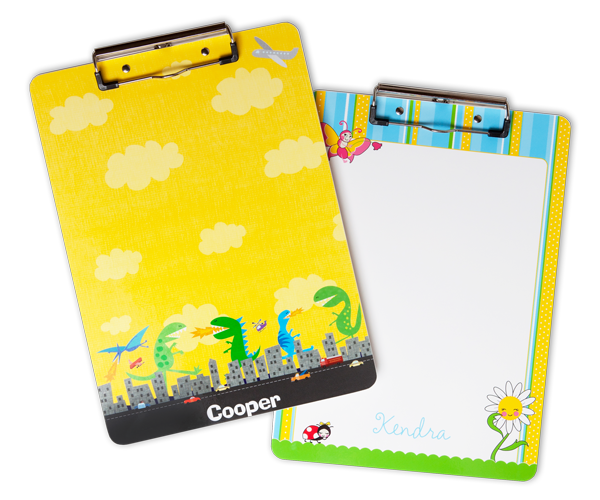
Even the coolest paper and pens are worthless without a stable, flat surface to write or draw. Include a Dry-Erase Clipboard in your bag – it serves as a lap desk that securely anchors papers and it stashes in a bag without taking up much room. The personalization makes it extra special, and the dry-erase surface gives you one more activity to add to your traveling arsenal.  $19.95 via frecklebox.

clipboards frecklebox
via frecklebox

2. A little something to keep the littlest one happy

Babies need more than just warm bottles and clean diapers to make them happy on a long flight or car ride. Don’t forget to include some soothing entertainment in your bag. Teething babies will dig the 100 percent Silicone beads on the Chewbeads Mulberry Teether. You can breathe easy knowing that the beads are free of BPA, phthalates, cadmium, lead or any metal. The colorful “bracelet” is so cute, you can easily get away with sliding one on your wrist to have at the ready. $16.50 via Amazon.

via Amazo
via Amazon

3. Germ prevention.

Think of all the places little hands will touch in a single day of traveling  – door handles, airplane trays, high chairs, restaurant tables, even your handbag that’s been perched next to your feet on a well-traveled commuter train or plane. Ugh! Do your best to keep germs at bay by squirting busy hands with all-natural hand sanitizers that kill the bugs without spreading equally nasty chemicals. $5.95 for a two-pack via Honest Co.

via Honest Co.
via Honest Co.

4. Mini backpacks loaded with loot.

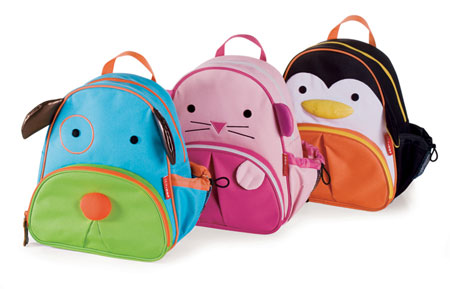
The experts at Conde Traveler suggest giving each child their own backpack to carry. Before they leave home, load it with loot you can buy from the $1 isle, including toys and activities to keep kids busy on the plane or in the car. Your best bet are stickers, coloring books, mini notebooks, and trinkets. Make a deal with the kids before you leave home – the content is theirs as long as they carry the bag and don’t open it until you give them the green light. Skip Hop Zoo Pack Backpacks starting at $14.29 via Fat Brain Toys.

via Fat Brain Toys
via Fat Brain Toys

5. Emergency Kit

No matter how much you hover, someone is bound to end up with a scraped knee, itchy bug bite, or a fever… and hopefully nothing more serious. Be prepared by having a mini first aid kit stashed in your bag. The Red Cross has a handy list of what to include in a standard first aid kit for the family. When traveling with little kids, remember to include Baby Tylenol, Benadryl for an allergic reaction and plenty of bandaids. Turn to quick ship sources for a handy take-along emergency kit designed for easy travel. Medi Buddy First Aid Kit available for $6.99 via Amazon.

MediBuddy
via Amazon

No matter how well you’ve prepared, your sanity might need a bit of lifesaving of its own, once you arrive at your destination. Remember that nothing beats a babysitter! UrbanSitter has you covered in major metropolitan areas nationwide. Book one for a night out or a few hours to yourself.

Tips for Helping Kids Adjust to Daylight Savings


For most of the country, it’s time to turn the clocks ahead one hour this weekend, as we officially move to Daylight Savings Time, Sunday, March 9. Interestingly, newborns don’t seem to be affected by time changes. However, the hour change tends to take a toll on children. According to child healthcare experts, it can take kids a few days to adjust to a new sleep schedule, leaving parents with tired, cranky kids on their hands. Fortunately, there are simple tips you can follow to help your kids adjust to the change as quickly and easily as possible, so you can both get the sleep you need.

julia-Exhausted sleeping toddler

Tips for Helping Kids Adjust to Daylight Savings

  • Don’t wait until Sunday to deal with the change and its consequences. Be prepared and have a plan for how you’ll help your kids adapt to the extra hour.
  • Consider starting on Thursday. Drop their bedtime back 15 minutes each day so that by Sunday night, they are ready to go to bed when the clock says their usual bedtime, even if their body clock think it’s an hour early.
  • If you don’t start Thursday, push bedtime back an hour Friday so kids have an extra weekend night to adjust to the change.
  • Don’t try to give kids extra help getting to sleep. Keep to the usual routine, no matter the time. They may not fall asleep right away, but getting them in bed will encourage their minds and bodies to relax a little earlier.
  • It’s often hard to convince kids that it’s bedtime when it’s still light outside. Try making bedrooms darker with blackout shades or blinds, or skip the nightlight.
  • Don’t overstimulate kids in an attempt to tire them out for an earlier bedtime. Overtired kids often have meltdowns and trouble falling asleep, rather than falling asleep easier.
  • Wake them up at their normal times. Don’t let them sleep later to make up for lost sleep.
  • Same goes for naps. Stick with the usual nap times, and wake them from their nap time at a normal time.
  • Falling asleep an hour earlier often means waking an hour earlier. Discourage kids from waking too early by letting them know what you feel is an acceptable time to start the day. Suggest they read in bed or play quietly until it’s time to get out of bed.
  • Consider putting a digital clock in your kid’s room and letting them know when it’s ok to leave their bed in the morning. Kid sleep training clocks are especially helpful this time of year.

The best way to help kids get the sleep they need is to be regimented about bedtime and bedtime routines. Kids always benefit when they know what to expect, and can easily grasp the idea that having a bath, brushing teeth and hearing a bedtime story signals the end of the day, regardless of the time or caregiver. If you haven’t already established a bedtime routine, now is the time to do it. Both you and your kids will get the rest you need to start enjoying the longer days!

What are your tips on getting kids to adjust to Daylight Savings? Share with us in the comments!

How Technology Can Help Solve 5 Common Problems of Busy Families

 You may be able to take some comfort in knowing that you are not alone in your struggle to navigate the often wild and rapid waters of everyday family life.

There are five common problems most parents confront in their day-to-day lives that can be at least alleviated, if not solved, with the help of an app. We’ve scoured, reviewed and talked with parents to find favorite apps that could bring a welcome, helping hand to your world.

Five Apps for Busy Families

1. Managing your family’s activities and calendars.

UpTo Modern Calendar

Chances are you have your preferred calendar method pretty down pat by now, whether it’s a paper day planner, Outlook, Facebook or another calendar you can access via your mobile device. All are tried-and-true, obviously effective methods of keeping your calendar. But when it comes to keeping track of calendars for several members of your family, you may benefit from taking it a step further.

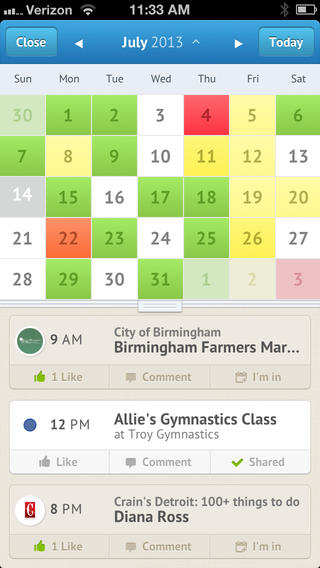
A popular go-to calendar app is Cozi, an awesome solution for organizing your day-to-day calendar in a simple format, adding after-school activities, meals, to-do lists, chores, social events and more with ease. But, there’s a newcomer that’s caught our attention as a real productivity booster. UpTo is an app that streams public calendars, such as college and pro sports schedules, TV show schedules, new movie release dates, concerts and other important events you’d like to be reminded of, and lists them alongside your own events. So, you not only remember to take your son to the dentist, you also don’t miss the season premiere of your favorite TV show or your alma mater’s big game. You know, the important stuff.

2. Getting a decent dinner on the table.

Epicurious Shopping List and Recipes

Stop scouring the Web for what to do with those chicken legs you bought on sale or for that fantasy recipe that you’ll be able to whip up in minutes. Epicurious Recipe and Shopping List app is a one-stop-shop for nearly any recipe you could need.

It’s a virtual smorgasborg of more than 30,000 recipes pulled from around the world, all of which are divided into categories that are organized by skill level and theme such as Quick and Easy and Kid-Friendly. Not only can you find recipes on the go, you can also add ingredients to a shopping list and save your favorite recipes. It’s quick and easy to pull up the shopping list when you walk into the grocery store. You’ll be instantly prepared to pull off any dinner, last-minute throw-together or otherwise. If you prefer to have a hard copy of your recipes while you cook, there’s the Epicurious app for an HP printer that enables you to send recipes directly to your printer.

UrbanSitter Mobile
UrbanSitter Mobile

3. Staying connected with your spouse.

We’re a bit partial to this one, but it’s so good at simplifying your life as a parent, we have to toot our own horn and remind you of it again – The UrbanSitter iPhone App. It’s incredibly valuable to be able to find and book a babysitter, even exchange logistics with her, while on the go.

You simply use the app to see who is available to care for your kids when and where you need her, read profiles, check parent reviews, and send him or her an instant request.

It’s an app that can put the spontaneity back into your life, ensuring that you never have to turn down an invitation for a dinner with your spouse or a coffee with a friend.

4. Taking care of a newborn while juggling an already hectic life.

“Momnesia” may not be a medically documented condition, but forgetfulness and that feeling of losing track of what you were in the middle of doing is a reality for most parents – first-times and old pros, alike.

Baby Log

Keeping track of all the necessities, such as when and how you last fed your baby (bottle or breast), when you changed a diaper, how long your baby last slept, and when you need to do it all again is mind-boggling – especially to sleep-deprived, pulled-in-every-direction parents.

Baby Log is an ultimate baby log app. It holds unlimited data for all your baby’s activities, and can be used for multiple babies, too. Let it keep track of it all, so you can enjoy a bit of peaceful time with your baby, instead of fretting over the schedule. It also offers a nursing or nap timer, and provides a place to record milestone, growth or precious moments.

5. Archiving the memories so you don’t forget a minute.

When it comes to dealing with the masses of artwork and school projects that flood your home once you have a preschooler or school-age child, many parents are fans of Artkive. It allows you to take photos of your child’s masterpieces, share the work and archive it so you can show your grandkids what their Mom created when she was three.

MomentGarden

But what do you do if your little one isn’t yet producing any art, yet the pressure of just keeping up the baby book is enough to put you over the edge? Meet Moment Garden. It’s an app that allows you to keep pictures, track weight and growth, record all trips to the doctor and keep first-time events of your baby on your phone, and privately share them with your closest family and friends. With a single click, you can even turn your Moment Garden into a Moment Book, a beautifully printed book like that baby book you never had time to finish!

We’d love to know which apps you find indispensable in the fight to keep your head above water in the fun, but sometimes frantic world of parenting. Give us a shout!

Find and book trusted babysitters at UrbanSitter.