5 Easy Ways to Celebrate Preschool or Kindergarten Graduation (That Feel Like a Big Deal)

Your little one worked hard all year: learning letters, making friends, and figuring out how to share (mostly). A preschool or kindergarten graduation is a real milestone, and it deserves to feel like one. Whether you have the whole family coming or it is just your crew, these five easy ideas will make the day memorable without adding stress to your plate.

1. Throw a mini celebration at home

homemade graduation cupcakes decorated for a preschool graduation party

You do not need a full party to make it feel special. A batch of graduation cupcakes, a banner, and their favorite dinner at home can feel enormous to a five-year-old. Let them pick the menu and help with the decorations. Giving them ownership of the details makes it their celebration, not just an event you planned for them.

Keep it simple. The goal is for your child to feel like the star of the day. If siblings or grandparents can join, even better.

2. Make the ceremony feel like a big deal
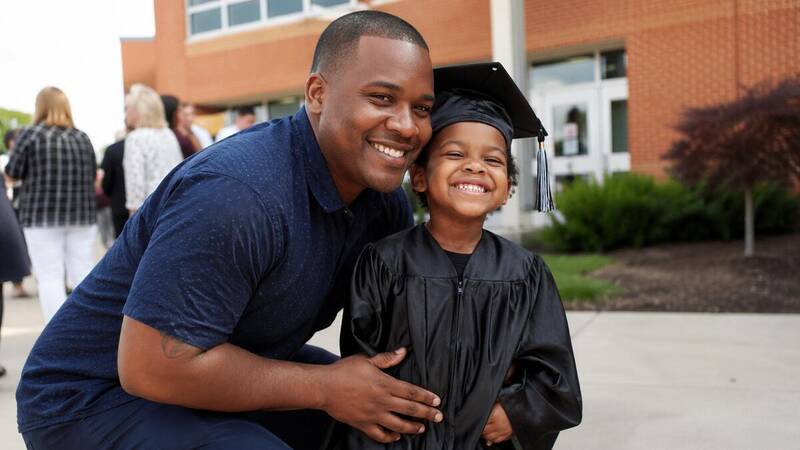
dad taking photo at preschool or kindergarten graduation ceremony

Dress up a little. Bring flowers. Take a photo in front of the school before you walk in. These small gestures signal to your child that today is different and that today matters.

After the ceremony, let them wear their cap and gown as long as they want. If you can grab a moment with their teacher for a photo, take it. These are the pictures you will print and frame.

3. Plan a special outing or treat

family celebrating kindergarten graduation with ice cream

A special outing does not have to be elaborate. Ice cream at their favorite spot, a trip to the bookstore to pick one new book, a movie they have been waiting to see: whatever feels like a treat to them is the right answer.

Ask your child what they want to do to celebrate. You might be surprised by how simple their answer is. Following their lead turns a parent-planned event into their celebration.

4. Create a milestone marker they’ll keep
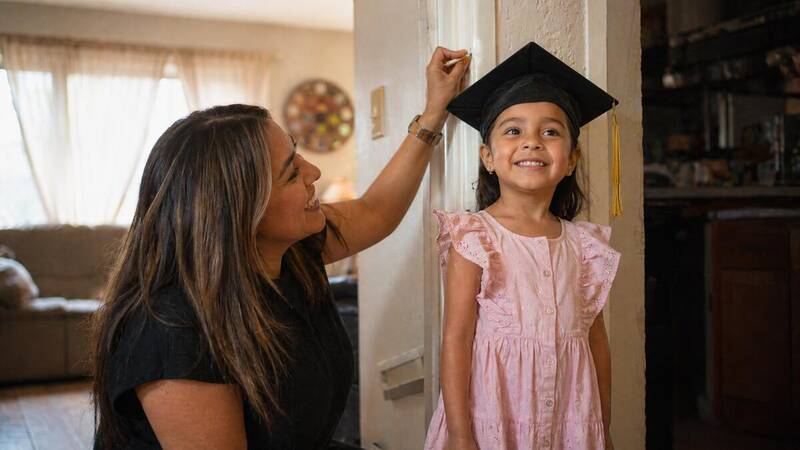
parent marking child height on doorframe as a graduation milestone

Mark their height on the doorframe. Write down what they want to be when they grow up. Take a photo of their hands. These small, concrete things capture who they are right now, before they change too much.

A simple memory book (even a few pages stapled together with their drawings and your notes) becomes something they will come back to for years. Future-you will be glad you did it.

5. Book a sitter so you can focus on your grad
babysitter with two kids and mom

If you have younger kids, graduation day logistics can get complicated fast. A babysitter can handle pick-ups, keep little ones entertained during the ceremony, and give you the space to be fully present for your grad’s big moment.

Even if the whole family is attending, booking a sitter for the afternoon gives you flexibility: someone to wrangle the toddler while you take photos, or to take younger kids home for nap time so the celebration can keep going.

Frequently asked questions about preschool and kindergarten graduation

What do you do for a preschool graduation?

Most preschool graduations include a short ceremony at the school, often with a cap and gown. From there, families typically celebrate with a meal, a special outing, or a small party at home. The key is making your child feel celebrated. The size of the event matters much less than the intention behind it.

What is a good gift for preschool graduation?

Books are a great choice, especially ones that bridge the gap between preschool and kindergarten. A personalized keepsake, a journal, a special art kit, or a fun activity like a museum membership or a cooking class all make meaningful gifts. Skip the toys that will be forgotten in a week and go for something that marks the transition.

How do you celebrate kindergarten graduation on a budget?

Some of the most memorable celebrations cost almost nothing. Make cupcakes together, blow up a few balloons, and let them pick dinner. Write a letter to your child describing who they are at this age and seal it to open when they graduate high school. Mark their height. Take photos. The memory-making is free.

What are some fun preschool graduation party ideas at home?

Set up a simple celebration with their favorite food, a homemade banner, and a few balloons. Let them invite a couple of close friends or cousins. Play their favorite songs, make a craft together, or do a special activity they love. A photo booth corner with a few props and their cap and gown makes for great pictures and a memorable moment without much effort.

How do you make kindergarten graduation feel memorable?

The details you document matter more than the size of the celebration. Take photos at the school, capture them in their cap and gown, record a short video message about who they are right now. Mark their height. Write down their favorite things. The moments you preserve intentionally are the ones that become the memories you will return to for years.
Summer child care, solved!

Find a summer nanny or a driver to help with camp pick ups with UrbanSitter.

Simple Ways To Help Prepare Your Child for Kindergarten

photo by anieto2k

Whether your little one is going off to kindergarten this fall or the big day is a year or two away, it’s nice to know she’s on track and prepared for success. Preparing her is easier than you may think.

You can send her off to big kid school with confidence by taking time to help her practice skills in each of seven areas experts have identified as key aspects of early childhood development: Language Development, Learning and Thinking, Beginning to Read, Beginning to Write, Numbers and Counting, Physical Development, and Social and Emotional Development.

Educators use these buckets to help decide if a child is ready for kindergarten. Yours will undoubtedly be ready to tackle the big milestone with some simple, yet consistent help from you, other family members or your sitter!

Language Development

What you can do:

  • Have frequent conversations with your child. No baby talk  Use complete sentences and lots of good description.  Encourage her to use words to express her feelings and reactions to the world around her.
  • Play games that require listening and following simple directions.
  • Read stories with easy-to-follow plots and interesting characters to talk about.
  • Sing songs and read stories or poems with rhyming words.

Learning and Thinking

What you can do:

  • Help make small collections, such as rocks or toys, and have her sort them using different criteria, such as size, shape, and color.
  • Do simple puzzles together. Tired of yours, trade with a friend or make your own using photos, pictures from magazines or print-outs.
  • Let her help you sort and fold the laundry, matching socks and other clothes by size or color.
  • Play “I Spy” to practice color and shape recognition.
  • Show her how to string beads to make patterns… and beautiful necklaces!

Beginning to Read

What you can do:

  • Set a time every day to read to your child and talk about the letters and words, characters, and what happened first, next and last.
  • Have her put into the correct sequence photos of herself or family members at different ages.
  • Buy magnetic letters and let her play with them on a cookie sheet or other magnetic surface.  Practice the sound each letter makes.
  • Have her cut out letters from magazines to spell her name and other simple words she knows.

Beginning to Write

What you can do:

  • Help her practice writing her name, ABCs and numbers 1-10. Use different tools to make it fun – colored pencils, chalk on the sidewalk, and finger paint.
  • Together keep a summer journal. She draws a picture of something she did each day, and with your help writes a word or more to describe it.
  • Let her help with writing grocery lists or making cards for friends. This helps her to see the different ways we use writing in our daily lives.
  • Make labels for belongings, such as an art box, notebook, or cup.

Numbers and Counting

What you can do:

  • Go on treasure hunts to collect things to use for counting.
  • Use coins or items around the house to experiment with adding, subtracting and the use of “more” and “less.”
  • Together look for and point out numbers in her world, such as addresses, page numbers, recipes, and price tags.
  • Read stories and sing songs about numbers, such as “Five Little Monkeys Jumping on the Bed.”

Physical Development

What you can do:

  • Help develop large muscles by playing with balls, hula-hoops and bean bags, and riding a bicycle or tricycle.
  • Build simple obstacle courses to practice jumping, walking a straight line, and climbing.
  • Help develop fine motor skills by practicing with child-safety scissors. She can cut out shapes you draw on paper or pictures from magazines.

Social and Emotional Development

What you can do:

  • Create an “About Me” notebook for your child. Together add personal information, such as her name, age, address, favorites, and names of family members. She can decorate it with drawings that tell more about her.
  • Build independence by rewarding the things she can do for herself, such as brushing her teeth, washings hands, getting dressed, and zipping a jacket.
  • Play school to help her practice saying goodbye, meeting new friends and packing up to come home

Looking for childcare help? Find babysitters with advanced degrees in child development and elementary education at UrbanSitter.