For many families, the hardest part of the school day starts at 3 p.m. Here is what an after-school nanny costs in 2026 and how to budget for the help your family needs.
We’re sharing the current rates by U.S. city, five factors that can influence costs, and how to land a great hire.
How much does an after school nanny cost?
Rates vary based on location, job responsibilities, days per week, driving needs, skills, and experience. For most families, the range runs about $18 to $30 per hour depending on city, with the national average sitting around $26 per hour for one child.
These rates come from UrbanSitter booking data, tracked across major U.S. cities. The chart below shows the average for one child by city.
Average after school nanny rates by U.S. city
| Area/U.S. City | Average Hourly Rate | Weekly Rate (based on 15 hours) |
| National | $26.24 | $393.60 |
| Atlanta, GA | $20.78 | $311.70 |
| Austin, TX | $23.39 | $350.85 |
| Boston, MA | $25.52 | $382.80 |
| Charlotte, NC | $23.56 | $353.40 |
| Chicago, IL | $22.21 | $333.15 |
| Columbus, OH | $19.98 | $299.70 |
| Dallas/Ft. Worth, TX | $19.25 | $288.75 |
| Denver, CO | $24.05 | $360.75 |
| Honolulu, HI | $27.22 | $408.30 |
| Houston, TX | $21.69 | $325.35 |
| Las Vegas, NV | $21.16 | $317.40 |
| Los Angeles, CA | $26.11 | $391.65 |
| Miami, FL | $21.15 | $317.25 |
| Minneapolis, MN | $21.35 | $320.25 |
| Nashville, TN | $23.43 | $351.45 |
| New York City, NY | $26.03 | $390.45 |
| North Jersey, NJ | $25.38 | $380.70 |
| Orlando, FL | $21.68 | $325.20 |
| Philadelphia, PA | $20.10 | $301.50 |
| Phoenix, AZ | $20.59 | $308.85 |
| Portland, OR | $23.98 | $359.70 |
| Raleigh/Durham, NC | $22.23 | $333.45 |
| Reno-Tahoe, NV | $23.90 | $358.50 |
| Sacramento, CA | $22.79 | $341.85 |
| San Antonio, TX | $18.21 | $273.15 |
| San Diego, CA | $24.39 | $365.85 |
| San Francisco, CA | $29.63 | $444.45 |
| Seattle, WA | $27.70 | $415.50 |
| Tampa Bay, FL | $21.26 | $318.90 |
| Washington, DC | $23.95 | $359.25 |
What helps you attract a great after-school nanny
We surveyed 500 nannies looking for an after school job to determine what would influence them to take the after school job and what hourly rate they’d expect. Based on their feedback, here are 5 tips to help you secure your after school nanny. For a broader hiring playbook, see our 7 tips for hiring an after school nanny.
Related: After School Babysitter Guide for Parents
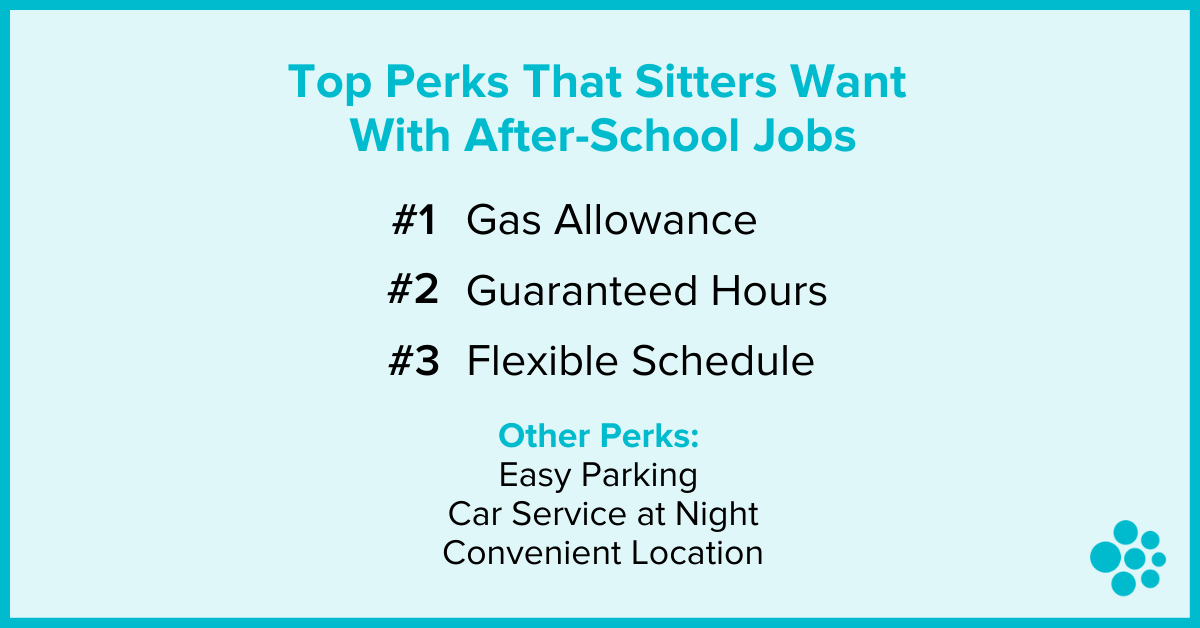
1. Provide a Gas Allowance
High gas prices are at the top of nannies’ minds when using their own car for school pick-ups. With 69% influenced by an allowance for gas, this is a factor nannies consider when determining if the job fits them. If you live in an area where public transportation is the prevalent method of getting around, consider a weekly transportation stipend.
2. Guarantee Weekly Hours
To make an after school job worthwhile, a majority of nannies (66%) want guaranteed hours each week. 50% prefer 10-20 hours per week and 24% between 20-25 hours per week.
3. Consider a Flexible Schedule
If your family’s schedule allows it, offering a flexible schedule for part-time care is highly sought after and would influence 64% of nannies to say yes to an after school job offer. One option for flexibility is allowing the nanny to choose which days of the week they work (M-W-F or Tu-Th-F) or certain days they stay later and others they don’t.
4. Pay a Competitive After School Nanny Rate
The average hourly after school nanny rate is around $26 per hour, that’s about $400 per week based on 15 hours. With that said, there is variability by city and region. San Francisco is the most expensive city per hour at $29.63/hr. San Antonio, TX, is the least expensive city, at $18.21/hr. Competitive pay matters most for part-time schedules that involve driving and afternoon availability.
If you’re looking for an alternative to an hourly rate, according to our survey, 49% of nannies would accept flat rates. Flat rates are usually provided by the day, with 51% stating they offer daily rates, 26% offer weekly flat rates, and 12% offer monthly flat rates.
5. Include Other Perks
Including a few other perks in the job, such as offering a car service when the nanny works late, is another popular deal sweetener. Easy parking and convenient location are also ranked highly for nannies.

Alternatives to after school nannies
Other after-school child care options include:
-
School-based after-school programs. Often the most affordable choice. School-based and community programs (YMCA, Boys & Girls Club, school district after-school care) work well if your schedule fits the program hours and your child does well in a group setting.
-
After-school programs at a child care center or daycare. A good fit if your child is already at a center that offers school-age care, since pickup and handoff stay simple.
-
Full-time nanny. Families with long work hours, multiple kids, or sick-day and school-holiday gaps often prefer a full-time nanny because the schedule is consistent and flexible. If one child is with the nanny all day and a sibling joins after school, ask about a blended rate.
-
Drop-in or pay-as-you-go sitters. If your schedule shifts week to week, drop-in care can work better than committing to a fixed after-school routine.
-
Community and youth programs. Local YMCAs, Boys & Girls Clubs, and rec centers often run after-school activities from sports to arts. Lower cost than in-home care, and many include transportation from school.
If you’re still mapping out the school year, start with our back-to-school child care guide.
What to nail down before your nanny starts
Clear expectations before the first day save a lot of friction later. Pin down which hours are firm and which have flexibility, agree on a weekly gas stipend if your nanny drives, and lock in the weekly hours you actually need so the schedule is real, not aspirational.
UrbanSitter makes sharing all these details in a job description easy. A clear job description, a competitive rate, and a few thoughtful perks are usually enough to land a great after-school nanny.
After school nanny cost FAQs
How much does an after school nanny cost?
As of 2026, an after school nanny in the U.S. costs an average of $26.24 per hour for one child, based on UrbanSitter booking data. Rates range from about $18.21 per hour in San Antonio to $29.63 per hour in San Francisco. For a typical 15-hour week, that works out to roughly $273 to $444 depending on your city.
How much does an after school nanny cost for two kids?
After school nanny rates rise with each additional child. As of 2026, the national average is $29.87 per hour for two children, compared with $26.24 per hour for one child, based on UrbanSitter booking data. Most nannies add roughly $1 to $3 per hour for each additional child.
How many hours per week does an after school nanny work?
Most after school nannies work part-time, usually 10 to 25 hours per week, Monday through Friday from school pickup until parents are home in the early evening. A common schedule is about 3 hours a day, or roughly 15 hours a week. For help mapping your full school-year coverage including alternatives to a nanny, see our back-to-school child care guide.
How much should I pay an after school nanny for school pickup?
Expect to pay your local hourly rate for the full time, including travel. Many families round up to a one-hour minimum even when the pickup itself is short, and add a gas allowance if the nanny uses their own car.
Should I give my after school nanny a gas allowance?
If your after school nanny drives your kids to school pickup or activities in their own car, it is common to cover their gas. Many families offer a flat weekly stipend, often $20 to $50 depending on the driving involved, or reimburse mileage at the IRS standard rate. Agree on the arrangement before the nanny starts driving.
Is the cost of an after school nanny tax deductible?
After school care for children under 13 may qualify for the federal Child and Dependent Care Tax Credit if it allows both parents to work or look for work, and this can include an after school nanny. Some employer Dependent Care FSAs also cover after school care. See our guide to child care and dependent care tax benefits for the basics. Eligibility depends on your situation, so check with a tax professional.
Ready to see what rates look like where you live? Browse after school nannies near you and compare hourly rates, experience, and availability.